Emergent Endovascular Management of Long-Segment and Flow-Limiting Carotid Artery Dissections in Acute Ischemic Stroke Intervention with Multiple Tandem Stents
- PMID: 28059705
- PMCID: PMC7963658
- DOI: 10.3174/ajnr.A4965
Emergent Endovascular Management of Long-Segment and Flow-Limiting Carotid Artery Dissections in Acute Ischemic Stroke Intervention with Multiple Tandem Stents
Abstract
Background and purpose: Although most cervical dissections are managed medically, emergent endovascular treatment may become necessary in the presence of intracranial large-vessel occlusions, flow-limiting and long-segment dissections with impending occlusion, and/or hypoperfusion-related ischemia at risk of infarction. We investigated the role of emergent endovascular stenting of long-segment carotid dissections in the acute ischemic stroke setting.
Materials and methods: We retrospectively studied long-segment carotid dissections requiring stent reconstruction with multiple tandem stents (≥3 stents) and presenting with acute (<12 hours) ischemic stroke symptoms (NIHSS score, ≥4). We analyzed patient demographics, vascular risk factors, clinical presentations, imaging/angiographic findings, technical procedures/complications, and clinical outcomes.
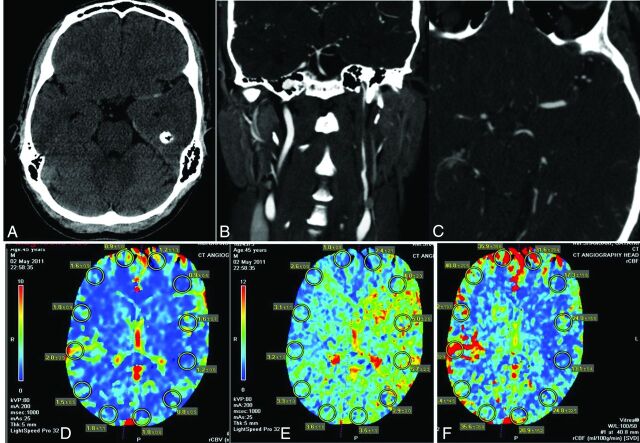
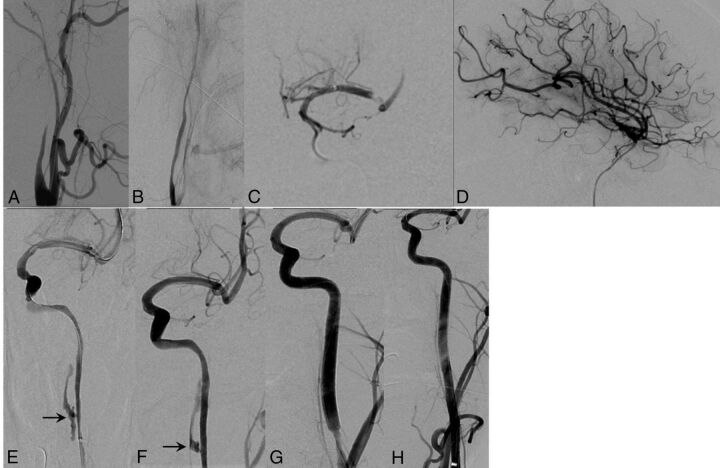
Results: Fifteen patients (mean age, 51.5 years) with acute ischemic stroke (mean NIHSS score, 15) underwent endovascular stent reconstruction for vessel and/or ischemic tissue salvage. All carotid dissections presented with >70% flow limiting stenosis and involved the distal cervical ICA with a minimum length of 3.5 cm. Carotid stent reconstruction was successful in all patients with no residual stenosis or flow limitation. Nine patients (60%) harbored intracranial occlusions, and 6 patients (40%) required intra-arterial thrombolysis/thrombectomy, achieving 100% TICI 2b-3 reperfusion. Two procedural complications were limited to thromboembolic infarcts from in-stent thrombus and asymptomatic hemorrhagic infarct transformation (7% morbidity, 0% mortality). Angiographic and ultrasound follow-up confirmed normal carotid caliber and stent patency, with 2 cases of <20% in-stent stenosis. Early clinical improvement resulted in a mean discharge NIHSS score of 6, and 9/15 (60%) patients achieved a 90-day mRS of ≤2.
Conclusions: Emergent stent reconstruction of long-segment and flow-limiting carotid dissections in acute ischemic stroke intervention is safe and effective, with favorable clinical outcomes, allowing successful thrombectomy, vessel salvage, restoration of cerebral perfusion, and/or prevention of recurrent thromboembolic stroke.
© 2017 by American Journal of Neuroradiology.
Figures
References
MeSH terms
LinkOut - more resources
Full Text Sources
Other Literature Sources
Medical
Miscellaneous