High Incidence of Human Rabies Exposure in Northwestern Tigray, Ethiopia: A Four-Year Retrospective Study
- PMID: 28060935
- PMCID: PMC5245898
- DOI: 10.1371/journal.pntd.0005271
High Incidence of Human Rabies Exposure in Northwestern Tigray, Ethiopia: A Four-Year Retrospective Study
Abstract
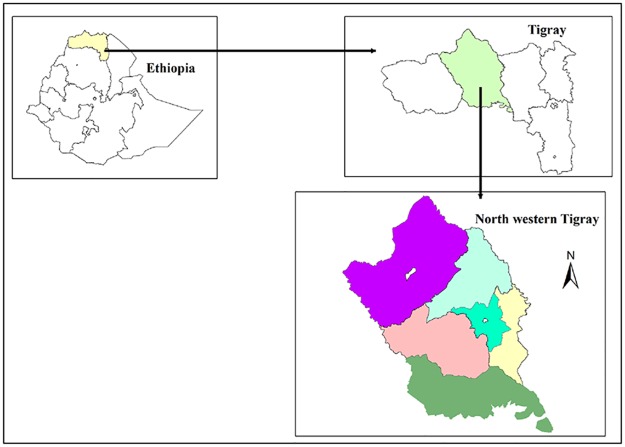
Background: Rabies is a fatal zoonotic disease that has been known in Ethiopia for centuries in society as "Mad Dog Disease". It is an important disease with veterinary and public health significance in the North western zone of Tigray where previous studies have not been conducted. Frequent occurrence of outbreaks in the area led the researchers to carry out a four year retrospective study to estimate the incidence of human rabies exposure in Northwestern Tigray, Ethiopia.
Methodology: A referent study was conducted on human rabies exposure cases recorded from 2012 to 2015 at Suhul hospital, Shire Endaselase, Northwestern Tigray, Ethiopia. Exposure cases included in this research constituted victims bitten by unprovoked dogs and who received post exposure prophylaxis (PEP) at the hospital. Two thousand one hundred eighty human rabies exposure cases retrieved from the rabies case database were included in this study.
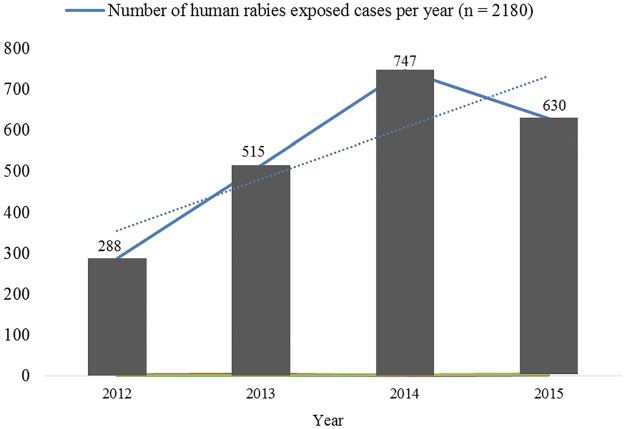
Principal findings: The majority of the exposed cases were males (1363/2180, 63%). Age wise, the most exposed age group was ≥15 years in all the study years: 166 (58%), 335 (65%), 492 (66%) and 394 (63%) in 2012, 2013, 2014 and 2015, respectively. Similarly, exposure cases for human rabies increased with age in both males and females across the study years. The incidence of human rabies exposure cases calculated per 100,000 populations was 35.8, 63.0, 89.8 and 73.1 in 2012, 2013, 2014 and 2015, respectively. Binary logistic regression analysis revealed that being male was a risk for human rabies exposure in all the study years.
Conclusion: The study discovered the highest annual human rabies exposure incidence in Ethiopia. This suggests an urgent need for synergistic efforts of human and animal health sectors to implement prevention and control strategies in this area.
Conflict of interest statement
The authors have declared that no competing interests exist.
Figures
References
-
- World Health Organization Expert Consultation on Rabies. World Health Organization Technical Report Series 931 2005; 1–88. - PubMed
-
- World Health Organization Expert Consultation on Rabies. World Health Organization Technical Report Series No. 982. Second report. World Health Organization; 2013. - PubMed
-
- Rupprecht CE, Hanlon CA, Hemachudha T. Rabies re-examined. Lancet Infect Dis. 2002; 2:327–43. - PubMed
-
- Hellenbrand W, Meyer C, Rasch G, Steffens I, Ammon A. Cases of rabies in Germany following organ transplantation. Europe Surveillance. 2005; 10, E050224.6. - PubMed
-
- Deressa A, Ali A, Beyene M, Newaye Selassie B, Yimer E, Hussen K. The status of rabies in Ethiopia: A retrospective record review. Ethiop J Health Dev. 2010; 24(2):127–132.
MeSH terms
LinkOut - more resources
Full Text Sources
Other Literature Sources
Medical
Miscellaneous