


Score risk model for predicting severe fever with thrombocytopenia syndrome mortality
- PMID: 28061758
- PMCID: PMC5219703
- DOI: 10.1186/s12879-016-2111-0
Score risk model for predicting severe fever with thrombocytopenia syndrome mortality
Abstract
Background: Severe fever with thrombocytopenia syndrome (SFTS) is an emerging epidemic infectious disease with high mortality in East Aisa, especially in China. To predict the prognosis of SFTS precisely is important in clinical practice.
Methods: From May 2013 to November 2015, 233 suspected SFTS patients were tested for SFTS virus using RT-PCR. Cox regression model was utilized to comfirm independent risk factors for mortality. A risk score model for mortality was constructed based on regression coefficient of risk factors. Log-rank test was used to evaluate the significance of this model.
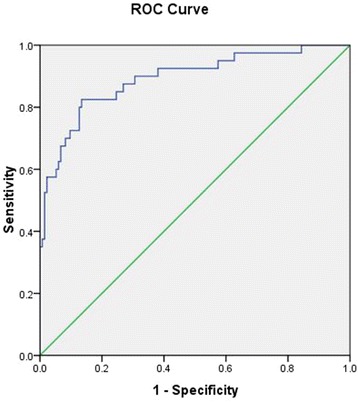
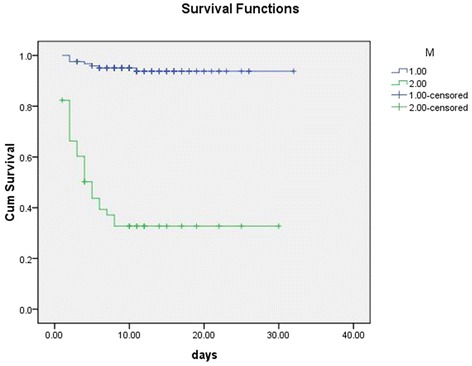
Results: One hundred seventy-four patients were confirmed with SFTS, of which 40 patients died (23%). Baseline age, serum aspartate aminotransferase (AST) and serum creatinine (sCr) level were independent risk factors of mortality. The area under ROC curve (AUCs) of these parameters for predicting death were 0.771, 0.797 and 0.764, respectively. And hazard ratio (HR) were 1.128, 1.002 and 1.013, respectively. The cutoff value of the risk model was 10. AUC of the model for predicting mortality was 0.892, with sensitivity and specificity of 82.5 and 86.6%, respectively. Log-rank test indicated strong statistical significance (×2 = 88.35, p < 0.001).
Conclusions: This risk score model may be helpful to predicting the prognosis of SFTS patients.
Keywords: Mortality; Prediction; Risk model; Severe fever with thrombocytopenia syndrome.
Figures
References
MeSH terms
LinkOut - more resources
Full Text Sources
Other Literature Sources
