


Acute kidney injury as an independent risk factor for unplanned 90-day hospital readmissions
- PMID: 28061831
- PMCID: PMC5217258
- DOI: 10.1186/s12882-016-0430-4
Acute kidney injury as an independent risk factor for unplanned 90-day hospital readmissions
Abstract
Background: Reducing readmissions is an international priority in healthcare. Acute kidney injury (AKI) is common, serious and also a global concern. This analysis evaluates AKI as a candidate risk factor for unplanned readmissions and determines the reasons for readmissions.
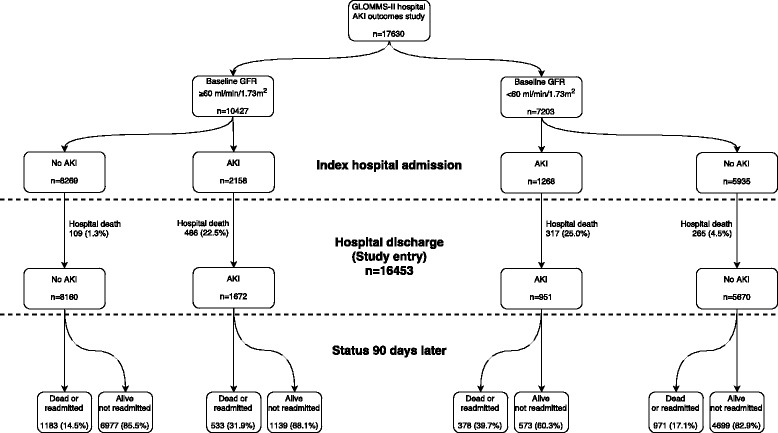
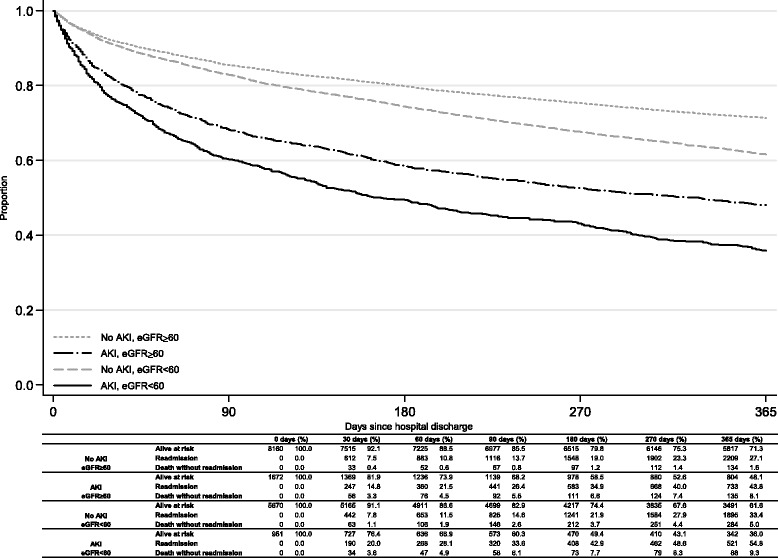
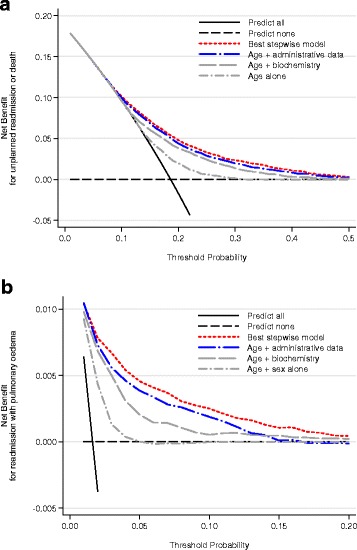
Methods: GLOMMS-II is a large population cohort from one health authority in Scotland, combining hospital episode data and complete serial biochemistry results through data-linkage. 16453 people (2623 with AKI and 13830 without AKI) from GLOMMS-II who survived an index hospital admission in 2003 were used to identify the causes of and predict readmissions. The main outcome was "unplanned readmission or death" within 90 days of discharge. In a secondary analysis, the outcome was limited to readmissions with acute pulmonary oedema. 26 candidate predictors during the index admission included AKI (defined and staged 1-3 using an automated e-alert algorithm), prior AKI episodes, baseline kidney function, index admission circumstances and comorbidities. Prediction models were developed and assessed using multivariable logistic regression (stepwise variable selection), C statistics, bootstrap validation and decision curve analysis.
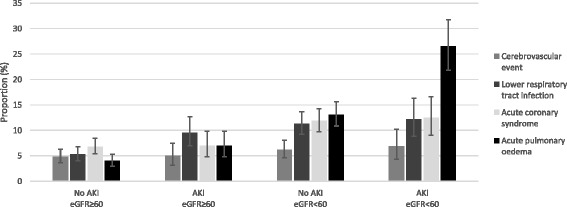
Results: Three thousand sixty-five (18.6%) patients had the main outcome (2702 readmitted, 363 died without readmission). The outcome was strongly predicted by AKI. Multivariable odds ratios for AKI stage 3; 2 and 1 (vs no AKI) were 2.80 (2.22-3.53); 2.23 (1.85-2.68) and 1.50 (1.33-1.70). Acute pulmonary oedema was the reason for readmission in 26.6% with AKI and eGFR < 60; and 4.0% with no AKI and eGFR ≥ 60. The best stepwise model from all candidate predictors had a C statistic of 0.698 for the main outcome. In a secondary analysis, a model for readmission with acute pulmonary oedema had a C statistic of 0.853. In decision curve analysis, AKI improved clinical utility when added to any model, although the incremental benefit was small when predicting the main outcome.
Conclusions: AKI is a strong, consistent and independent risk factor for unplanned readmissions - particularly readmissions with acute pulmonary oedema. Pre-emptive planning at discharge should be considered to minimise avoidable readmissions in this high risk group.
Keywords: Acute kidney injury; Acute renal failure; Clinical decision-making; Decision support techniques; Epidemiology; Heart failure; Patient discharge; Patient readmission; Prediction model; Prognosis.
Figures
References
-
- Organisation for Economic Co-operation and Development. OECD Health Ministerial Meeting. Health System Priorities in the Aftermath of the Crisis. 2010; Available at: https://www.oecd.org/health/ministerial/46098360.pdf. Accessed 6 June 2016.
-
- Parliamentary and Health Service Ombudsman. A report of investigations into unsafe discharge from hospital. 2016; Available at: http://www.ombudsman.org.uk/reports-and-consultations/reports/health/a-r.... Accessed 6 June 2016.
Publication types
MeSH terms
Grants and funding
LinkOut - more resources
Full Text Sources
Other Literature Sources
Research Materials
Miscellaneous
