


Multistate outbreak of Listeria monocytogenes infections linked to whole apples used in commercially produced, prepackaged caramel apples: United States, 2014-2015
- PMID: 28065170
- PMCID: PMC6542465
- DOI: 10.1017/S0950268816003083
Multistate outbreak of Listeria monocytogenes infections linked to whole apples used in commercially produced, prepackaged caramel apples: United States, 2014-2015
Abstract
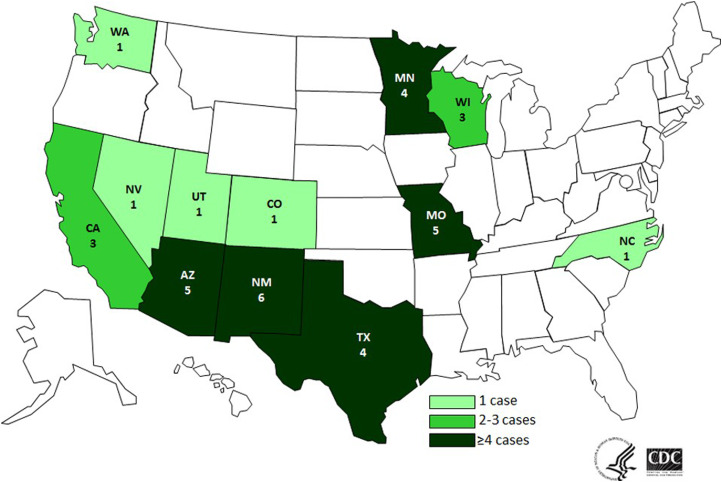
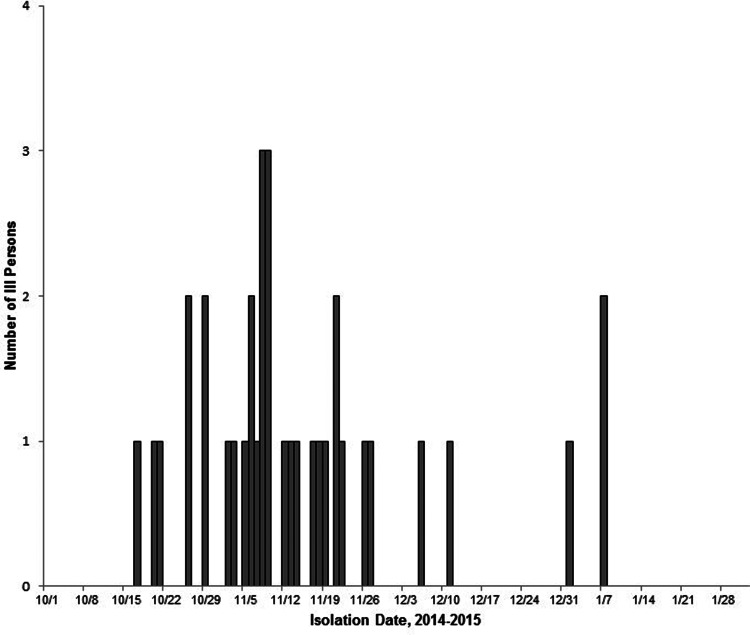
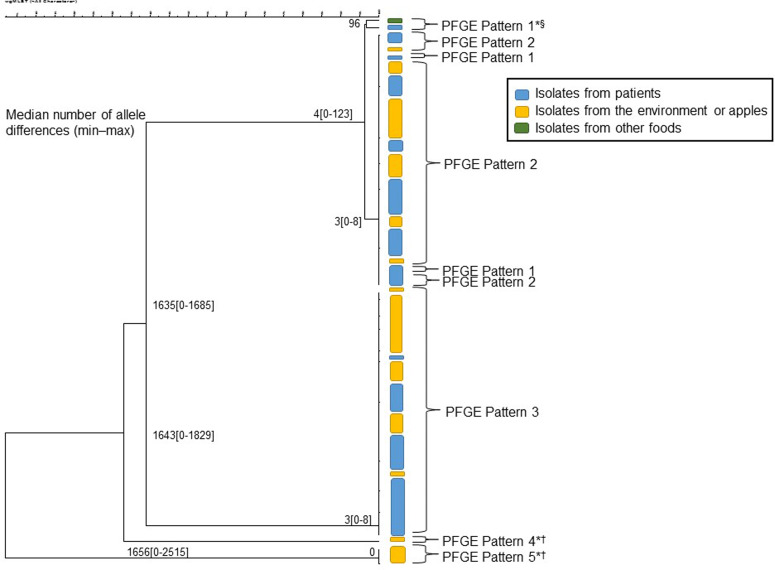
Whole apples have not been previously implicated in outbreaks of foodborne bacterial illness. We investigated a nationwide listeriosis outbreak associated with caramel apples. We defined an outbreak-associated case as an infection with one or both of two outbreak strains of Listeria monocytogenes highly related by whole-genome multilocus sequence typing (wgMLST) from 1 October 2014 to 1 February 2015. Single-interviewer open-ended interviews identified the source. Outbreak-associated cases were compared with non-outbreak-associated cases and traceback and environmental investigations were performed. We identified 35 outbreak-associated cases in 12 states; 34 (97%) were hospitalized and seven (20%) died. Outbreak-associated ill persons were more likely to have eaten commercially produced, prepackaged caramel apples (odds ratio 326·7, 95% confidence interval 32·2-3314). Environmental samples from the grower's packing facility and distribution-chain whole apples yielded isolates highly related to outbreak isolates by wgMLST. This outbreak highlights the importance of minimizing produce contamination with L. monocytogenes. Investigators should perform single-interviewer open-ended interviews when a food is not readily identified.
Keywords: Listeria; Foodborne infections; food safety; infectious disease epidemiology; outbreaks.
Conflict of interest statement
None.
Figures
References
-
- Painter J, Slutsker L. Listeriosis in humans. In: Ryser ET, Marth EH, eds. Listeria, Listeriosis and Food Safety, 3rd edn. Boca Raton, Florida: Taylor and Francis Group, 2007. pp. 85–110.
-
- Swaminathan B, Gerner-Smidt P. The epidemiology of human listeriosis. Microbes Infection 2007; 9: 1236–1243. - PubMed
-
- Gottlieb SL, et al. Multistate outbreak of listeriosis linked to turkey deli meat and subsequent changes in US regulatory policy. Clinical Infectious Diseases 2006; 42: 29–36. - PubMed
MeSH terms
Substances
Grants and funding
LinkOut - more resources
Full Text Sources
Other Literature Sources
Medical
