Review
. 2017 Sep:180:71-83.
doi: 10.1016/j.exppara.2017.01.001. Epub 2017 Jan 5.

Extended-spectrum antiprotozoal bumped kinase inhibitors: A review

Affiliations
Review

Extended-spectrum antiprotozoal bumped kinase inhibitors: A review

Wesley C Van Voorhis et al. Exp Parasitol. 2017 Sep.

Abstract

Many life-cycle processes in parasites are regulated by protein phosphorylation. Hence, disruption of essential protein kinase function has been explored for therapy of parasitic diseases. However, the difficulty of inhibiting parasite protein kinases to the exclusion of host orthologues poses a practical challenge. A possible path around this difficulty is the use of bumped kinase inhibitors for targeting calcium-dependent protein kinases that contain atypically small gatekeeper residues and are crucial for pathogenic apicomplexan parasites' survival and proliferation. In this article, we review efficacy against the kinase target, parasite growth in vitro, and in animal infection models, as well as the relevant pharmacokinetic and safety parameters of bumped kinase inhibitors.

Keywords: Bumped kinase inhibitors; Calcium-dependent protein kinase; Gatekeeper residue.


Figures

Fig. 1
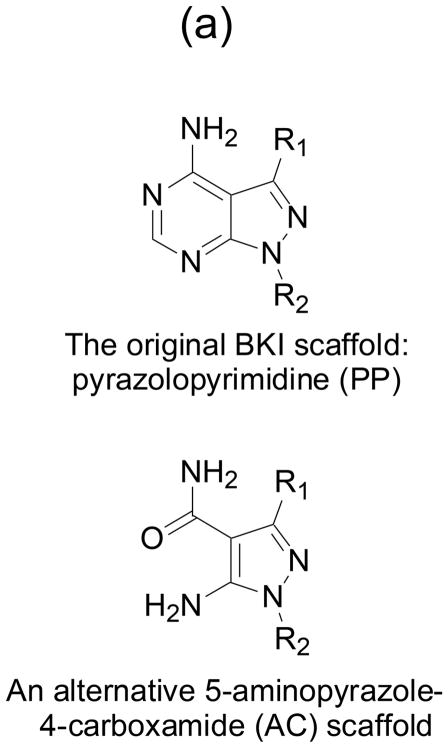
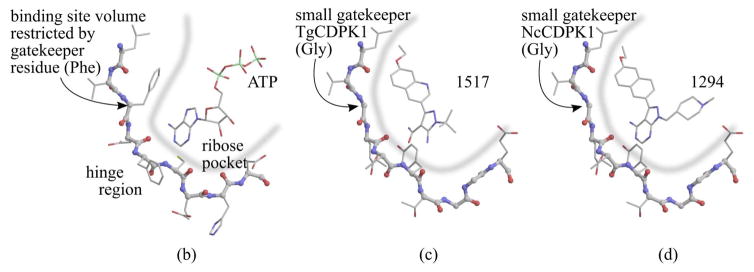
Fig. 1. BKIs core scaffold and orientation with enzymes ATP binding sites
(a) Pyrazolopyrimidines (PP) and alternative 5-aminopyrazole-4-carboxamide (AC) scaffold chemical backbone for CDPK inhibitors. (b) Typical protein kinase active site. The volume accessible for ATP binding, indicated by the thick blue line, is limited by the presence of a large gatekeeper residue, in this case phenylalanine 103 of human CDK9. (c) Active site of T. gondii CDPK1 with AC scaffold BKI-1517. The large R1 substituent occupies a hydrophobic region made accessible by the absence of sidechain atoms in the glycine gatekeeper residue. (d) Active site of N. caninum CDPK1 with PP scaffold BKI-1294. In addition to the large R1 group, this inhibitor contains a large R2 group that extends deeper into the ribose pocket. The three crystal structures shown are 3BLQ, 4ONA, and 4MX9.
Fig. 1
Fig. 1. BKIs core scaffold and orientation with enzymes ATP binding sites
(a) Pyrazolopyrimidines (PP) and alternative 5-aminopyrazole-4-carboxamide (AC) scaffold chemical backbone for CDPK inhibitors. (b) Typical protein kinase active site. The volume accessible for ATP binding, indicated by the thick blue line, is limited by the presence of a large gatekeeper residue, in this case phenylalanine 103 of human CDK9. (c) Active site of T. gondii CDPK1 with AC scaffold BKI-1517. The large R1 substituent occupies a hydrophobic region made accessible by the absence of sidechain atoms in the glycine gatekeeper residue. (d) Active site of N. caninum CDPK1 with PP scaffold BKI-1294. In addition to the large R1 group, this inhibitor contains a large R2 group that extends deeper into the ribose pocket. The three crystal structures shown are 3BLQ, 4ONA, and 4MX9.
Fig. 2
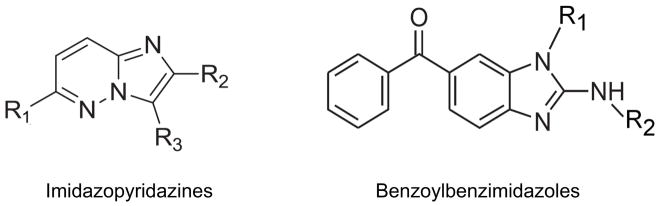
Fig. 2. Imidazopyridazines and benzoylbenzimidazoles
are two other chemical scaffolds previously used as backbone for development of BKIs to target apicomplexan parasite enzymes.
Fig. 3
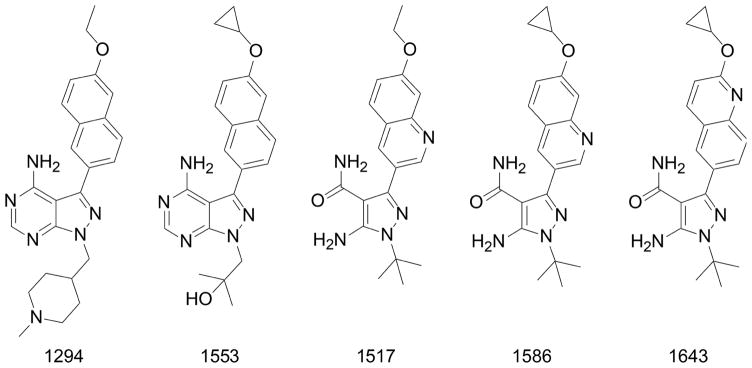
Fig. 3. Chemical structures
Chemical structures of lead bumped kinase inhibitors with demonstrated activities against apicomplexan calcium-dependent protein kinase enzymes and parasites growth and proliferation.
Fig. 4
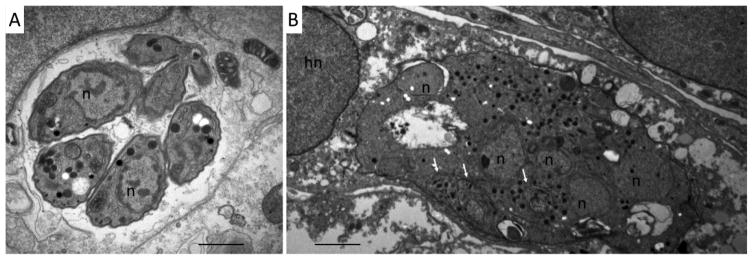
Fig. 4. BKI-1294 induces the formation of multinucleated parasite complexes in N.caninum infected cells
A: TEM showing a parasitophorous vacuole containing numerous N. caninum tachyzoites cultured in the absence of BKI-1294. B. N. caninum tachyzoites were allowed to invade the host cells and were then treated with BKI-1294 (2.5μM) for 6 days. Note the formation of multinucleated parasites, still enclosed within a vacuole. n = parasite nucleus; hn = host cell nucleus. Bars = 1 μm

References

    1. Panel on Opportunistic Infections in HIV-Infected Adults and Adolescents. Guidelines for the prevention and treatment of opportunistic infections in HIV-infected adults and adolescents: recommendations from the Centers for Disease Control and Prevention, the National Institutes of Health, and the HIV Medicine Association of the Infectious Diseases Society of America.

    1. Adams LG. Clinicopathological aspects of imidocarb dipropionate toxicity in horses. Res Vet Sci. 1981;31:54–61. - PubMed
    1. Arranz-Solís D, Aguado-Martínez A, Müller J, Regidor-Cerrillo J, Ortega-Mora LM, Hemphill A. Dose-dependent effects of experimental infection with the virulent Neospora caninum Nc-Spain7 isolate in a pregnant mouse model. Vet Parasitol. 2015;211:133–140. - PubMed
    1. Bishop AC, Buzko O, Shokat KM. Magic bullets for protein kinases. Trends Cell Biol. 2001;11:167–172. - PubMed
    1. Bishop AC, Shah K, Liu Y, Witucki L, Kung C, Shokat KM. Design of allele-specific inhibitors to probe protein kinase signaling. Curr Biol. 1998;8:257–266. - PubMed

MeSH terms