


Antimicrobial resistance in Staphylococcus pseudintermedius and the molecular epidemiology of methicillin-resistant S. pseudintermedius in small animals in Finland
- PMID: 28065889
- PMCID: PMC5400095
- DOI: 10.1093/jac/dkw559
Antimicrobial resistance in Staphylococcus pseudintermedius and the molecular epidemiology of methicillin-resistant S. pseudintermedius in small animals in Finland
Erratum in
-
Antimicrobial resistance in Staphylococcus pseudintermedius and the molecular epidemiology of methicillin-resistant S. pseudintermedius in small animals in Finland.J Antimicrob Chemother. 2017 Jul 1;72(7):2141. doi: 10.1093/jac/dkx086. J Antimicrob Chemother. 2017. PMID: 28333277 Free PMC article. No abstract available.
Abstract
Objectives: To investigate antimicrobial susceptibility in Staphylococcus pseudintermedius and the occurrence of methicillin-resistant S. pseudintermedius (MRSP), to explore the molecular structure of the MRSP population and to analyse risk factors for MRSP.
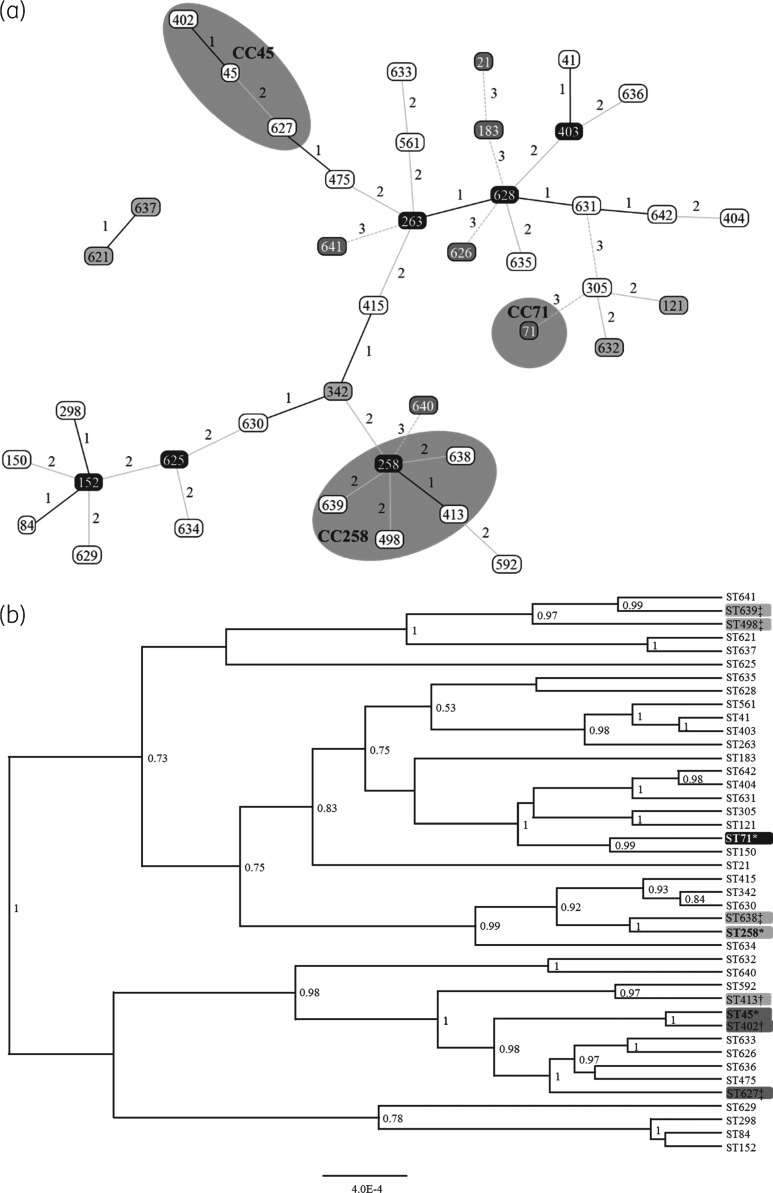
Methods: Susceptibility data for clinical S. pseudintermedius isolates in 2011-15 were analysed using WHONET. All MRSP isolates in 2010-14 ( n = 362) were typed using PFGE. Representative isolates ( n = 87) of clusters were analysed using MLST and staphylococcal cassette chromosome mec (SCC mec ) typing. Risk factors were analysed using logistic regression.
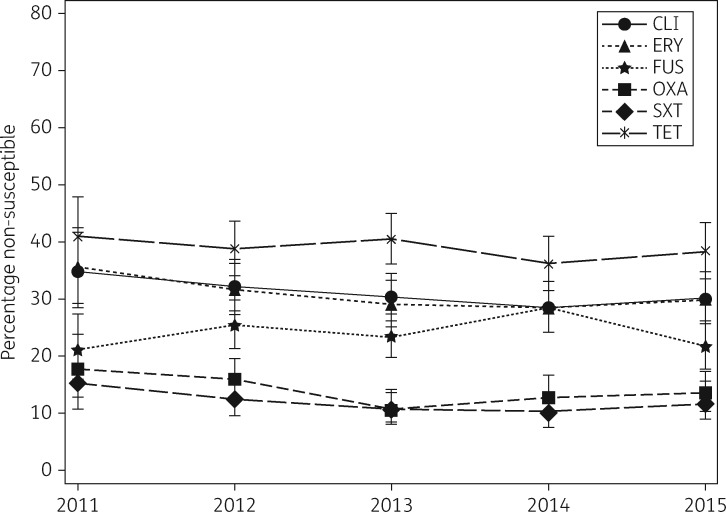
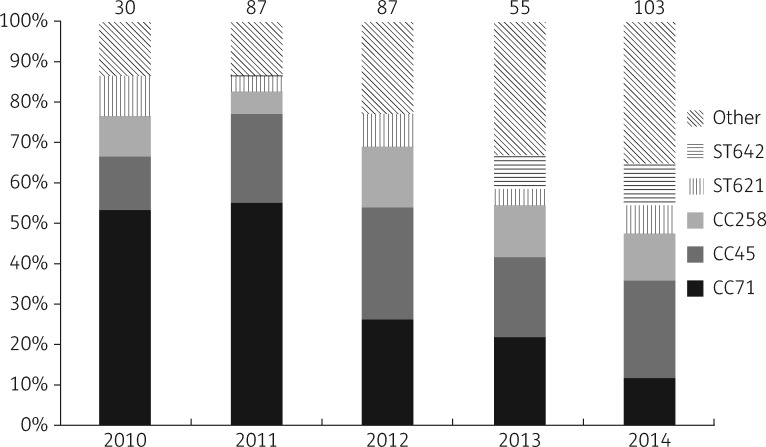
Results: Of the clinical S. pseudintermedius ( n = 1958; 98% from dogs), 14% were MRSP. Resistance to other antimicrobials varied between 12% and 39%. No trends were observed over time. Among clinical specimens (from infection sites) and screening specimens (from potential carriers), respectively, 2.5% (267/10 813) and 9% (211/2434) revealed MRSP. MLST revealed 42 different STs, including 19 new ones. Clonal complexes 71, 45 and 258 were the most common, but the MRSP population diversified over the years. A clinical S. pseudintermedius isolate was more likely to be MRSP if the patient was on antimicrobials at the time of sampling or was male. The presence of MRSP in screening specimens was more likely if the patient was on multiple antimicrobials at the time of sampling. Specimens from private clinics (versus the Veterinary Teaching Hospital of the University of Helsinki) had a higher likelihood of MRSP in both analyses.
Conclusions: Resistance to antimicrobials among S. pseudintermedius in Finland is high, emphasizing the importance of infection control measures and susceptibility testing prior to therapy. The diverse MRSP population indicates non-clonal spread.
© The Author 2017. Published by Oxford University Press on behalf of the British Society for Antimicrobial Chemotherapy.
Figures
References
-
- Hajek V. Staphylococcus intermedius, a new species isolated from animals. Int J Syst Bacteriol 1976; 26: 401–8.
-
- Igimi S, Atobe H, Tohya Y. et al. Characterization of the most frequently encountered Staphylococcus sp. in cats. Vet Microbiol 1994; 39: 255–60. - PubMed
-
- Cabassu J, Moissonnier P.. Surgical treatment of a vertebral fracture associated with a haematogenous osteomyelitis in a dog. Vet Comp Orthop Traumatol 2007; 20: 227–30. - PubMed
-
- Huerta B, Maldonado A, Ginel PJ. et al. Risk factors associated with the antimicrobial resistance of staphylococci in canine pyoderma. Vet Microbiol 2011; 150: 302–8. - PubMed
-
- Fitzgerald JR. The Staphylococcus intermedius group of bacterial pathogens: species re-classification, pathogenesis and the emergence of meticillin resistance. Vet Dermatol 2009; 20: 490.. - PubMed
Publication types
MeSH terms
LinkOut - more resources
Full Text Sources
Other Literature Sources
Medical
Research Materials
