


PREDICTING WALKING ABILITY FOLLOWING LOWER LIMB AMPUTATION: AN UPDATED SYSTEMATIC LITERATURE REVIEW
- PMID: 28066522
- PMCID: PMC5218540
- DOI: 10.21300/18.2-3.2016.125
PREDICTING WALKING ABILITY FOLLOWING LOWER LIMB AMPUTATION: AN UPDATED SYSTEMATIC LITERATURE REVIEW
Abstract
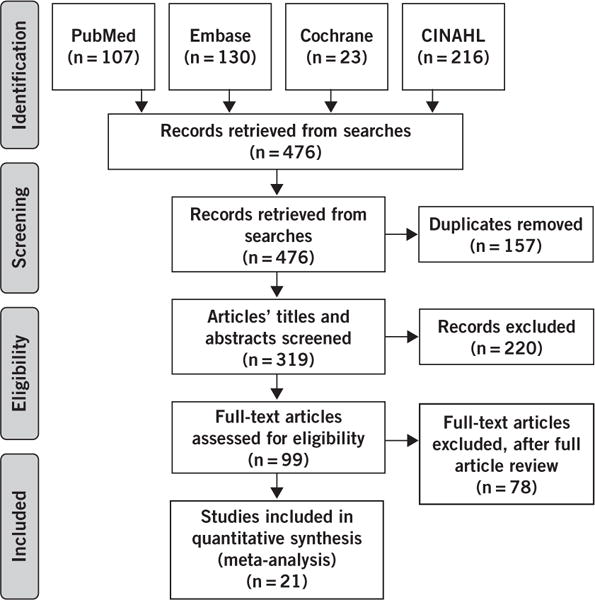
There is not a clear clinical recommendation for the determination of prosthetic candidacy. Guidelines do not delineate which member(s) of the multidisciplinary team are responsible for prosthetic candidacy decisions and which factors will best predict a positive outcome. Also not clearly addressed is a patient-centered decision-making role. In a previous systematic review (SR), Sansam et al. reported on the prediction of walking ability following lower limb amputation using literature up to 2007. The search strategy was designed from the previous Sansam SR as an update of previously valuable predictive factors of prosthetic candidacy. An electronic literature search was executed from August 8, 2007, to December 31, 2015, using MEDLINE (Pubmed), Embase, The Cumulative Index to Nursing and Allied Health Literature (CINAHL) (Ovid), and Cochrane. A total of 319 studies were identified through the electronic search. Of these, 298 were eliminated, leaving a total of 21 for full evaluation. Conclusions from this updated study are drawn from a total recruited sample (n) of 15,207 subjects. A total of 12,410 subjects completed the respective studies (18% attrition). This updated study increases the size of the original Sansam et al. report by including 137% more subjects for a total of 21,490 between the two articles Etiology, physical fitness, pre-amputation living status, amputation level, age, physical fitness, and comorbidities are included as moderate to strongly supported predictive factors of prosthetic candidacy. These factors are supported in an earlier literature review and should be strongly considered in a complete history and physical examination by a multidisciplinary team. Predictive factors should be part of the patient's healthcare record.
Keywords: Amputee; Functional level; Physical therapy; Prosthesis; Prosthetic candidacy; Rehabilitation.
Conflict of interest statement
Authors declare no conflicts of interest.
Figures
References
-
- CARF International. CMS DMEPOS accreditation program standards manual with survey preparation questions. 3rd. Washington, (DC): CARF International; 2011.
-
- CARF International. Medical rehabilitation program descriptions. Washington, (DC): CARF International; 2013.
-
- Royal College of Physicians, National Council for Palliative Care, British Society of Rehabilitation Medicine. Long-term neurological conditions: management at the interface between neurology, rehabilitation and palliative care. London (UK): RCP; 2008. (Concise Guidance to Good Practice series, No 10).
-
- [WHO] World Health Organization. International Classification of Functioning, Disability and Health (ICF) Geneva (Switzerland): WHO; 2001.
-
- Sansam K, Neumann V, O’Connor R, Bhakta B. Predicting walking ability following lower limb amputation: a systematic review of the literature. J Rehabil Med. 2009;41(8):593–603. - PubMed
Grants and funding
LinkOut - more resources
Full Text Sources
Other Literature Sources
Research Materials