. 2017 Jan 9:7:39328.
doi: 10.1038/srep39328.

Multiomics reveal non-alcoholic fatty liver disease in rats following chronic exposure to an ultra-low dose of Roundup herbicide

Affiliations

Multiomics reveal non-alcoholic fatty liver disease in rats following chronic exposure to an ultra-low dose of Roundup herbicide

Robin Mesnage et al. Sci Rep. .

Erratum in

Abstract

The impairment of liver function by low environmentally relevant doses of glyphosate-based herbicides (GBH) is still a debatable and unresolved matter. Previously we have shown that rats administered for 2 years with 0.1 ppb (50 ng/L glyphosate equivalent dilution; 4 ng/kg body weight/day daily intake) of a Roundup GBH formulation showed signs of enhanced liver injury as indicated by anatomorphological, blood/urine biochemical changes and transcriptome profiling. Here we present a multiomic study combining metabolome and proteome liver analyses to obtain further insight into the Roundup-induced pathology. Proteins significantly disturbed (214 out of 1906 detected, q < 0.05) were involved in organonitrogen metabolism and fatty acid β-oxidation. Proteome disturbances reflected peroxisomal proliferation, steatosis and necrosis. The metabolome analysis (55 metabolites altered out of 673 detected, p < 0.05) confirmed lipotoxic conditions and oxidative stress by showing an activation of glutathione and ascorbate free radical scavenger systems. Additionally, we found metabolite alterations associated with hallmarks of hepatotoxicity such as γ-glutamyl dipeptides, acylcarnitines, and proline derivatives. Overall, metabolome and proteome disturbances showed a substantial overlap with biomarkers of non-alcoholic fatty liver disease and its progression to steatohepatosis and thus confirm liver functional dysfunction resulting from chronic ultra-low dose GBH exposure.


Figures
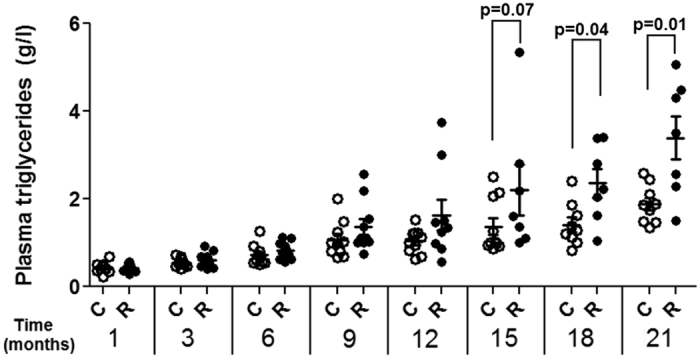
Figure 1
Figure 1. Increased plasma triglyceride levels in rats administered with Roundup.
Blood samples was collected from control and Roundup-treated (50 ng/L glyphosate equivalent dilution) female rats following two years exposure via drinking water. Blood was taken via the tail vein of each animal after 1, 2, 3, 6, 9, 12, 15, 18, 21 and 24 months of treatment. Pair-wise comparisons were performed with a Mann-Whitney U test.
Figure 2
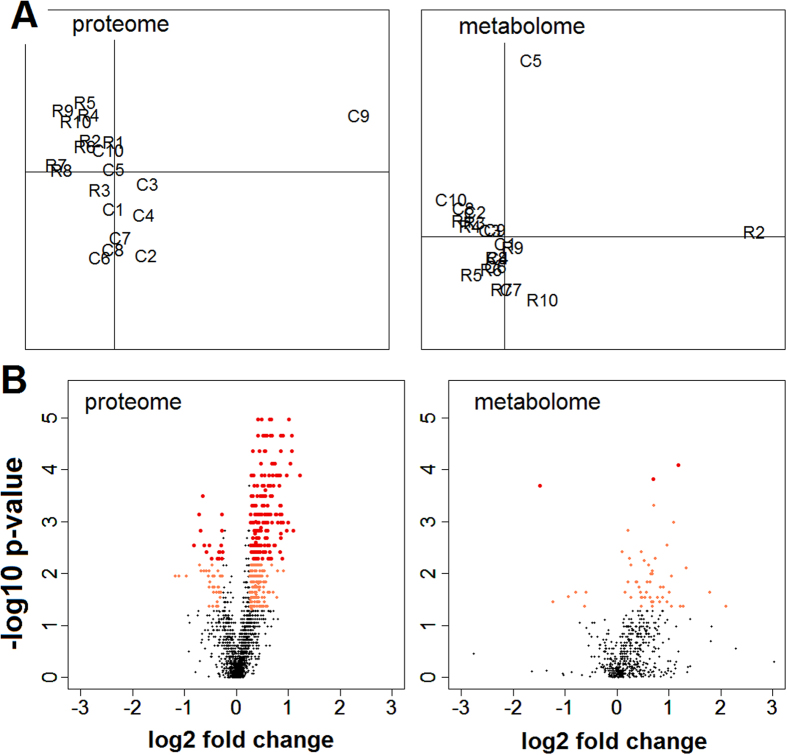
Figure 2. Wide-scale proteome and metabolome profile alteration in liver of Roundup-treated female rats.
Liver from control rats and animals receiving 0.1 ppb Roundup (50 ng/L glyphosate equivalent dilution; 4 ng/kg body weight/day daily intake) in drinking water were subjected to a proteome and a metabolome analysis. (A) PCA analysis profiles shows a separation into groups of Roundup-treated (R) and control (C) rats in liver samples for the proteome but not for the metabolome analysis. (B) Volcano plots of liver profiles showing log 2 fold changes and the −log10 p-values in peptide and metabolite levels induced by Roundup exposure compared to controls. Data were used at the cut off values Benjamini-Hochberg adjusted p < 0.05 (dark red dots) or unadjusted p < 0.05 (light red dots), with a fold change >1.2.
Figure 3
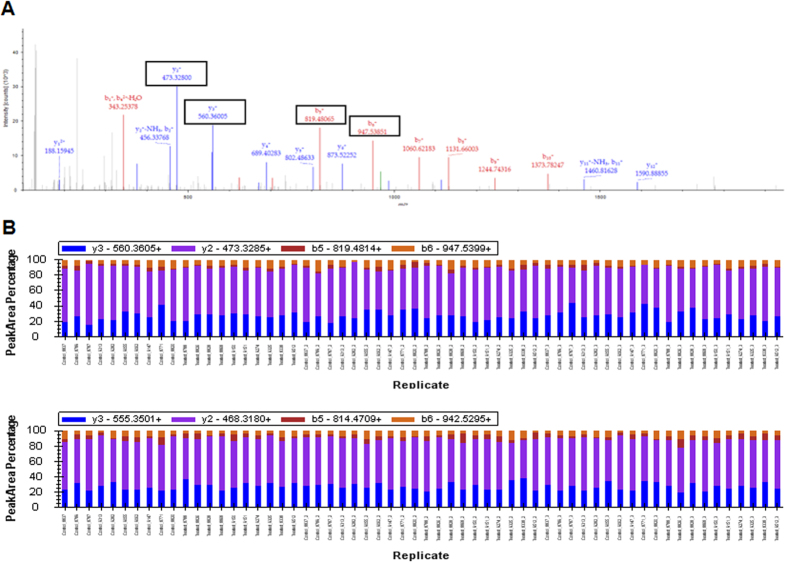
Figure 3. The raw LC-MS/MS spectra of 60S ribosomal protein L18.
The peptide “ILTFDQLALESPK” from 60S ribosomal protein L18 detected in the discovery analysis via the Orbitrap Velos-Pro is presented along with the same peptides Transition Peak Area Percentage detection from TMT-SRM analysis via the TSQ Vantage.
Figure 4
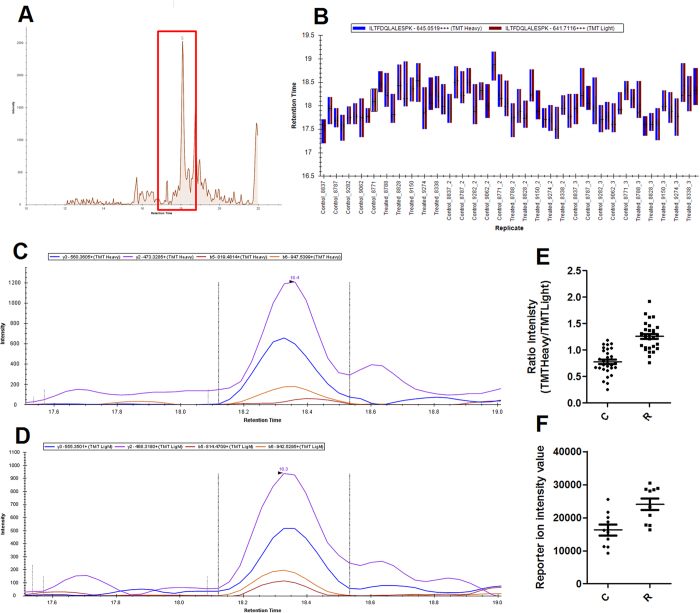
Figure 4. SRM verification of peptide “ILTFDQLALESPK” from 60S ribosomal protein L18.
The TMT Heavy peptide transitions in the internal standard can be measured at the same time as the TMT Light peptide transitions in the sample of interest using the TSQ Vantage. The peak area under the transitions curves for the Light & Heavy transitions is then calculated to give a ratio specific to each sample. These are then compared between control and treated samples. This ratio change between control and treated samples can be compared in the same way that the reporter ion intensity values are in the discovery experiment. (A) Chromatogram of the sample run. (B) Box plot showing the retention times for each of the individual 60 samples. Co-eluting light (C) and heavy transition (D) in a control sample from a TSQ Vantage raw file analysed using Skyline software. Dot plots of comparisons between the SRM validation study (E) and the discovery study (F).
Figure 5
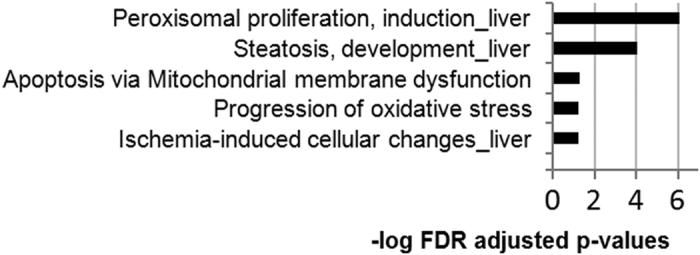
Figure 5. Toxicity ontology analysis of proteins disturbed in liver of Roundup-treated rats.
List of top 5 scoring pathway and toxicity process networks revealed by MetaCore analysis of female liver proteome profiles receiving 0.1 ppb of Roundup in drinking water (q < 0.05, p < 0.005, fold changes >1.2). The p-values are determined by hyper-geometric calculation and adjusted using the Benjamini-Hochberg method.
Figure 6
Figure 6. Scatter plots of the major significantly altered metabolic networks in livers of Roundup-treated female rats.
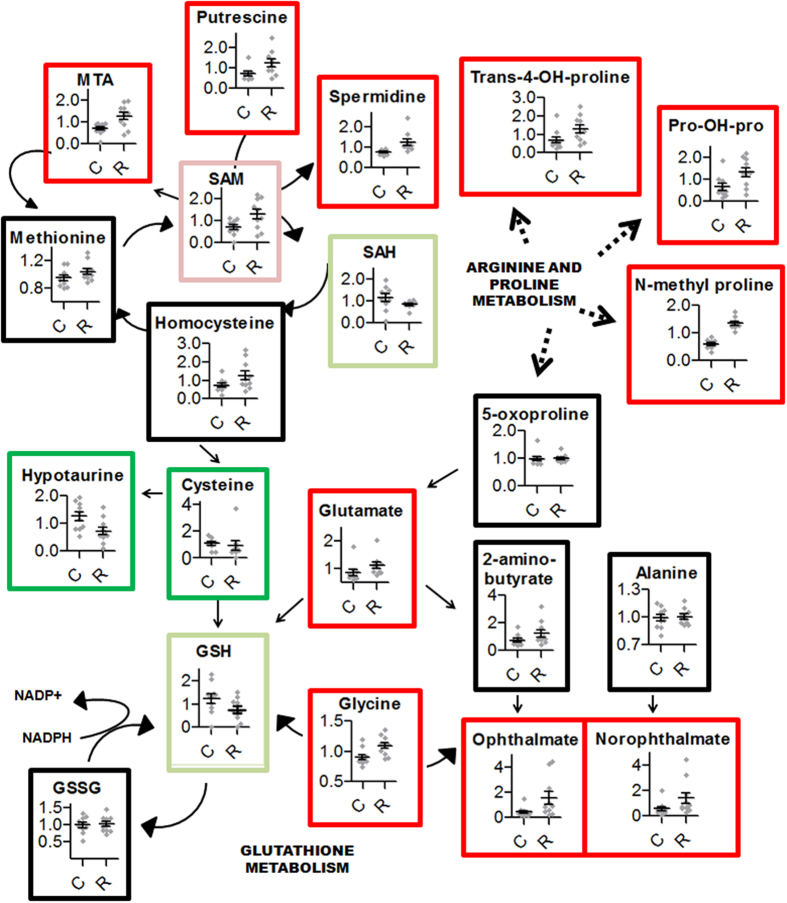
Levels of each metabolite from the metabolomics of livers from female rats receiving the herbicide Roundup in their drinking water (R) were subjected to a statistical analysis by comparison to controls (C) using a Mann-Whitney U test. A selection of metabolites showing a statistically significant increase (dark red) or decrease (dark green) and which are of potential biological relevance are shown. Some metabolites approaching the level of significance (p < 0.1) are shown by light red and light green frames.

Comment in

References

    1. Benbrook C. M. Trends in glyphosate herbicide use in the United States and globally. Environmental Sciences Europe 28, 1–15 (2016). - PMC - PubMed
    1. Bohn T. et al. Compositional differences in soybeans on the market: glyphosate accumulates in Roundup Ready GM soybeans. Food chemistry 153, 207–215 (2014). - PubMed
    1. EFSA. The 2011 European Union Report on Pesticide Residues in Food. EFSA J 12, 3694 (2014).
    1. Majewski M. S., Coupe R. H., Foreman W. T. & Capel P. D. Pesticides in Mississippi air and rain: a comparison between 1995 and 2007. Environ Toxicol Chem 33, 1283–1293 (2014). - PubMed
    1. Niemann L., Sieke C., Pfeil R. & Solecki R. A critical review of glyphosate findings in human urine samples and comparison with the exposure of operators and consumers. J. Verbr. Lebensm. 10, 3 (2015).

Publication types