


Stem Cell Transplantation for Peripheral Nerve Regeneration: Current Options and Opportunities
- PMID: 28067783
- PMCID: PMC5297728
- DOI: 10.3390/ijms18010094
Stem Cell Transplantation for Peripheral Nerve Regeneration: Current Options and Opportunities
Abstract
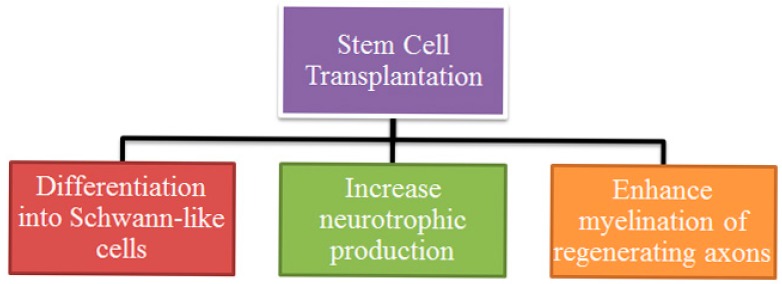
Peripheral nerve regeneration is a complicated process highlighted by Wallerian degeneration, axonal sprouting, and remyelination. Schwann cells play an integral role in multiple facets of nerve regeneration but obtaining Schwann cells for cell-based therapy is limited by the invasive nature of harvesting and donor site morbidity. Stem cell transplantation for peripheral nerve regeneration offers an alternative cell-based therapy with several regenerative benefits. Stem cells have the potential to differentiate into Schwann-like cells that recruit macrophages for removal of cellular debris. They also can secrete neurotrophic factors to promote axonal growth, and remyelination. Currently, various types of stem cell sources are being investigated for their application to peripheral nerve regeneration. This review highlights studies involving the stem cell types, the mechanisms of their action, methods of delivery to the injury site, and relevant pre-clinical or clinical data. The purpose of this article is to review the current point of view on the application of stem cell based strategy for peripheral nerve regeneration.
Keywords: peripheral nerve; regeneration; stem cells; transplantation.
Conflict of interest statement
The authors declare no conflict of interest.
Figures
References
Publication types
MeSH terms
Grants and funding
LinkOut - more resources
Full Text Sources
Other Literature Sources
Medical
