


The TGF-β/Smad4 Signaling Pathway in Pancreatic Carcinogenesis and Its Clinical Significance
- PMID: 28067794
- PMCID: PMC5294958
- DOI: 10.3390/jcm6010005
The TGF-β/Smad4 Signaling Pathway in Pancreatic Carcinogenesis and Its Clinical Significance
Abstract
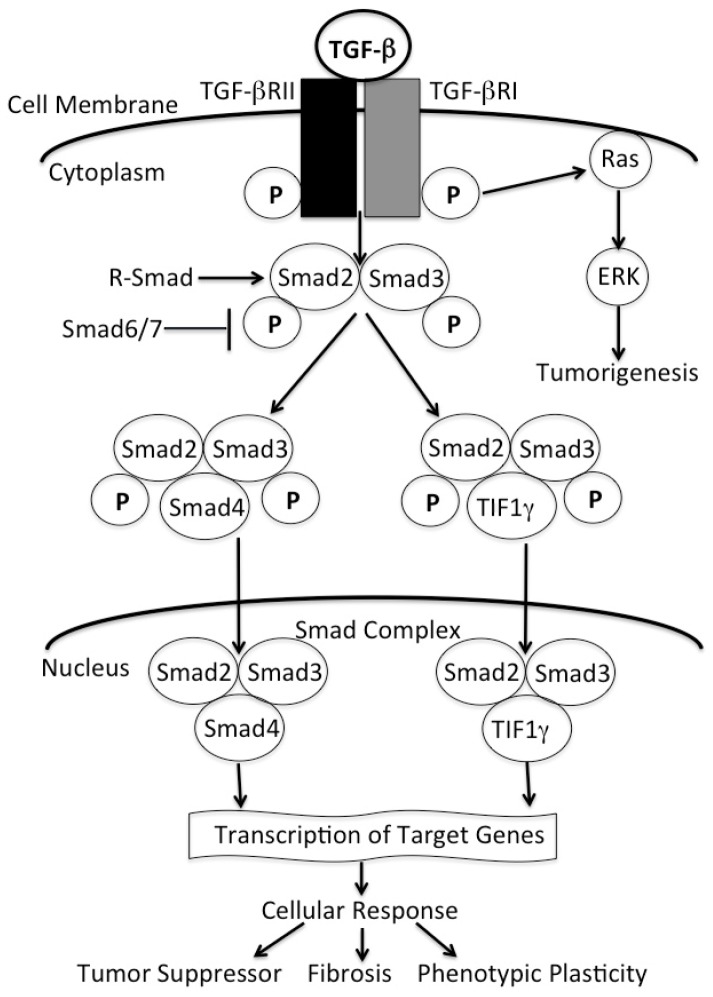
Pancreatic ductal adenocarcinoma (PDAC) is one of the most fatal human cancers due to its complicated genomic instability. PDAC frequently presents at an advanced stage with extensive metastasis, which portends a poor prognosis. The known risk factors associated with PDAC include advanced age, smoking, long-standing chronic pancreatitis, obesity, and diabetes. Its association with genomic and somatic mutations is the most important factor for its aggressiveness. The most common gene mutations associated with PDAC include KRas2, p16, TP53, and Smad4. Among these, Smad4 mutation is relatively specific and its inactivation is found in more than 50% of invasive pancreatic adenocarcinomas. Smad4 is a member of the Smad family of signal transducers and acts as a central mediator of transforming growth factor beta (TGF-β) signaling pathways. The TGF-β signaling pathway promotes many physiological processes, including cell growth, differentiation, proliferation, fibrosis, and scar formation. It also plays a major role in the development of tumors through induction of angiogenesis and immune suppression. In this review, we will discuss the molecular mechanism of TGF-β/Smad4 signaling in the pathogenesis of pancreatic adenocarcinoma and its clinical implication, particularly potential as a prognostic factor and a therapeutic target.
Keywords: Smad4; TGF-β; pancreatic ductal adenocarcinoma; prognosis; therapy.
Conflict of interest statement
The authors declare no conflict of interest.
Figures
References
-
- Kato Y., Inoue H., Yoshioka U., Fujiyama Y., Bamba T. Effects of transforming growth factor β1, interleukin-1β, tumor necrosis factor a and platelet-derived growth factor on the collagen synthesis and the proliferation of periacinal fibroblastoid cells isolated and cultured from rat pancreatic acini. Pathophysiology. 1999;3:175–179. doi: 10.1016/0928-4680(96)00012-0. - DOI
-
- Krzemień S., Knapczyk P. Current review on the role of transforming growth factor beta (TGF-beta) in some pathological disorders. Wiad. Lek. 2005;58:536–539. - PubMed
-
- Subramanian G., Schwarz R.E., Higgins L., McEnroe G., Chakravarty S., Dugar S., Reiss M. Targeting endogenous transforming growth factor beta receptor signaling in SMAD4-deficient human pancreatic carcinoma cells inhibits their invasive phenotype1. Cancer Res. 2004;64:5200–5211. doi: 10.1158/0008-5472.CAN-04-0018. - DOI - PubMed
Publication types
LinkOut - more resources
Full Text Sources
Other Literature Sources
Research Materials
Miscellaneous
