


Access to Accredited Cancer Hospitals Within Federal Exchange Plans Under the Affordable Care Act
- PMID: 28068172
- PMCID: PMC5455806
- DOI: 10.1200/JCO.2016.69.9835
Access to Accredited Cancer Hospitals Within Federal Exchange Plans Under the Affordable Care Act
Erratum in
-
Errata.J Clin Oncol. 2017 Jun 20;35(18):2100. doi: 10.1200/JCO.2017.74.0548. J Clin Oncol. 2017. PMID: 28618243 Free PMC article. No abstract available.
Abstract
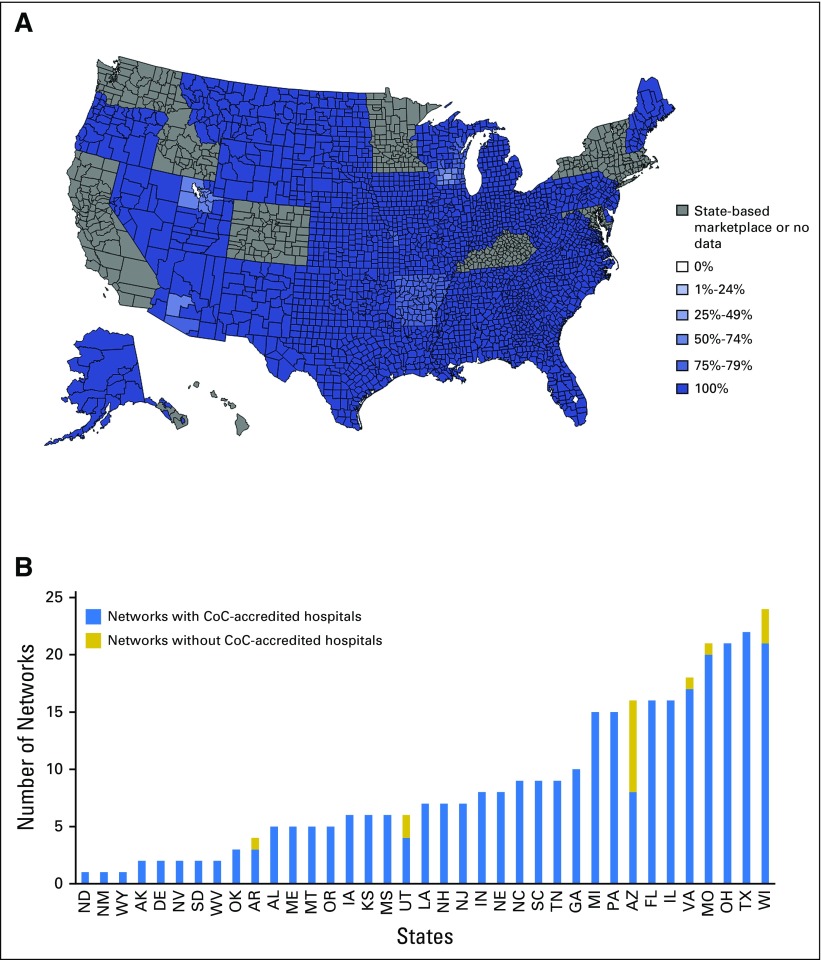
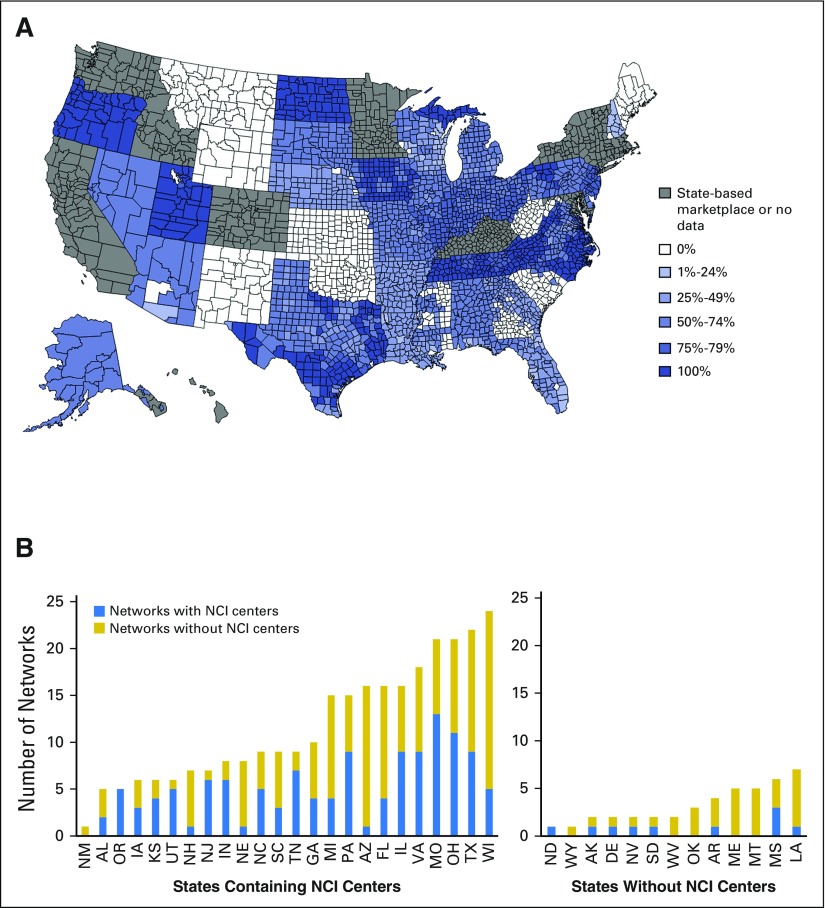
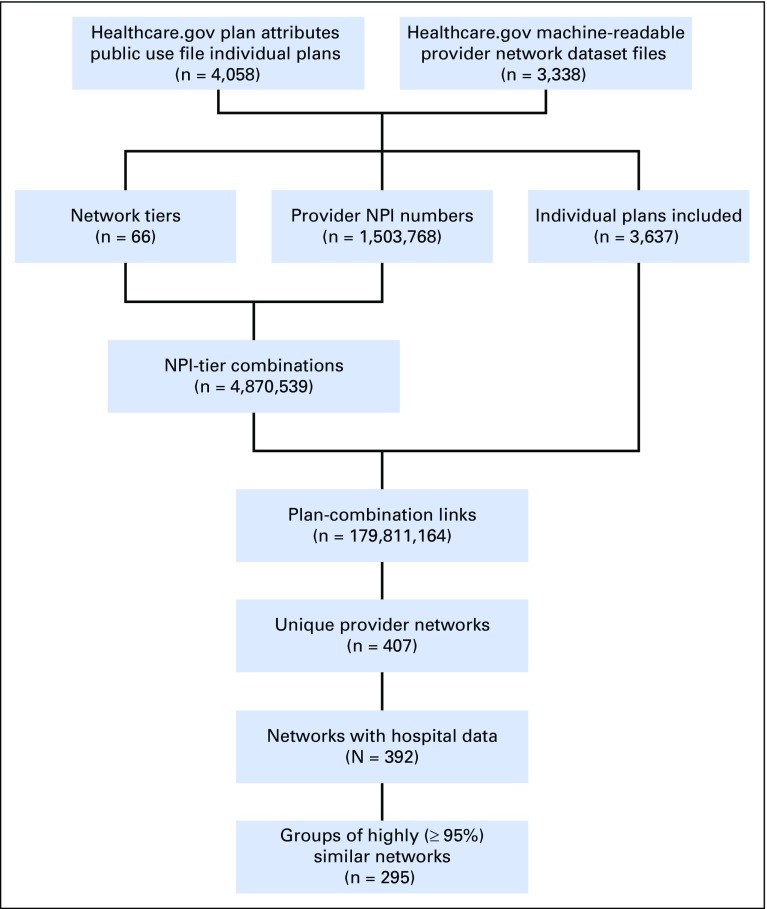
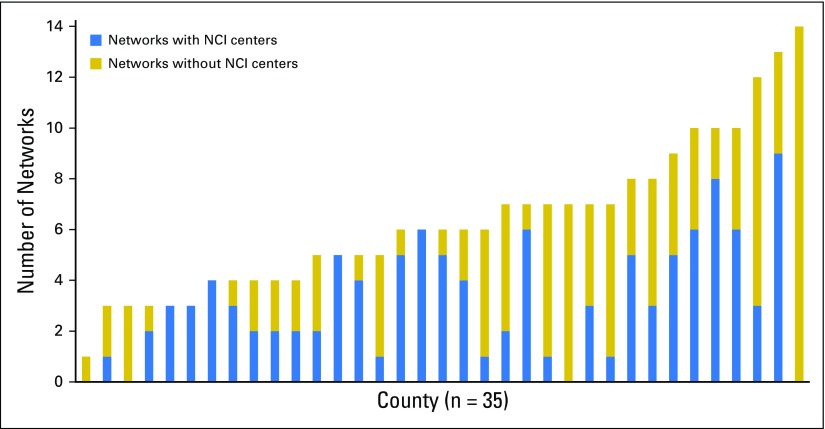
Purpose The Affordable Care Act expanded access to health insurance in the United States, but concerns have arisen about access to specialized cancer care within narrow provider networks. To characterize the scope and potential impact of this problem, we assessed rates of inclusion of Commission on Cancer (CoC) -accredited hospitals and National Cancer Institute (NCI) -designated cancer centers within federal exchange networks. Methods We downloaded publicly available machine-readable network data and public use files for individual federal exchange plans from the Centers for Medicare and Medicaid Services for the 2016 enrollment year. We linked this information to National Provider Identifier data, identified a set of distinct provider networks, and assessed the rates of inclusion of CoC-accredited hospitals and NCI-designated centers. We measured variation in these rates according to geography, plan type, and metal level. Results Of 4,058 unique individual plans, network data were available for 3,637 (90%); hospital information was available for 3,531 (87%). Provider lists for these plans reduced into 295 unique networks for analysis. Ninety-five percent of networks included at least one CoC-accredited hospital, but just 41% of networks included NCI-designated centers. States and counties each varied substantially in the proportion of networks listed that included NCI-designated centers (range, 0% to 100%). The proportion of networks that included NCI-designated centers also varied by plan type (range, 31% for health maintenance organizations to 49% for preferred provider organizations; P = .04) but not by metal level. Conclusion A large majority of federal exchange networks contain CoC-accredited hospitals, but most do not contain NCI-designated cancer centers. These results will inform policy regarding access to cancer care, and they reinforce the importance of promoting access to clinical trials and specialized care through community sites.
Figures
References
-
- Patient Protection and Affordable Care Act, 42 USC § 18001 (2010).
-
- Department of Health and Human Services Key Features of the Affordable Care Act by Year. http://www.hhs.gov/healthcare/facts/timeline/timeline-text.html
-
- Sommers BD, Musco T, Finegold K, et al. Health reform and changes in health insurance coverage in 2014. N Engl J Med. 2014;371:867–874. - PubMed
-
- Sommers BD, Gunja MZ, Finegold K, et al. Changes in self-reported insurance coverage, access to care, and health under the Affordable Care Act. JAMA. 2015;314:366–374. - PubMed
-
- Haeder SF, Weimer DL, Mukamel DB. Narrow networks and the Affordable Care Act. JAMA. 2015;314:669–670. - PubMed
MeSH terms
Grants and funding
LinkOut - more resources
Full Text Sources
Other Literature Sources
