


Head Injury as a Risk Factor for Dementia and Alzheimer's Disease: A Systematic Review and Meta-Analysis of 32 Observational Studies
- PMID: 28068405
- PMCID: PMC5221805
- DOI: 10.1371/journal.pone.0169650
Head Injury as a Risk Factor for Dementia and Alzheimer's Disease: A Systematic Review and Meta-Analysis of 32 Observational Studies
Abstract
Background: Head injury is reported to be associated with increased risks of dementia and Alzheimer's disease (AD) in many but not all the epidemiological studies. We conducted a systematic review and meta-analysis to estimate the relative effect of head injury on dementia and AD risks.
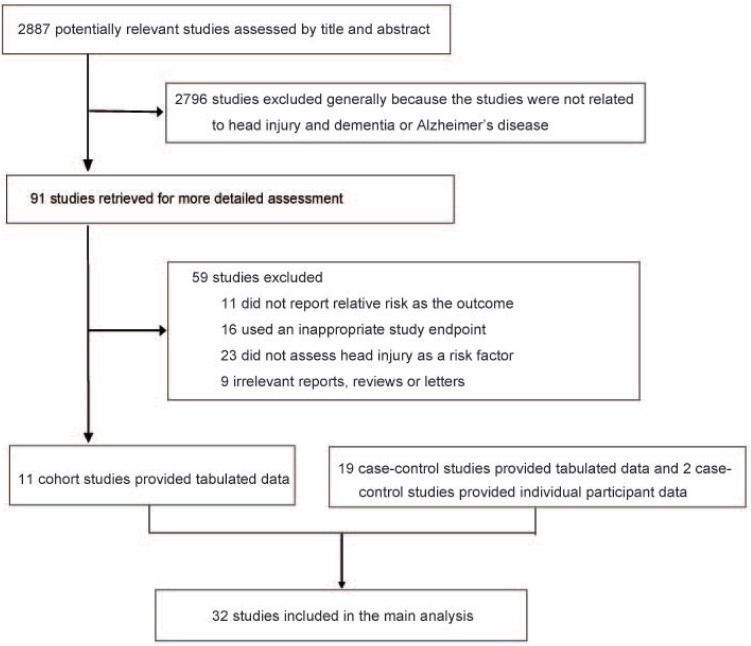
Methods: Relevant cohort and case-control studies published between Jan 1, 1990, and Mar 31, 2015 were searched in PubMed, Web of Science, Scopus, and ScienceDirect. We used the random-effect model in this meta-analysis to take into account heterogeneity among studies.
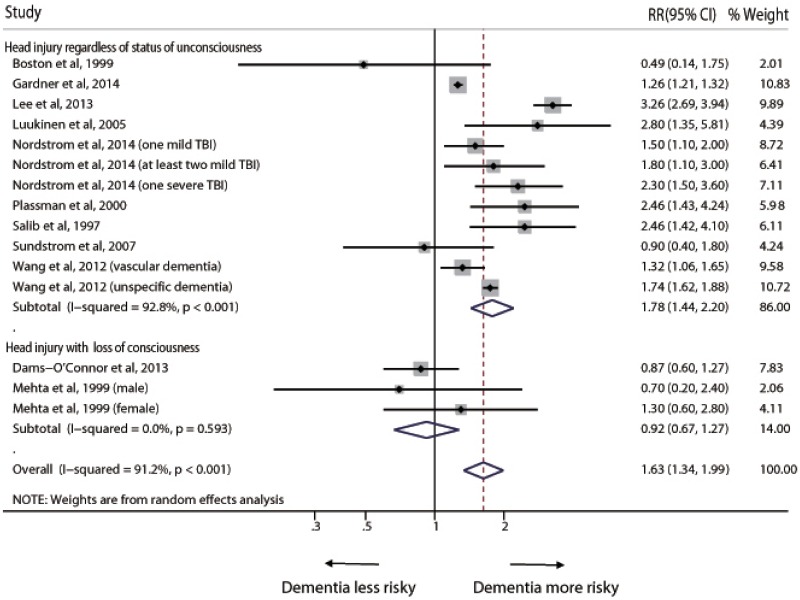
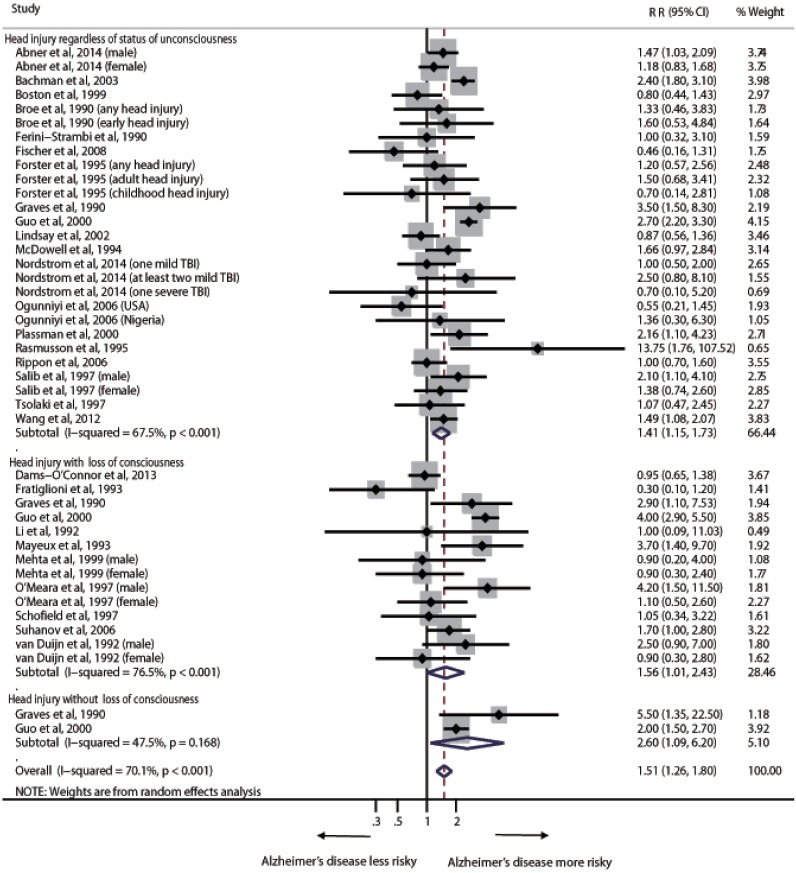
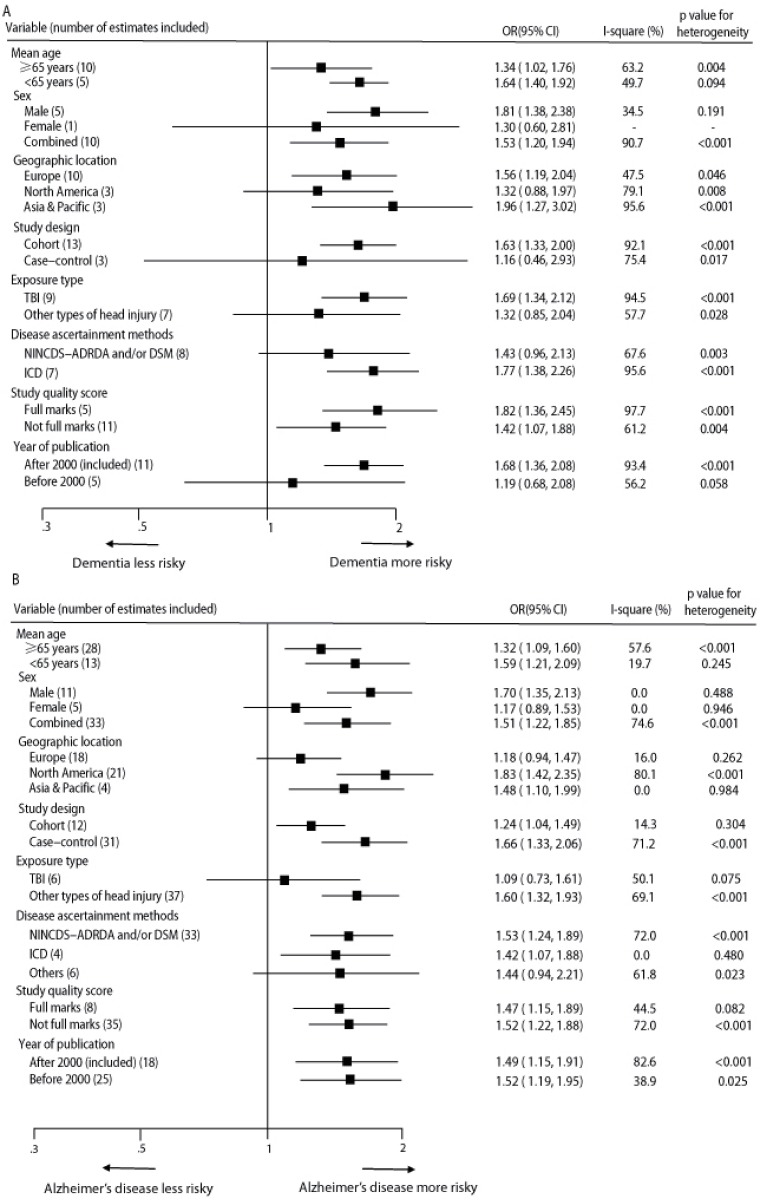
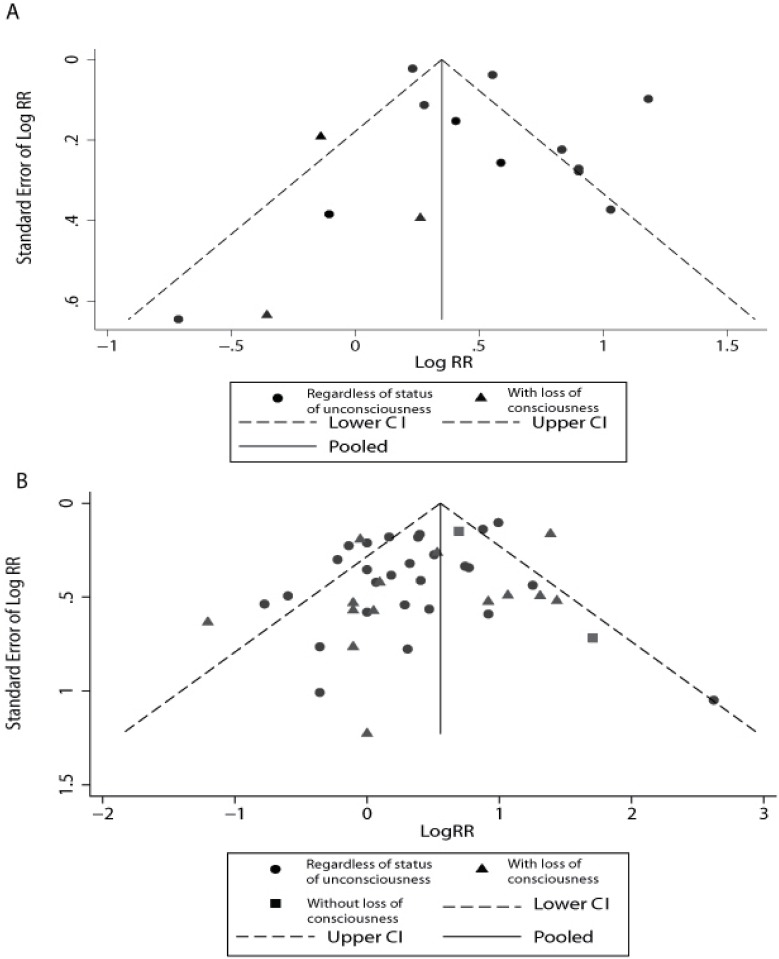
Results: Data from 32 studies, representing 2,013,197 individuals, 13,866 dementia events and 8,166 AD events, were included in the analysis. Overall, the pooled relative risk (RR) estimates showed that head injury significantly increased the risks of any dementia (RR = 1.63, 95% CI 1.34-1.99) and AD (RR = 1.51, 95% CI 1.26-1.80), with no evidence of publication bias. However, when considering the status of unconsciousness, head injury with loss of consciousness did not show significant association with dementia (RR = 0.92, 95% CI 0.67-1.27) and AD (RR = 1.49, 95% CI 0.91-2.43). Additionally, this positive association did not reach statistical significance in female participants.
Conclusions: The findings from this meta-analysis indicate that head injury is associated with increased risks of dementia and AD.
Conflict of interest statement
The authors have declared that no competing interests exist.
Figures
References
-
- Hyder AA, Wunderlich CA, Puvanachandra P, Gururaj G, Kobusingye OC. The impact of traumatic brain injuries: a global perspective. NeuroRehabilitation. 2007; 22 (5): 341–353. - PubMed
-
- Basso A, Previgliano I, Duarte JM, Ferrari N. Advances in management of neurosurgical trauma in different continents. World J Surg. 2001; 25 (9): 1174–1178. - PubMed
-
- Nemetz PN, Leibson C, Naessens JM, Beard M, Kokmen E, Annegers JF, et al. Traumatic brain injury and time to onset of Alzheimer's disease: a population-based study. Am J Epidemiol. 1999; 149 (1): 32–40. - PubMed
Publication types
MeSH terms
LinkOut - more resources
Full Text Sources
Other Literature Sources
Medical
