


Meat intake and risk of diverticulitis among men
- PMID: 28069830
- PMCID: PMC5533623
- DOI: 10.1136/gutjnl-2016-313082
Meat intake and risk of diverticulitis among men
Abstract
Objective: Diverticulitis is a common disease with a substantial clinical and economic burden. Besides dietary fibre, the role of other foods in the prevention of diverticulitis is underexplored.
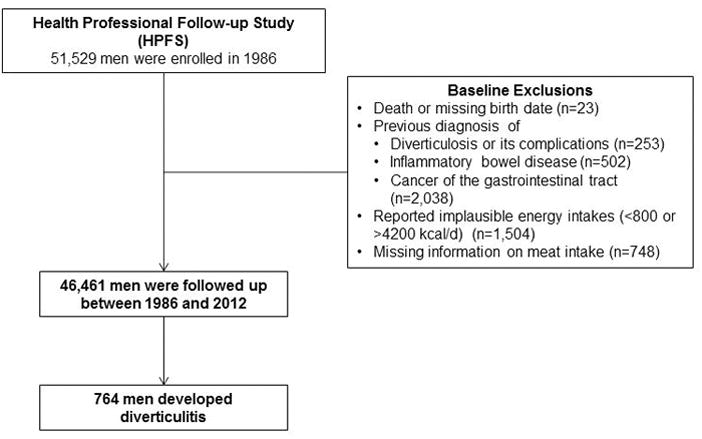
Design: We prospectively examined the association between consumption of meat (total red meat, red unprocessed meat, red processed meat, poultry and fish) with risk of incident diverticulitis among 46 461 men enrolled in the Health Professionals Follow-Up Study (1986-2012). Cox proportional hazards models were used to compute relative risks (RRs) and 95% CIs.
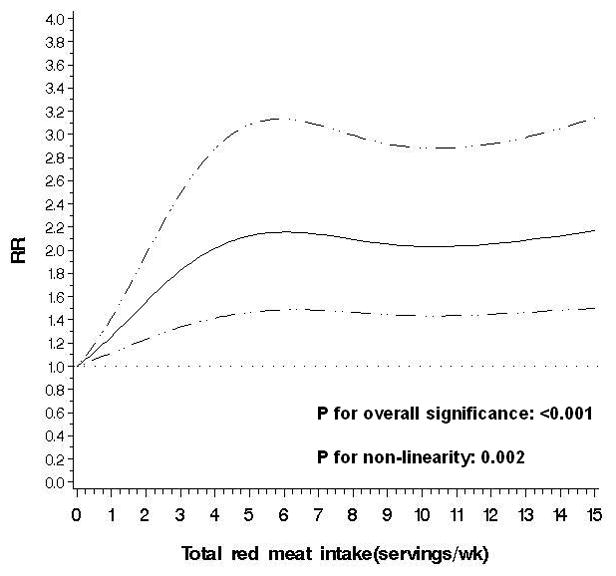
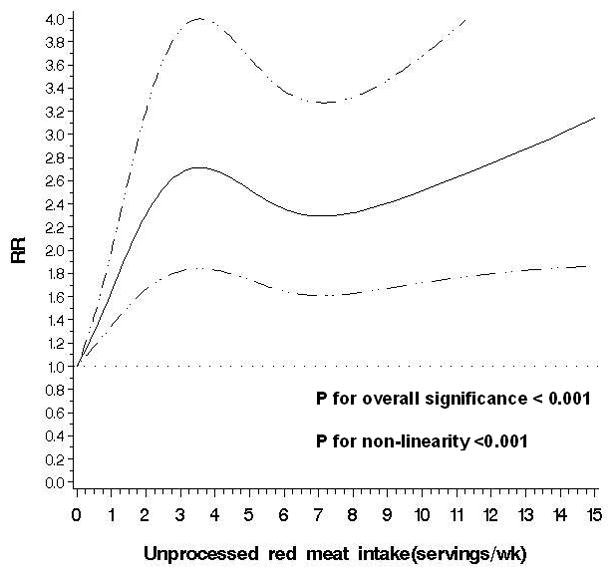
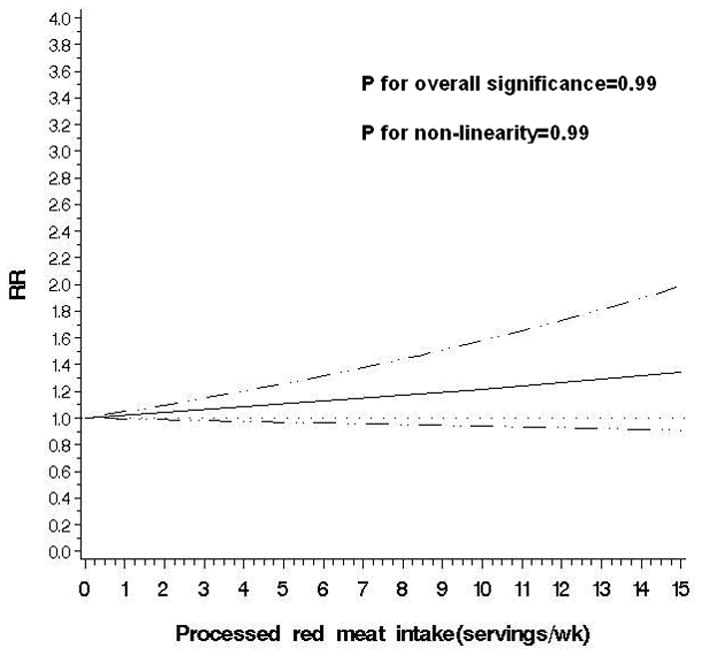
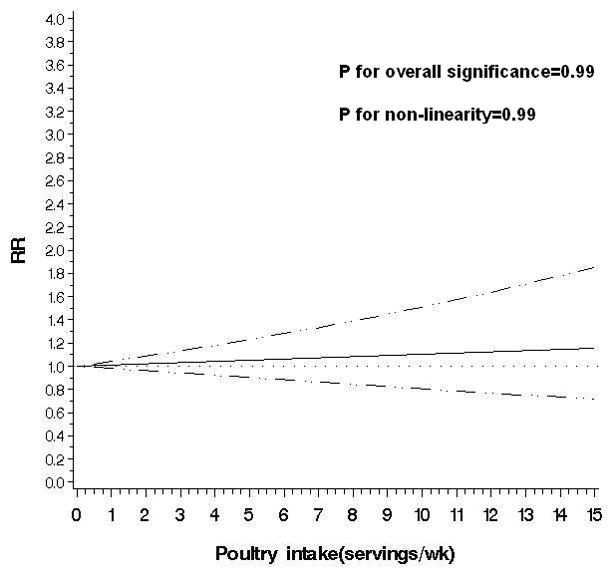
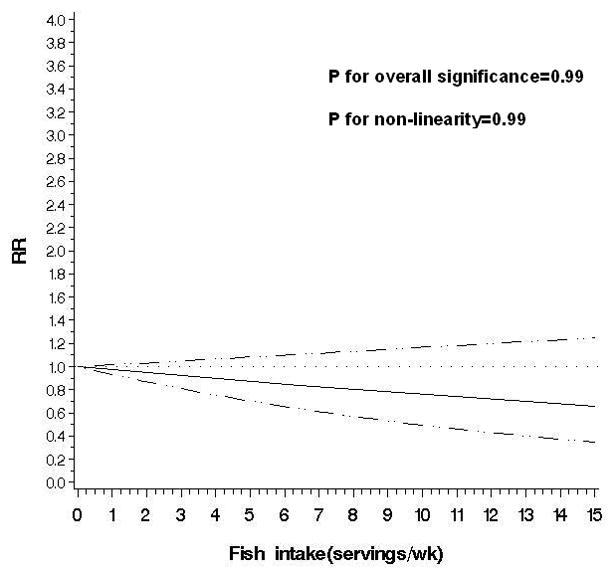
Results: During 651 970 person-years of follow-up, we documented 764 cases of incident diverticulitis. Compared with men in the lowest quintile (Q1) of total red meat consumption, men in the highest quintile (Q5) had a multivariable RR of 1.58 (95% CI 1.19 to 2.11; p for trend=0.01). The increase in risk was non-linear, plateauing after six servings per week (p for non-linearity=0.002). The association was stronger for unprocessed red meat (RR for Q5 vs Q1: 1.51; 95% CI 1.12 to 2.03; p for trend=0.03) than for processed red meat (RR for Q5 vs Q1: 1.03; 95% CI 0.78 to 1.35; p for trend=0.26). Higher consumption of poultry or fish was not associated with risk of diverticulitis. However, the substitution of poultry or fish for one serving of unprocessed red meat per day was associated with a decrease in risk of diverticulitis (multivariable RR 0.80; 95% CI 0.63 to 0.99).
Conclusions: Red meat intake, particularly unprocessed red meat, was associated with an increased risk of diverticulitis. The findings provide practical dietary guidance for patients at risk of diverticulitis.
Keywords: DIETARY FACTORS; DIVERTICULAR DISEASE; EPIDEMIOLOGY.
Published by the BMJ Publishing Group Limited. For permission to use (where not already granted under a licence) please go to http://www.bmj.com/company/products-services/rights-and-licensing/.
Conflict of interest statement
Competing interests: ATC previously served as a consultant for Bayer Healthcare, Aralaz Pharmaceuticals and Pfizer Inc. for work unrelated to the topic of this manuscript. This study was not funded by Bayer Healthcare, Pozen Aralez Pharmaceuticals or Pfizer Inc.
Figures
References
-
- Strate LL, Modi R, Cohen E, Spiegel BMR. Diverticular Disease as a Chronic Illness: Evolving Epidemiologic and Clinical Insights. American Journal of Gastroenterology. 2012;107:1486–93. - PubMed
Publication types
MeSH terms
Grants and funding
LinkOut - more resources
Full Text Sources
Other Literature Sources
Medical
