


Bacterial etiology of bloodstream infections and antimicrobial resistance in Dhaka, Bangladesh, 2005-2014
- PMID: 28070309
- PMCID: PMC5217397
- DOI: 10.1186/s13756-016-0162-z
Bacterial etiology of bloodstream infections and antimicrobial resistance in Dhaka, Bangladesh, 2005-2014
Abstract
Background: Bloodstream infections due to bacterial pathogens are a major cause of morbidity and mortality in Bangladesh and other developing countries. In these countries, most patients are treated empirically based on their clinical symptoms. Therefore, up to date etiological data for major pathogens causing bloodstream infections may play a positive role in better healthcare management. The aim of this study was to identify the bacterial pathogens causing major bloodstream infections in Dhaka, Bangladesh and determine their antibiotic susceptibility pattern.
Methods: From January 2005 to December 2014, a total of 103,679 single bottle blood samples were collected from both hospitalized and domiciliary patients attending Dhaka hospital, icddrb, Bangladesh All the blood samples were processed for culture using a BACT/Alert blood culture machine. Further identification of bacterial pathogens and their antimicrobial susceptibility test were performed using standard microbiological procedures.
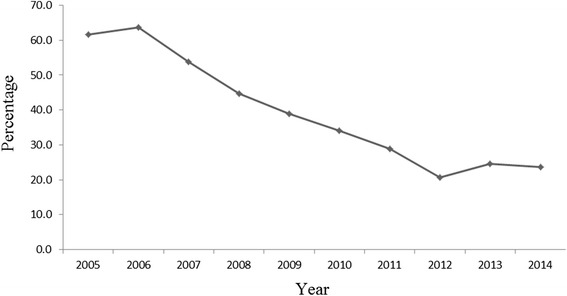
Results: Overall, 13.6% of the cultured blood samples were positive and Gram-negative (72.1%) bacteria were predominant throughout the study period. Salmonella Typhi was the most frequently isolated organism (36.9% of samples) in this study and a high percentage of those strains were multidrug-resistant (MDR). However, a decreasing trend in the S. Typhi isolation rate was observed and, noticeably, the percentage of MDR S. Typhi isolated declined sharply over the study period. An overall increase in the presence of Gram-positive bacteria was observed, but most significantly we observed the percentage of MDR Gram-positive bacteria to double over the study period. Overall, Gram positive bacteria were more resistant to most of the commonly used antibiotics than Gram-negative bacteria, but the MDR level was high in both groups.
Conclusions: This study identified the major bacterial pathogens involved with BSI in Dhaka, Bangladesh and also revealed their antibiotic susceptibility patterns. We expect our findings to help healthcare professionals to make informed decisions and provide better care for their patients. Also, we hope this study will assist researchers and policy makers to prioritize their research options to face the future challenges of infectious diseases.
Keywords: Antimicrobial resistance; BSI; Bangladesh; Bloodstream infection; Dhaka; Epidemiology; Gram-negative bacteria; Gram-positive bacteria; Multidrug-resistance (MDR).
Figures
References
LinkOut - more resources
Full Text Sources
Other Literature Sources
