Impact of birth weight and postnatal diet on the gut microbiota of young adult guinea pigs
- PMID: 28070463
- PMCID: PMC5214890
- DOI: 10.7717/peerj.2840
Impact of birth weight and postnatal diet on the gut microbiota of young adult guinea pigs
Abstract
Background: The gastrointestinal tract (GIT) microbiota is essential to metabolic health, and the prevalence of the Western diet (WD) high in fat and sugar is increasing, with evidence highlighting a negative interaction between the GIT and WD, resulting in liver dysfunction. Additionally, an adverse in utero environment such as placental insufficiency resulting in low birth weight (LBW) offspring, contributes to an increased risk of metabolic diseases such as fatty liver infiltration and liver dysfunction in later life. We sought to understand the potential interactive effects of exposure to a WD upon growing LBW offspring. We postulated that LBW offspring when challenged with a poor postnatal diet, would display an altered microbiota and more severe liver metabolic dysfunction.
Methods: The fecal microbiota of normal birth weight (NBW) and LBW young guinea pig offspring, weaned onto either a control diet (CD) or WD was determined with 16S rRNA gene next generation sequencing at young adulthood following the early rapid growth phase after weaning. A liver blood chemistry profile was also performed.
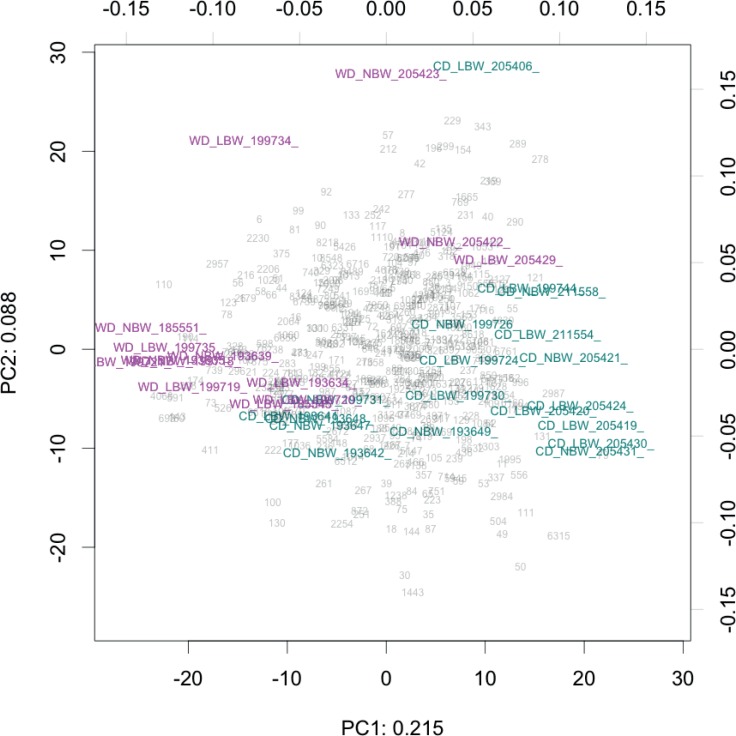
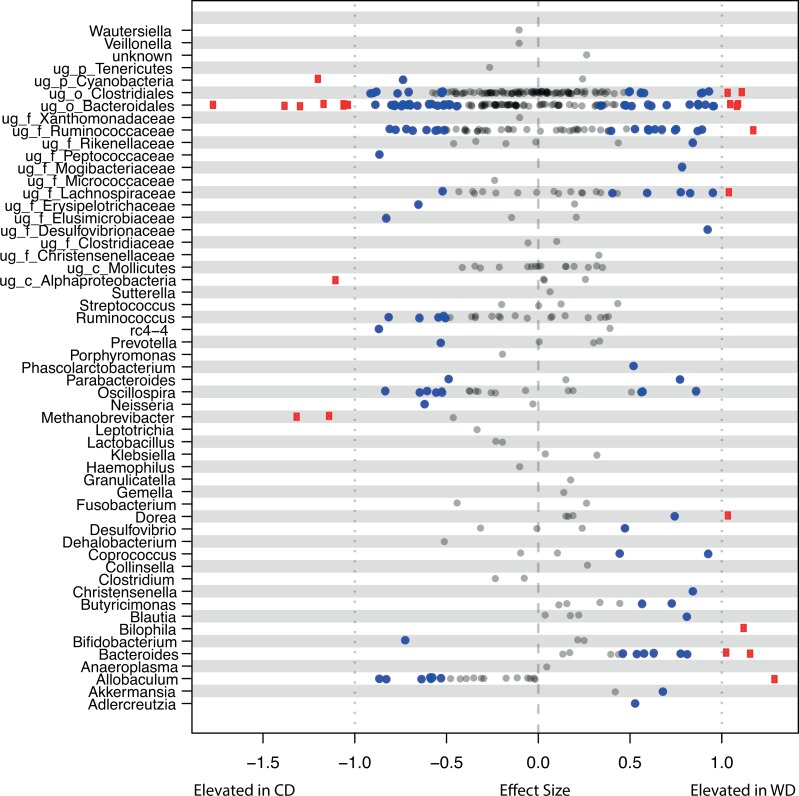
Results: The life-long consumption of WD following weaning into young adulthood resulted in increased total cholesterol, triglycerides and alanine aminotransferase levels in association with an altered GIT microbiota when compared to offspring consuming CD. Neither birth weight nor sex were associated with any significant changes in microbiota alpha diversity, by measuring the Shannon's diversity index. One hundred forty-eight operational taxonomic units were statistically distinct between the diet groups, independent of birth weight. In the WD group, significant decreases were detected in Barnesiella, Methanobrevibacter smithii and relatives of Oscillospira guillermondii, while Butyricimonas and Bacteroides spp. were increased.
Discussion: These results describe the GIT microbiota in a guinea pig model of LBW and WD associated metabolic syndrome and highlight several WD specific GIT alterations associated with human metabolic disease.
Keywords: Microbiome.
Conflict of interest statement
The authors declare there are no competing interests.
Figures
References
-
- Angulo P, Keach JC, Batts KP, Lindor KD. Independent predictors of liver fibrosis in patients with nonalcoholic steatohepatitis. Hepatology. 1999;30:1356–1362. - PubMed
-
- Barker DJP, Hales CN, Fall CHD, Osmond C, Phipps K, Clark PMS. Type 2 (non-insulin-dependent) diabetes mellitus, hypertension and hyperlipidaemia (syndrome X): relation to reduced fetal growth. Diabetologia. 1993;36:62–67. - PubMed
LinkOut - more resources
Full Text Sources
Other Literature Sources
Miscellaneous