Review
. 2016 Oct 2:7:41-54.
doi: 10.1016/j.bbacli.2016.09.003. eCollection 2017 Jun.

Metabolic relationship between diabetes and Alzheimer's Disease affected by Cyclo(His-Pro) plus zinc treatment

Affiliations
Review

Metabolic relationship between diabetes and Alzheimer's Disease affected by Cyclo(His-Pro) plus zinc treatment

Moon K Song et al. BBA Clin. .

Abstract

Background: Association of Alzheimer's Disease (AD) with Type 2 Diabetes (T2D) has been well established. Cyclo(His-Pro) plus zinc (Cyclo-Z) treatment ameliorated diabetes in rats and similar improvements have been seen in human patients. Treatment of amyloid precursor protein (APP) transgenic mice with Cyclo-Z exhibited memory improvements and significantly reduced Aβ-40 and Aβ-42 protein levels in the brain tissues of the mice.

Scope of review: Metabolic relationship between AD and T2D will be described with particular attention to insulin sensitivity and Aβ degradation in brain and plasma tissues. Mechanistic effect of insulin degrading enzyme (IDE) in decreasing blood glucose and brain Aβ levels will be elucidated. Cyclo-Z effects on these biochemical parameters will be discussed.

Major conclusion: Stimulation of IDE synthesis is effective for the clinical treatment of metabolic diseases including AD and T2D.

General significance: Cyclo-Z might be the effective treatment of AD and T2D by stimulating IDE synthesis.

Keywords: Alzheimer's Disease; Cyclo(His-Pro); Diabetes; Insulin degrading enzyme; Metabolic disease; Zinc.


Figures
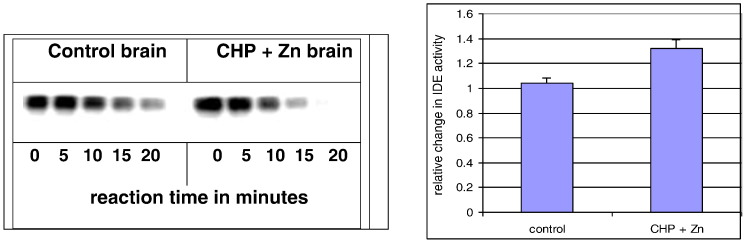
Fig. 1
Fig. 1
Enzymatic activity on insulin degradation in Cyclo-Z treated mouse brain. To understand the mechanisms by which Cyclo-Z affects insulin sensitivity, we tested the effects of adding 10 mg zinc plus 1.0 mg CHP/L to the drinking water on IDE activity in the brain tissues of APP transgenic mice. IDE in the cytosol of brain samples from control animals requires more than 20 min to degrade radiolabeled insulin whereas the cytosol from Cyclo-Z treated animals degraded 100% of the insulin within 15 min (left). This is approximately a 30% enhancement of IDE activity by Cyclo-Z therapy (right) (n = 6). IDE is the only known enzyme that can digest both insulin and amyloid protein; and since zinc is an integral part of IDE, it is absolutely required for IDE enzyme activity. Hence, Fig. 1 supports the hypothesis that Cyclo-Z treatment may ameliorate diabetes by increasing IDE synthesis in muscle or brain cells.
Fig. 2
Fig. 2
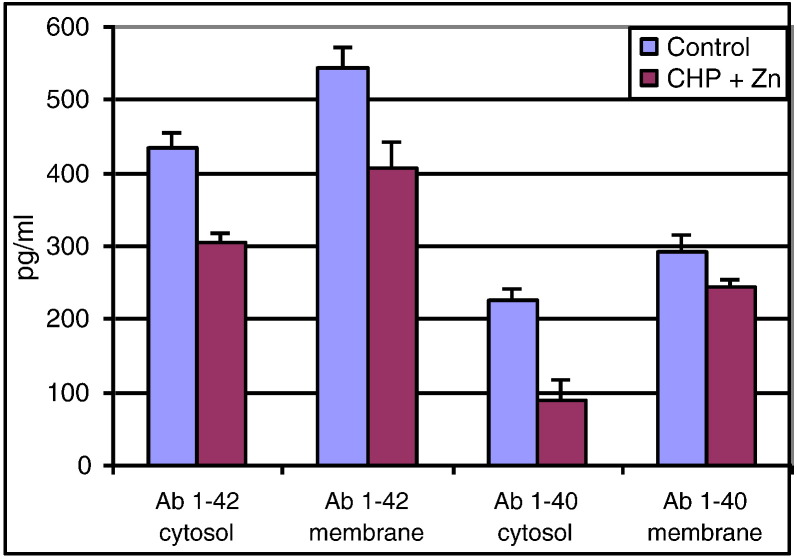
Levels of Aβ 1–40 and 1–42 in brain cytosol and membrane fractions in Cyclo(His-Pro) (CHP) plus zinc treated mouse brain. Brain fractions were analyzed for levels of Aβ 1–40 and 1–42 by ELISA after treatment with CHP + zinc or control (n = 6 mice per group). These studies demonstrate that CHP plus zinc treatment with 1.0 mg/ml CHP and 10 mg/L Zn in their drinking water for 5 weeks decreases Aβ 1–40 and 1–42 levels in transgenic mice expressing human APP. CHP plus zinc treatment caused a 60% reduction in cytosolic Aβ 1–40 and a 25% reduction in Aβ 1–42 over this time period.
Fig. 3
Fig. 3
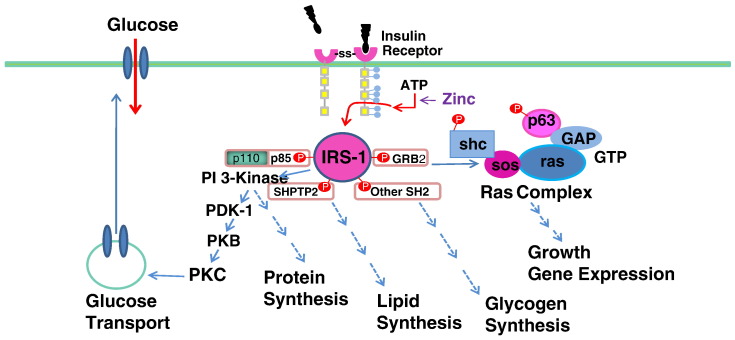
Signaling pathways involved in insulin-dependent glucose uptake, gene expression, or enzyme synthesis. Circulating insulin secreted by pancreatic B-cells first binds to the insulin receptor α-subunit at the cell membrane surface followed by signaling to the β-subunit which is auto-phosphorylated. In the absence of insulin treatment, zinc will activate ATP to phosphorylate the β-subunit of the receptor. Then, the β-subunit of the receptor will also be auto-phosphorylated. The phosphorylated insulin receptor initiates a cascade of phosphorylation events: Receptor Subunit-1 (IRS-1); phosphoinositol 3′-kinase (PI 3′-kinase); 3-phophoinositide-dependent protein kinase-1 (PDK-1); protein kinase B (Akt/PKB); atypical Protein kinase C (PKC). This cascade activates glucose transporter synthesis and/or translocation.
Fig. 4
Fig. 4
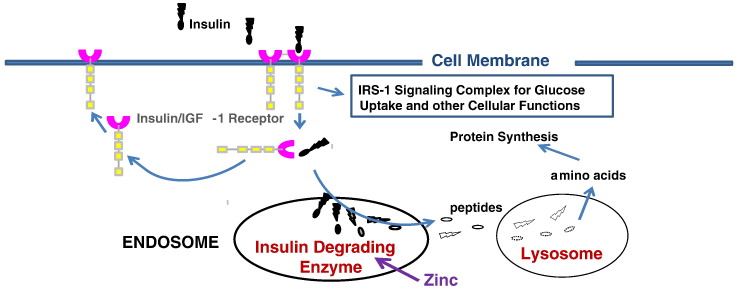
Cytosolic degradation of insulin. After the insulin-receptor mediated signal transduction process is initiated, the inactive cellular insulin must be degraded in the endosome by insulin degrading enzyme (IDE). The degraded insulin fragments will be completely digested into amino acids through lysosomal proteases like Cathepsin D. IDE levels in the cytosol are reduced in diabetic subjects probably due to zinc deficiency.
Fig. 5
Fig. 5
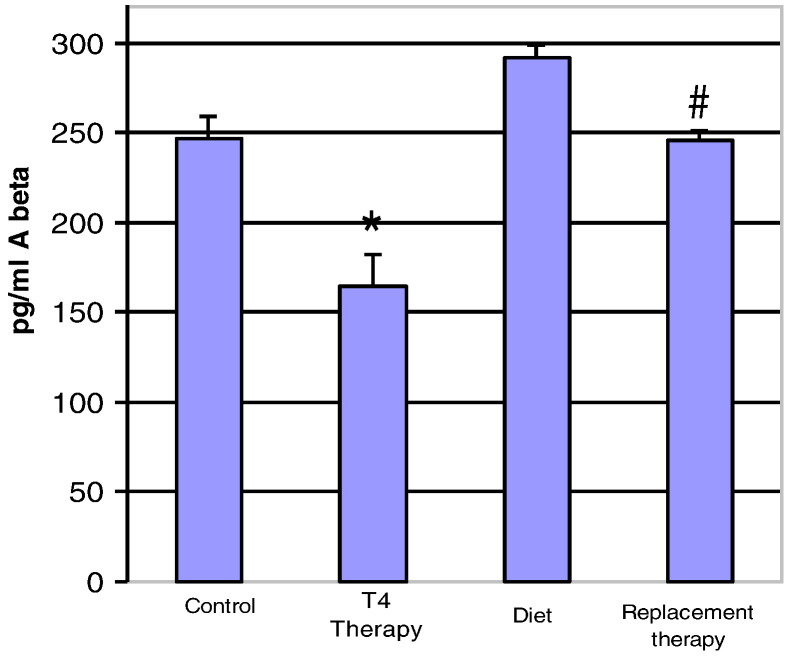
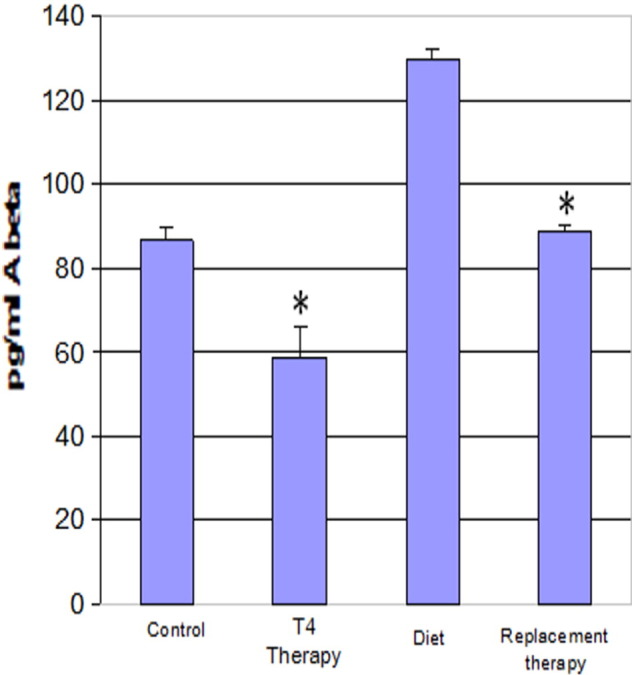
Aβ 1–42 levels in hyperthyroid and hypothyroid mouse brain. Mice were first made hypothyroid for three weeks with an iodine-deficient PTU diet, and then replaced with T4 to reverse hypothyroidism. *P < 0.05: Aβ levels in T4 treated mice were compared to controls. #P < 0.05: T4 replaced mice in hypothyroid animals were compared to non-treated hypothyroid animals.
Fig. 6
Fig. 6
Aβ 1–40 levels in Hyperthyroid and Hypothyroid Mouse Brain. *P < 0.05: Aβ levels in T4 treated mice were compared to controls. #P < 0.05: T4 replaced mice in hypothyroid animals were compared to non-treated hypothyroid animals.
Fig. 7
Fig. 7
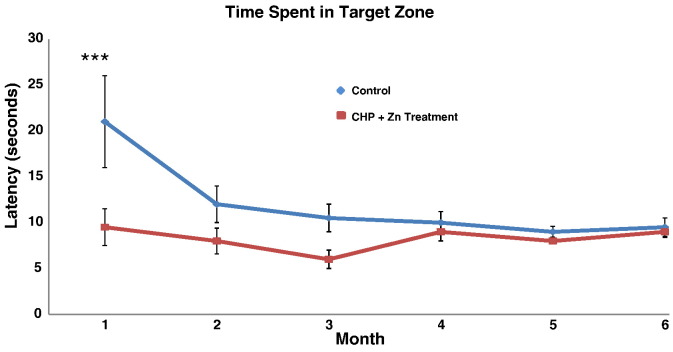
CHP plus zinc treatment enhances spatial memory in huAPP transgenic mice. HuAPP transgenic mice (9 months of age) were divided into 2 groups of 3 animals each and treated as follows: control group, animals were given access to H2O alone ad libitum; CHP plus zinc group, animals were given access to 1.0 mg/L CHP + 10 mg/L Zn in H2O ad libitum. Once a month, the animals were subjected to the Morris Water Maze to measure the time it took for the animal to find the platform. Very significant improvement in spatial memory is seen in one month in the CHP plus zinc treated mice. ***P < 0.001 for average ± SEM between CHP plus zinc treatment group and control group by Tukey multiple comparison statistical tests.
Fig. 8
Fig. 8
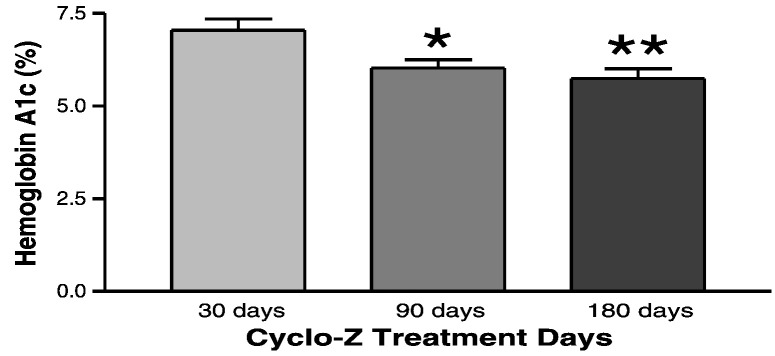
CHP plus zinc treatment decreases Hemoglobin A1 levels in diabetic subjects. In a small scale clinical trial, diabetic patients (n = 18) were treated with CHP plus zinc and Hemoglobin A1 (HbA1c) levels were determined at 30, 90, and 180 days. Significant reduction in HbA1c levels are seen at 90 and 180 days in patients treated with CHP plus zinc. *P < 0.05; **P < 0.01 vs. 30 days.
Fig. 9
Fig. 9
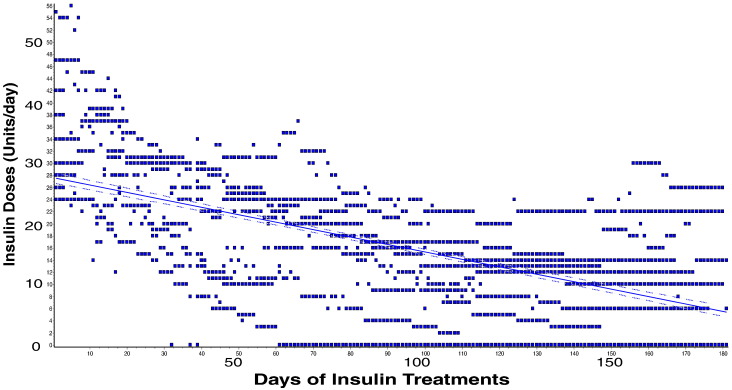
CHP plus zinc treatment decreases required insulin doses needed to stabilize glucose levels in diabetic subjects. Diabetic patients (n = 18) treated with CHP plus zinc for 180 days required significantly less insulin daily to maintain healthy levels of glucose. The decreasing rate of total insulin injection per day was − 0.1126 ± 0.0042 units/day. P < 0.0001.

References

    1. Fischer R., Maier O. Interrelation of oxidative stress and inflammation in neurodegenerative diseases: role of TNF. Oxidative Med. Cell. Longev. Feb 2015:1–18. ID 610813. - PMC - PubMed
    1. Hebert L.E., Weuve J., Scherr P.A., Evans D.L. Alzheimer's disease in the United States (2010–2050) estimated using 2010 census. Neurology. May 2013;80(19):1778–1783. - PMC - PubMed
    1. Prince M., Bryce R., Albanese E., Wimo A., Ribeiro W., Ferri C.P. The global prevalence of dementia: a systematic review and meta analysis. Alzheimers Dement. Jan 2013;9(1):63–75. - PubMed
    1. http://www.alzheimers.net/resources/alzheimers-statistics
    1. NCD Risk Factor Collaboration Members Lancet. April 2016;387:1513–1530. - PubMed