. 2017 Jan 10;12(1):e0169544.
doi: 10.1371/journal.pone.0169544. eCollection 2017.

p-Cymene Promotes Its Catabolism through the p-Cymene and the p-Cumate Pathways, Activates a Stress Response and Reduces the Biofilm Formation in Burkholderia xenovorans LB400

Affiliations

p-Cymene Promotes Its Catabolism through the p-Cymene and the p-Cumate Pathways, Activates a Stress Response and Reduces the Biofilm Formation in Burkholderia xenovorans LB400

Loreine Agulló et al. PLoS One. .

Abstract

p-Cymene is an aromatic terpene that is present in diverse plant species. The aims of this study were to study the p-cymene metabolism in the model aromatic-degrading bacterium Burkholderia xenovorans LB400, and its response to p-cymene. The catabolic p-cymene (cym) and p-cumate (cmt) genes are clustered on the LB400 major chromosome. B. xenovorans LB400 was able to grow on p-cymene as well as on p-cumate as a sole carbon and energy sources. LB400 growth attained higher cell concentration at stationary phase on p-cumate than on p-cymene. The transcription of the key cymAb and cmtAb genes, and p-cumate dioxygenase activity were observed in LB400 cells grown on p-cymene and on p-cumate, but not in glucose-grown cells. Diverse changes on LB400 proteome were observed in p-cymene-grown cells compared to glucose-grown cells. An increase of the molecular chaperones DnaK, GroEL and ClpB, the organic hydroperoxide resistance protein Ohr, the alkyl hydroperoxide reductase AhpC and the copper oxidase CopA during growth on p-cymene strongly suggests that the exposure to p-cymene constitutes a stress condition for strain LB400. Diverse proteins of the energy metabolism such as enolase, pyruvate kinase, aconitase AcnA, succinyl-CoA synthetase beta subunit and ATP synthase beta subunit were induced by p-cymene. Electron microscopy showed that p-cymene-grown cells exhibited fuzzy outer and inner membranes and an increased periplasm. p-Cymene induced diverse membrane and transport proteins including the p-cymene transporter CymD. Biofilm formation was reduced during growth in p-cymene in strain LB400 compared to glucose-grown cells that may be associated with a decrease of diguanylate cyclase protein levels. Overall, these results indicate active p-cymene and p-cumate catabolic pathways in B. xenovorans LB400. In addition, this study showed that p-cymene activated a stress response in strain LB400 and reduced its biofilm formation.


Conflict of interest statement

The authors have declared that no competing interests exist.

Figures
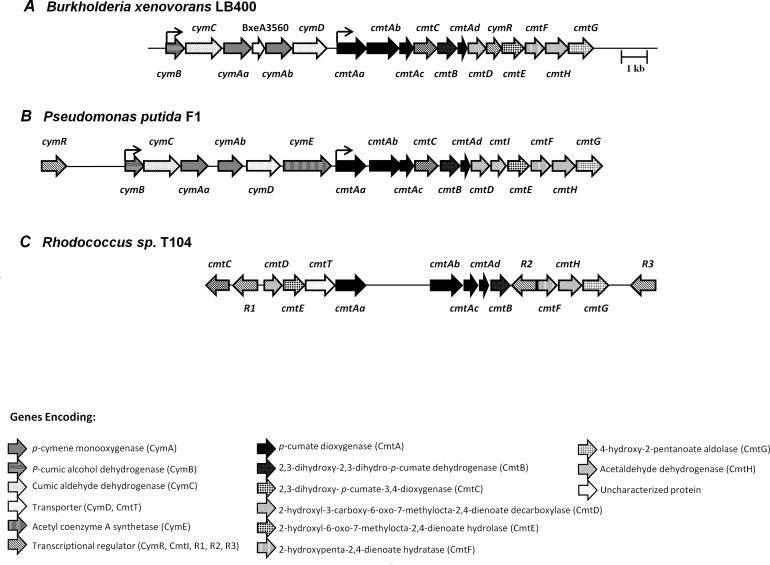
Fig 1
Fig 1. Organization of the genes encoding the p-cymene peripheral and the 2,3-dihydroxy-p-cumate central pathways in B. xenovorans LB400 and comparison with related bacterial gene clusters.
Organization of genes encoding the p-cymene, p-cumate and the 2,3-dihydroxy-p-cumate pathways in Burkholderia xenovorans LB400 (A), Pseudomonas putida F1 (B) and Rhodococcus sp. T104 (C). The cym genes encode proteins from the p-cymene catabolic pathway, and the cmt genes encode proteins from the p-cumate and 2,3-dihydroxy-p-cumate catabolic pathways.
Fig 2
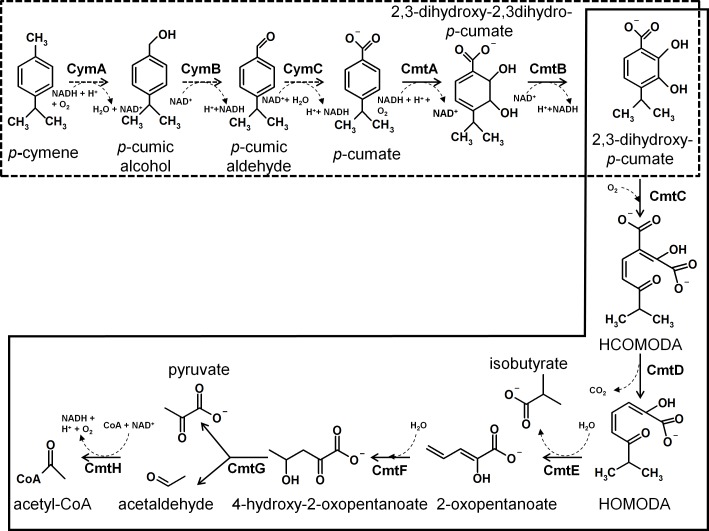
Fig 2. Model of p-cymene and 2,3-dihydroxy-p-cumate catabolic pathways in B. xenovorans LB400.
The box with dotted border indicates the p-cymene peripheral pathway, which converts p-cymene into 2,3-dihydroxy-p-cumate. The substrate is p-cymene and the products are p-cumic alcohol, p-cumic aldehyde, p-cumate, 2,3-dihydroxy-2,3dihydro-p-cumate and 2,3-dihydroxy-p-cumate. The enzymes are CymA (p-cymene monooxygenase), CymB (p-cumic alcohol dehydrogenase) CymC (p-cumic aldehyde dehydrogenase), CmtA (p-cumate dioxygenase) and CmtB (2,3-dihydroxy-2,3-dihydro-p-cumate dehydrogenase). The reactions of the 2,3-dihydroxy-p-cumate central pathway are presented in a box with continuous border. The substrate is 2,3-dihydroxy-p-cumate and the final products are isobutyrate, pyruvate and acetyl-CoA. The enzymes are CmtC (2,3-dihydroxy-p-cumate-3,4-dioxygenase), CmtD (2-hydroxy-3-carboxy-6-oxo-7-methylocta-2,4-dienoate decarboxylase), CmtE (2-hydroxy-6-oxo-7-methylocta-2,4-dienoate hydrolase), CmtF (2-hydroxypenta-2,4-dienoate hydratase), CmtG (4-hydroxy-2-pentanoate aldolase) and CmtH (acetaldehyde dehydrogenase).
Fig 3
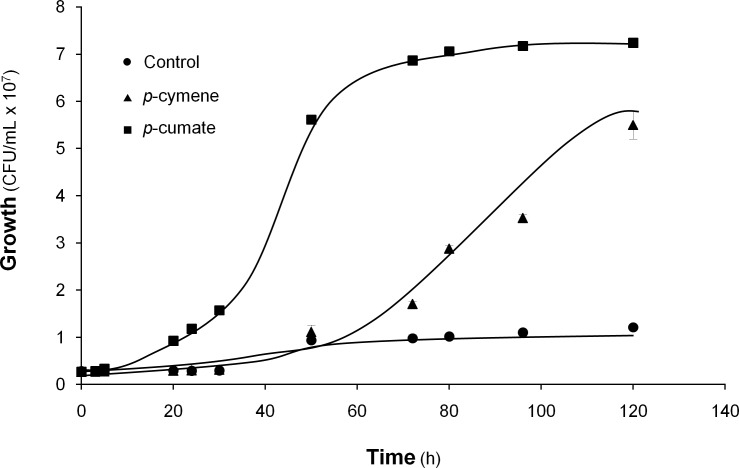
Fig 3. Growth of B. xenovorans LB400 on p-cymene and p-cumate.
LB400 cells were grown in M9 medium using p-cymene (vapor phase) or p-cumate (5 mM) as the sole carbon and energy source. Cells without carbon source were used as control. CFU/mL values were calculated as the mean ± SD of at least three independent experiments.
Fig 4
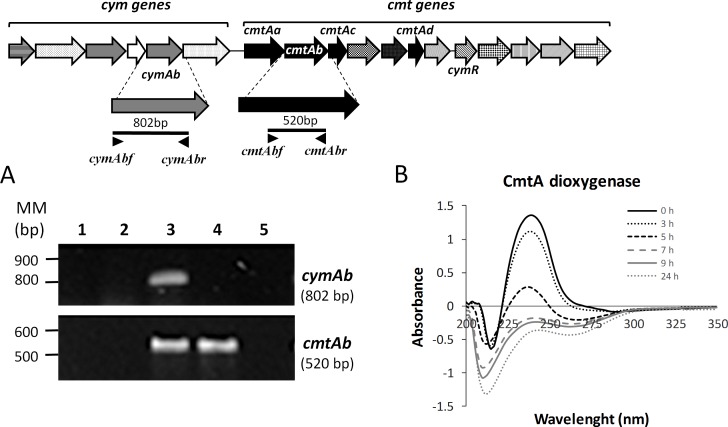
Fig 4. Expression of the cymAb and cmtAb genes during LB400 growth on p-cymene and p-cumate, and activity of p-cumate dioxygenase.
(A) Expression of cymAb and cmtAb genes during LB400 growth on p-cymene and p-cumate. Expression of cymAb (BxeA3559) and cmtAb (BxeA3556) genes in LB400 cells grown in glucose (lane 1), succinate (lane 2), p-cymene (lane 3), p-cumate (lane 4) and p-cymene plus succinate (lane 5). RT-PCR assays were performed using RNA from LB400 cells collected at exponential growth phase. The expression of 16S rRNA was used as a control to normalize across samples. At least three independent RNA samples were collected at each condition and two independent RT-PCR reactions for each sample were done to assess reproducibility. (B) Activity of the p-cumate dioxygenase CmtA in LB400 cells. LB400 cells grown overnight in LB medium and washed with M9 medium were incubated with 2.5 mM p-cumate and 0.3% lactate. Absorbance values are the mean ± SD of at least three independent experiments.
Fig 5
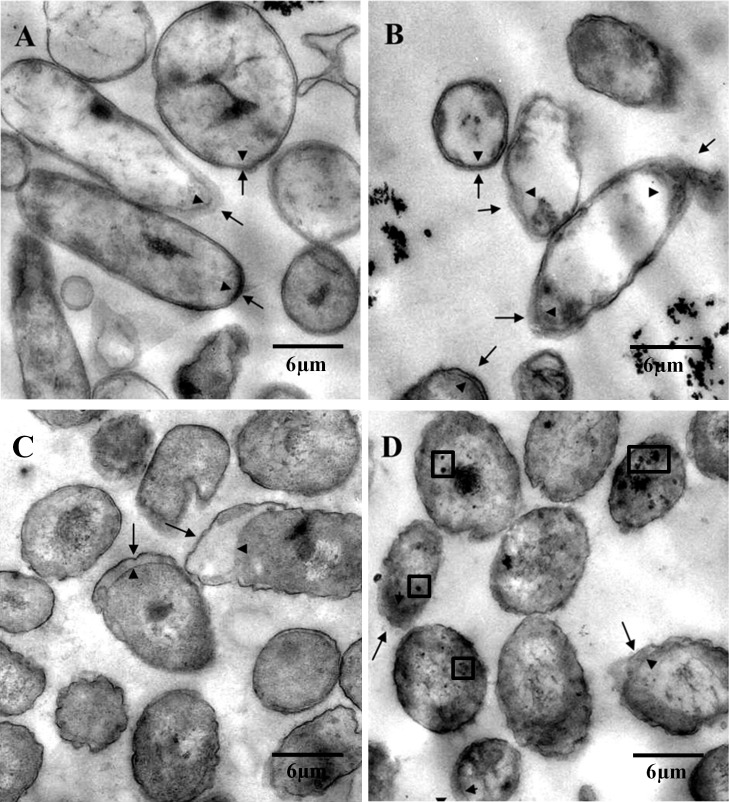
Fig 5. Effects of growth on p-cymene and p-cumate on the cell morphology of B. xenovorans LB400.
Cells were grown in M9 minimal medium using succinate (A), p-cumate (B), p-cymene (C), and succinate plus p-cymene (D) as sole carbon and energy sources. Arrows and arrowheads indicate the outer and the inner membrane, respectively. Some internal granules are indicated within boxes. The micrographs shown were representative and selected from, at least, 10 fields.
Fig 6
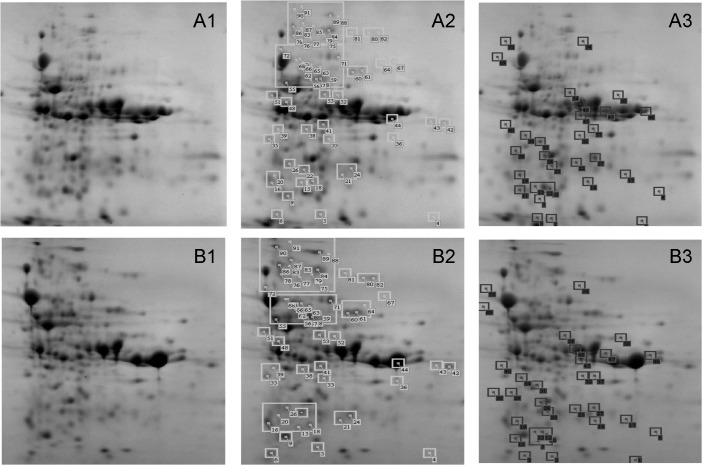
Fig 6. Effects of p-cymene on the proteome of B. xenovorans LB400.
Total protein pattern of LB400 cells grown in M9 medium using glucose (A1) and p-cymene (B1) as sole carbon and energy sources. Induced proteins in p-cymene-grown cells on the total protein pattern of strain LB400 grown in glucose (A2) and p-cymene (B2) are boxed. Proteins repressed in p-cymene-grown cells on the total protein pattern of strain LB400 grown in glucose (A3) and p-cymene (B3) are boxed. The gels depicted are representative of at least three biological replicates and at least six 2-DE gels.
Fig 7
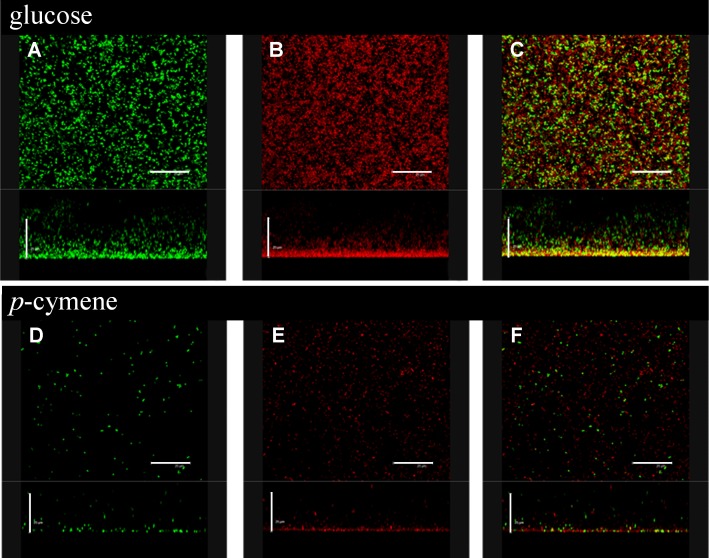
Fig 7. Effect of p-cymene on biofilm formation by B. xenovorans LB400.
Cells were grown in M9 medium using glucose or p-cymene as sole carbon source until exponential phase (Turbidity600nm = 0.6) and washed were resuspended in M9 medium supplemented with glucose (5 mM) or p-cymene (vapor phase). Microscopic characterization of B. xenovorans LB400 biofilms grown in M9 medium supplemented with glucose (5 mM) or p-cymene (vapor phase) during 48 h. Cells in the biofilms were stained with the BacLight kit showing viable (green fluorescence) and non-viable (red fluorescence) bacteria (C and F). The viable and non-viable cells were marked with green fluorescence (A and D). The dead cells were stained red (B and E). Images were horizontal and vertical three-dimensional reconstructed in the x–y plane and x–y plane, respectively. In all images the scale bar is 25 μm.
Fig 8
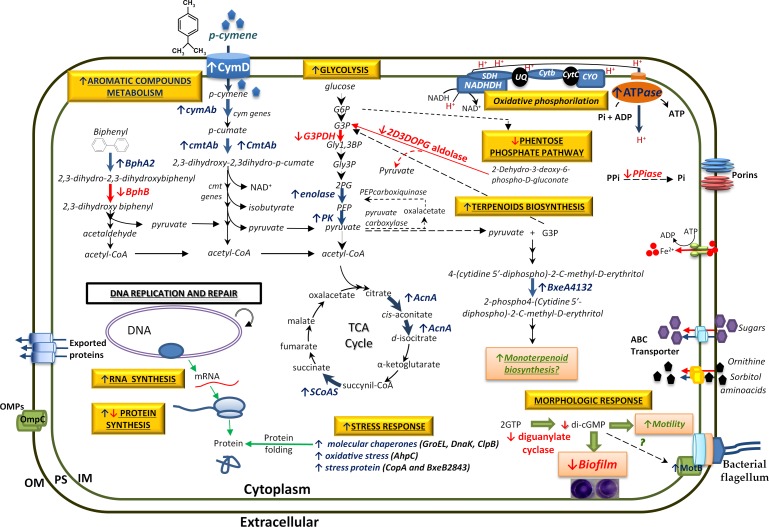
Fig 8. Schematic metabolic network activated by p-cymene in B. xenovorans LB400.
Capital and small letters indicate protein and genes, respectively. Red arrow indicates reduced protein synthesis or gene expression. Blue arrow indicates an increase in enzymatic activity, protein level or gene expression. Main p-cymene induced metabolic and physiological changes are highlighted by yellow boxes. OM, outer membrane; PS, periplasmic space; IM, inner membrane. BphA2, biphenyl 2,3-dioxygenase beta subunit; BphB, biphenyl dihydrodiol dehydrogenase; CmtAb, p-cumate dioxygenase large subunit; G3PDH, glyceraldehyde 3-phosphate dehydrogenase; PK, pyruvate kinase; AcnA, aconitate hydratase; SCoAS, Succinyl-CoA synthetase; NADHDH, NADH dehydrogenase; SDH, Succinate dehydrogenase (Complex II); UQ, ubiquinone; Cytb, ubiquinol-cytochrome C (Complex III); CytC, cytochrome C; Cyo, cytochrome C oxidase (Complex IV); ATPase, ATP synthase; PPiase, inorganic pyrophosphatase; BxeA4132, 4-diphosphocytidyl-2-methyl-D-erythritol kinase.

References

    1. Matilla MA, Espinosa-Urgel M, Rodríguez-Herva JJ, Ramos JL, Ramos-González MI. (2007) Genomic analysis reveals the major driving forces of bacterial life in the rhizosphere. Genome Biol 8(9) Article R179. - PMC - PubMed
    1. Radke M. (1987) Organic geochemistry of aromatic hydrocarbons. Adv Petrol Geochem 2:141–207.
    1. Fuentes S, Méndez V, Aguila P, Seeger M. (2014) Bioremediation of petroleum hydrocarbons: catabolic genes, microbial communities, and applications. Appl Microbiol Biotechnol 98(11):4781–94. 10.1007/s00253-014-5684-9 - DOI - PubMed
    1. Gildemeister E, Hoffman F. (1960). “Die ätherischen Öle”Vol. 4, Akademie-Verlag, Berlin.
    1. Eaton RW. (1996) p-Cumate catabolic pathway in Pseudomonas putida F1: cloning and characterization of DNA carrying the cmt operon. J Bacteriol.; 178:1351–62. - PMC - PubMed