


PCNA dependent cellular activities tolerate dramatic perturbations in PCNA client interactions
- PMID: 28073635
- PMCID: PMC5264654
- DOI: 10.1016/j.dnarep.2016.12.003
PCNA dependent cellular activities tolerate dramatic perturbations in PCNA client interactions
Abstract
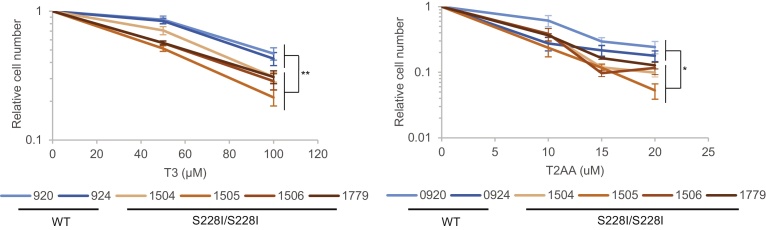
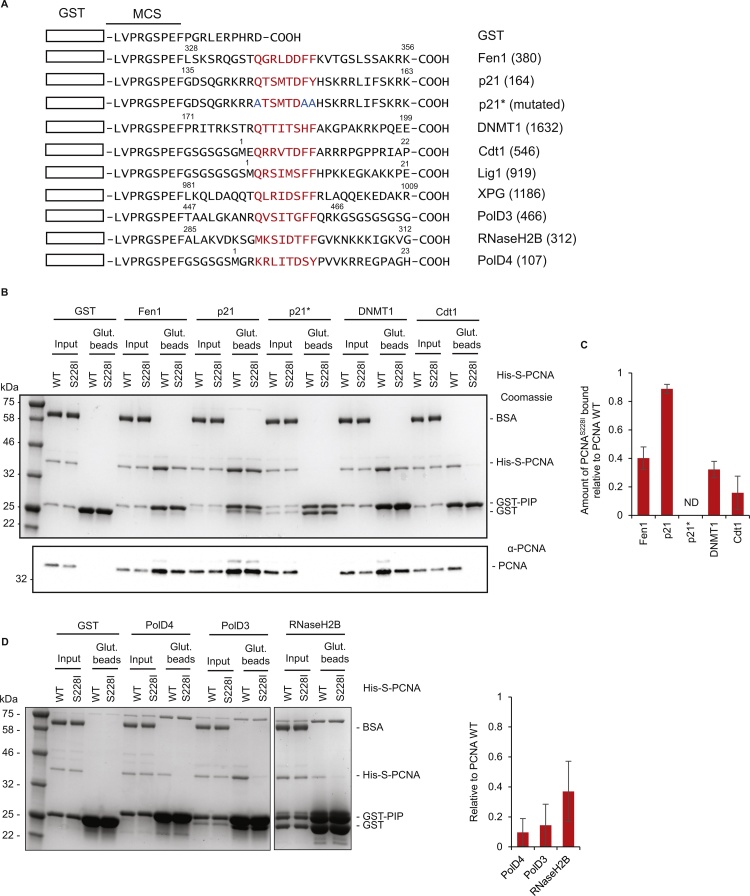
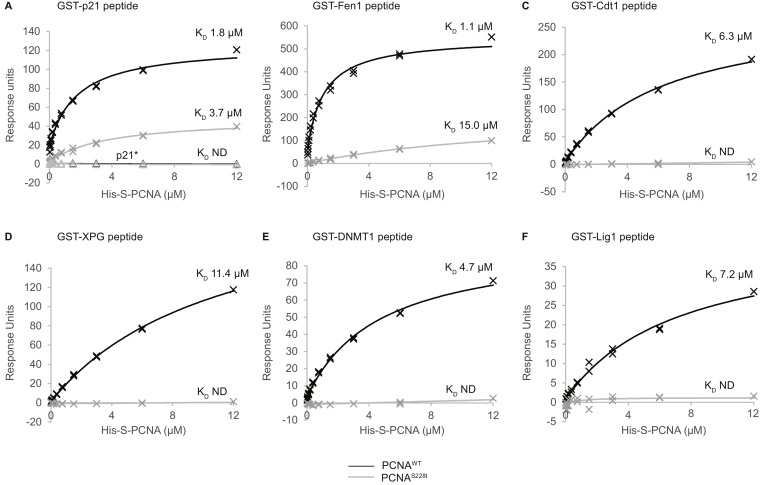
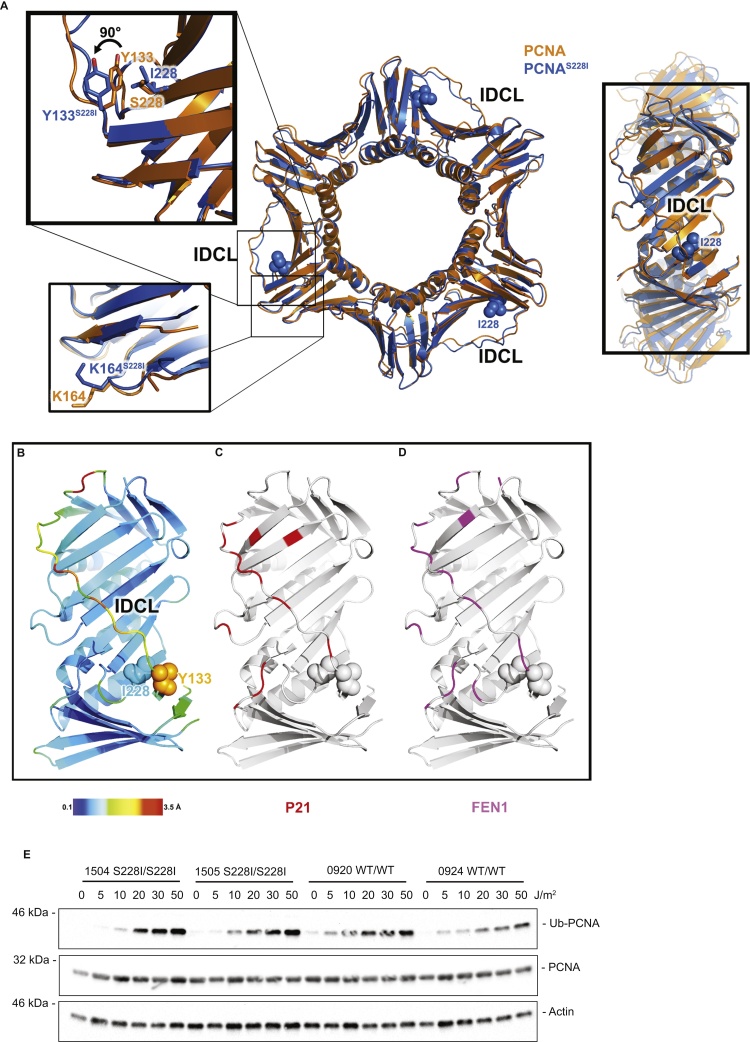
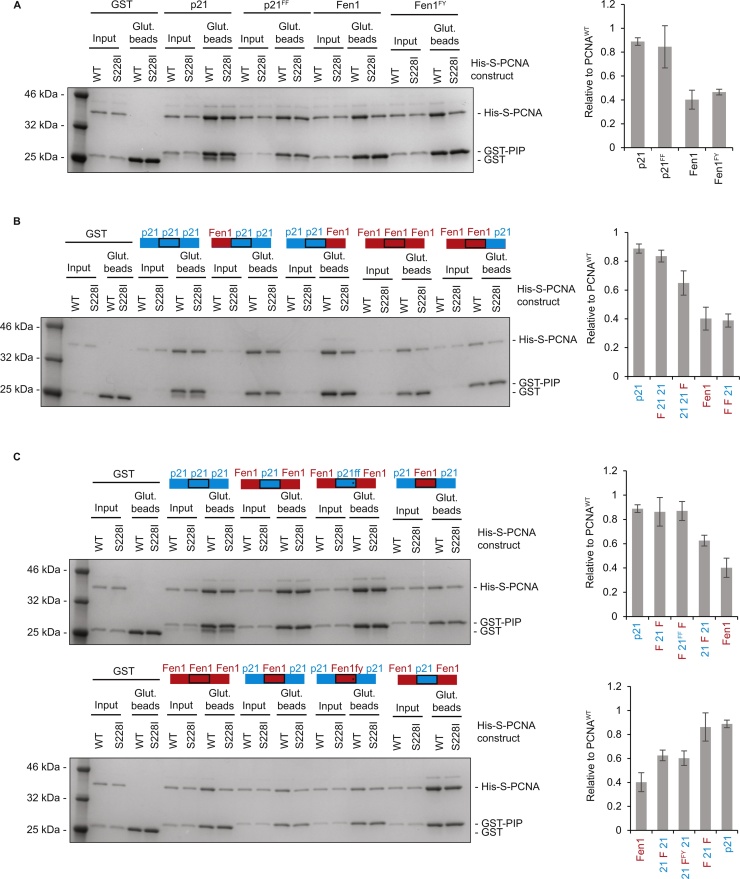
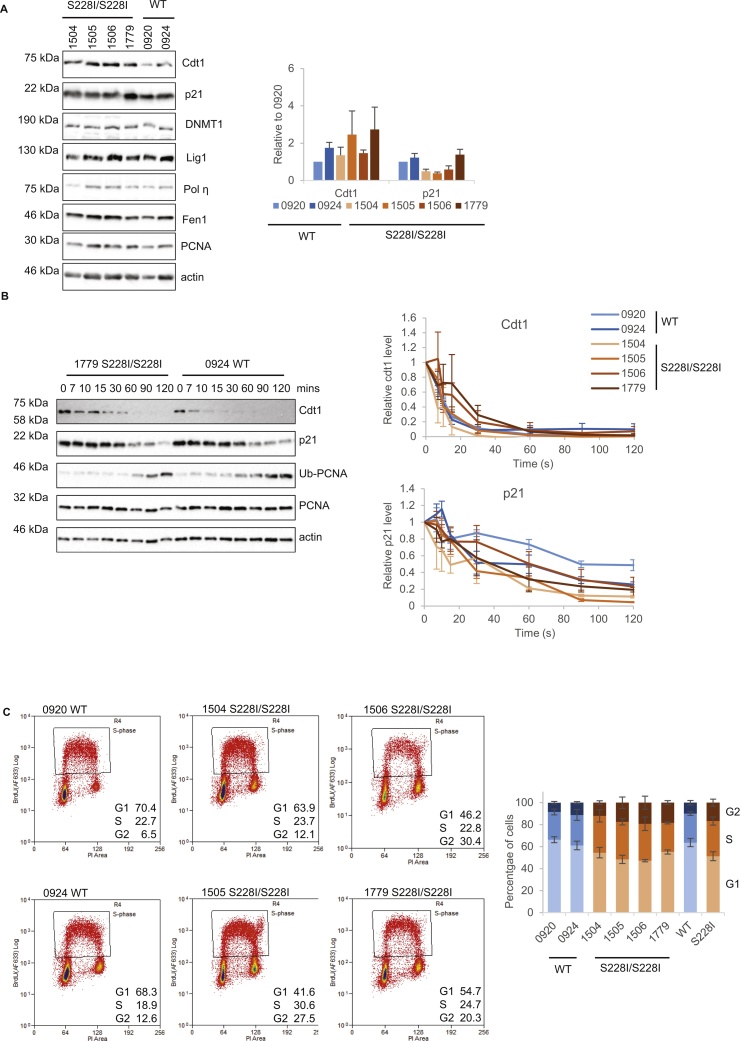
Proliferating cell nuclear antigen (PCNA) is an essential cofactor for DNA replication and repair, recruiting multiple proteins to their sites of action. We examined the effects of the PCNAS228I mutation that causes PCNA-associated DNA repair disorder (PARD). Cells from individuals affected by PARD are sensitive to the PCNA inhibitors T3 and T2AA, showing that the S228I mutation has consequences for undamaged cells. Analysis of the binding between PCNA and PCNA-interacting proteins (PIPs) shows that the S228I change dramatically impairs the majority of these interactions, including that of Cdt1, DNMT1, PolD3p66 and PolD4p12. In contrast p21 largely retains the ability to bind PCNAS228I. This property is conferred by the p21 PIP box sequence itself, which is both necessary and sufficient for PCNAS228I binding. Ubiquitination of PCNA is unaffected by the S228I change, which indirectly alters the structure of the inter-domain connecting loop. Despite the dramatic in vitro effects of the PARD mutation on PIP-degron binding, there are only minor alterations to the stability of p21 and Cdt1 in cells from affected individuals. Overall our data suggests that reduced affinity of PCNAS228I for specific clients causes subtle cellular defects in undamaged cells which likely contribute to the etiology of PARD.
Keywords: DNA repair; DNA replication; PCNA; PCNA-associated repair disorder (PARD).
Copyright © 2017 The Authors. Published by Elsevier B.V. All rights reserved.
Figures
References
-
- Ducoux M., Urbach S., Baldacci G., Hubscher U., Koundrioukoff S., Christensen J., Hughes P. Mediation of proliferating cell nuclear antigen (PCNA)-dependent DNA replication through a conserved p21(Cip1)-like PCNA-binding motif present in the third subunit of human DNA polymerase delta. J. Biol. Chem. 2001;276:49258–49266. - PubMed
-
- Montecucco A., Rossi R., Levin D.S., Gary R., Park M.S., Motycka T.A., Ciarrocchi G., Villa A., Biamonti G., Tomkinson A.E. DNA ligase I is recruited to sites of DNA replication by an interaction with proliferating cell nuclear antigen: identification of a common targeting mechanism for the assembly of replication factories. EMBO J. 1998;17:3786–3795. - PMC - PubMed
-
- Levin D.S., McKenna A.E., Motycka T.A., Matsumoto Y., Tomkinson A.E. Interaction between PCNA and DNA ligase I is critical for joining of Okazaki fragments and long-patch base-excision repair. Curr. Biol. 2000;10:919–922. - PubMed
-
- Li X., Li J., Harrington J., Lieber M.R., Burgers P.M. Lagging strand DNA synthesis at the eukaryotic replication fork involves binding and stimulation of FEN-1 by proliferating cell nuclear antigen. J. Biol. Chem. 1995;270:22109–22112. - PubMed
MeSH terms
Substances
Grants and funding
LinkOut - more resources
Full Text Sources
Other Literature Sources
Molecular Biology Databases
Miscellaneous
