


Effectiveness of Risk Evaluation and Mitigation Strategies (REMS) for Lenalidomide and Thalidomide: Patient Comprehension and Knowledge Retention
- PMID: 28074423
- PMCID: PMC5362654
- DOI: 10.1007/s40264-016-0501-2
Effectiveness of Risk Evaluation and Mitigation Strategies (REMS) for Lenalidomide and Thalidomide: Patient Comprehension and Knowledge Retention
Abstract
Introduction: The effectiveness of patient education activities conducted within the lenalidomide and thalidomide risk evaluation and mitigation strategies (REMS) programs was evaluated by measuring understanding of serious risk and safe-use messages.
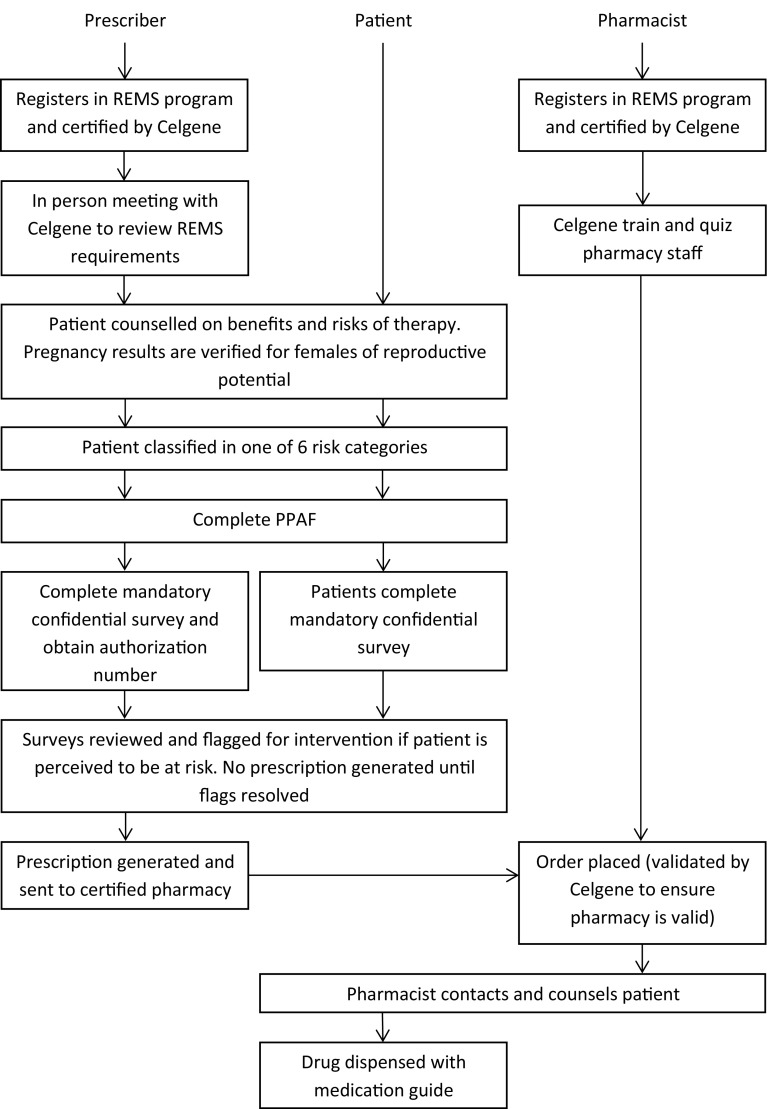
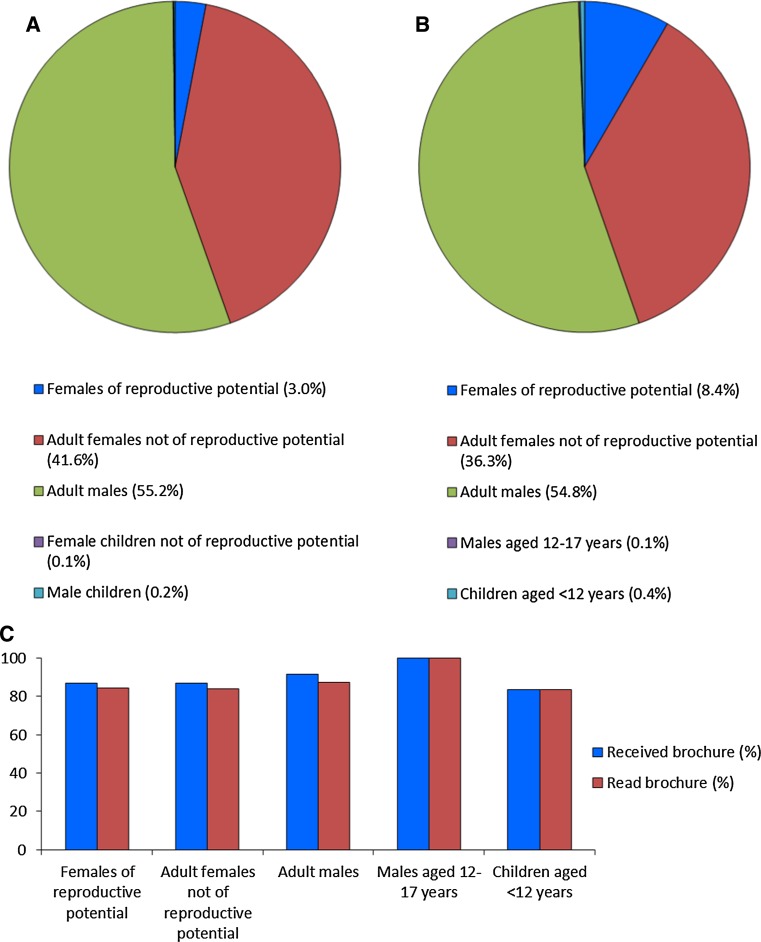
Methods: Results from mandatory knowledge, attitude, and behavior surveys and voluntary patient surveys completed between June 2012 and June 2013 were analyzed, and responses to questions relating to compliance with birth control measures and understanding of safe-use messages are presented by patient risk category.
Results: In total, 73,645 patients were enrolled into the REMS programs for lenalidomide and thalidomide and completed mandatory surveys prior to medication dispense. Of these, 2790 (3.8%) completed an additional voluntary survey. Among voluntary survey participants, for all patient pregnancy risk categories, reported compliance with birth control requirements was above 90% when starting therapy and at follow-up. At the beginning of therapy, complete compliance was 96.3%; 3 months later it was 96.4%. Patient understanding of safe-use messages was very high in all pregnancy risk groups, notably for messages repeated at each physician visit. Overall, 98.2% of patients knew that lenalidomide and thalidomide could cause birth defects, which is part of the repeated educational messaging. In contrast, 87.1% recalled that unused product should be returned to their healthcare professional, which is not included in repeated messaging.
Conclusion: The lenalidomide and thalidomide REMS programs enhance patient understanding of safe-use messages, resulting in high levels of compliance with the birth control precautions essential to prevent fetal exposure to these known and potential human teratogens. Overall compliance was maintained after 3 months of follow-up and throughout therapy.
Conflict of interest statement
Funding
This study was sponsored by Celgene Corporation.
Conflicts of interest
Robert Bwire, John Freeman, Florence Houn, and Paul Sheehan are employees of Celgene Corporation. Nancy Brandenburg and Jerome Zeldis are former Celgene employees.
Patient consent
All patients included in the study gave consent for their data to be used on the PPAF. Ethical approval was not required for this study.
Figures
References
-
- Waller P. An introduction to pharmacovigilance. Chichester: Wiley-Blackwell; 2010.
-
- Lenz W. Kindliche missbildungen nach medikament-einnahme während der gravidität? Dtsch Med Wochenschr. 1961;86:2555–2556.
-
- McBride WG. Thalidomide and congenital abnormalities. Lancet. 1961;2:1358. doi: 10.1016/S0140-6736(61)90927-8. - DOI
MeSH terms
Substances
LinkOut - more resources
Full Text Sources
Other Literature Sources
