


Inhibitory Effects of Probiotic Lactobacillus on the Growth of Human Colonic Carcinoma Cell Line HT-29
- PMID: 28075415
- PMCID: PMC6155858
- DOI: 10.3390/molecules22010107
Inhibitory Effects of Probiotic Lactobacillus on the Growth of Human Colonic Carcinoma Cell Line HT-29
Abstract
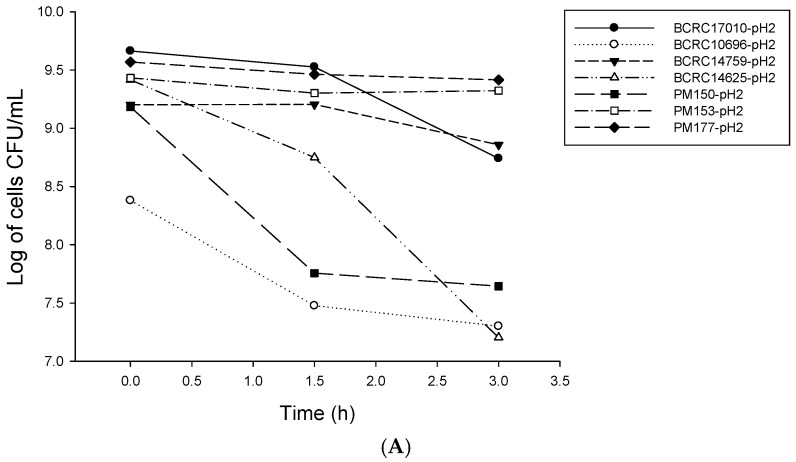
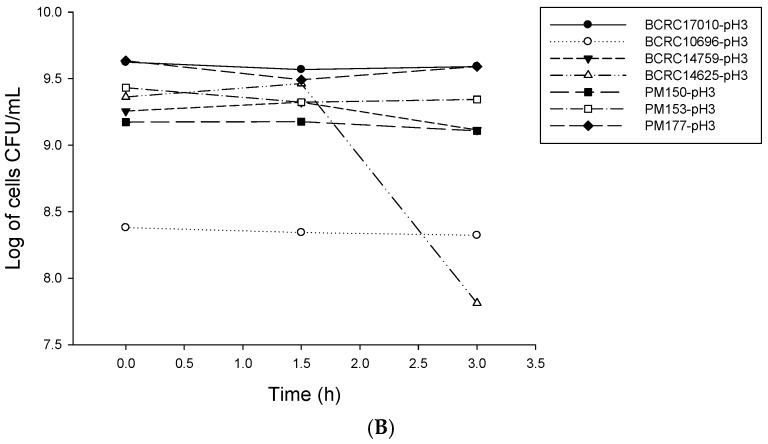
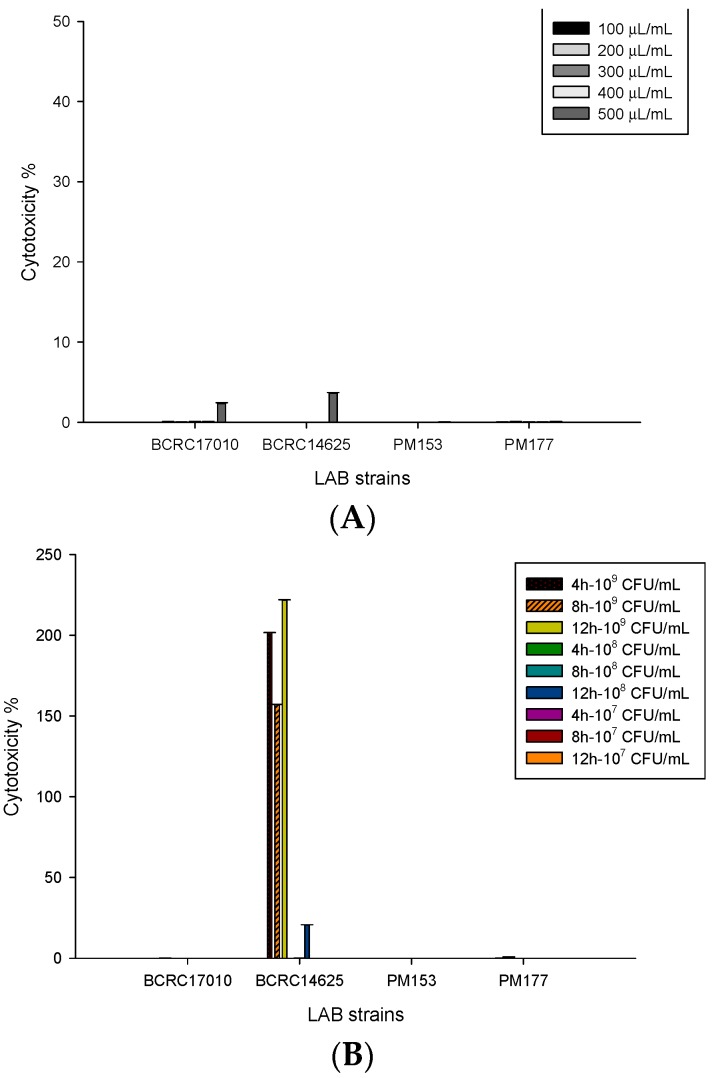
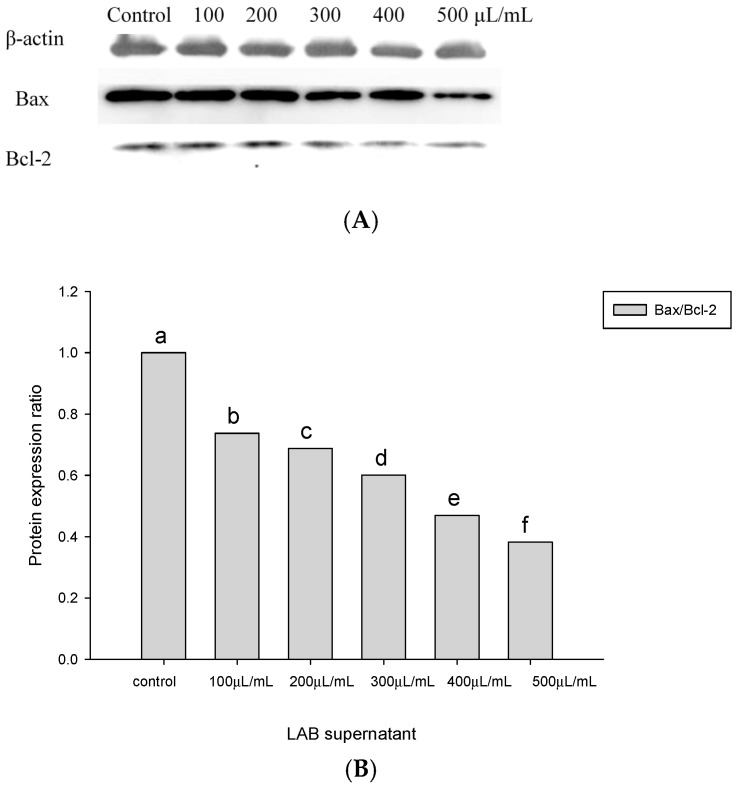
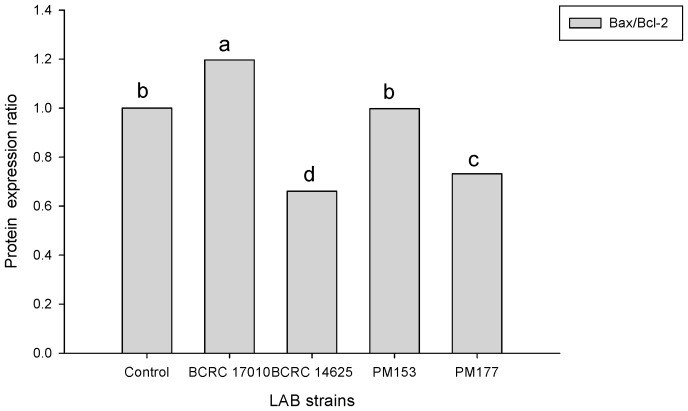
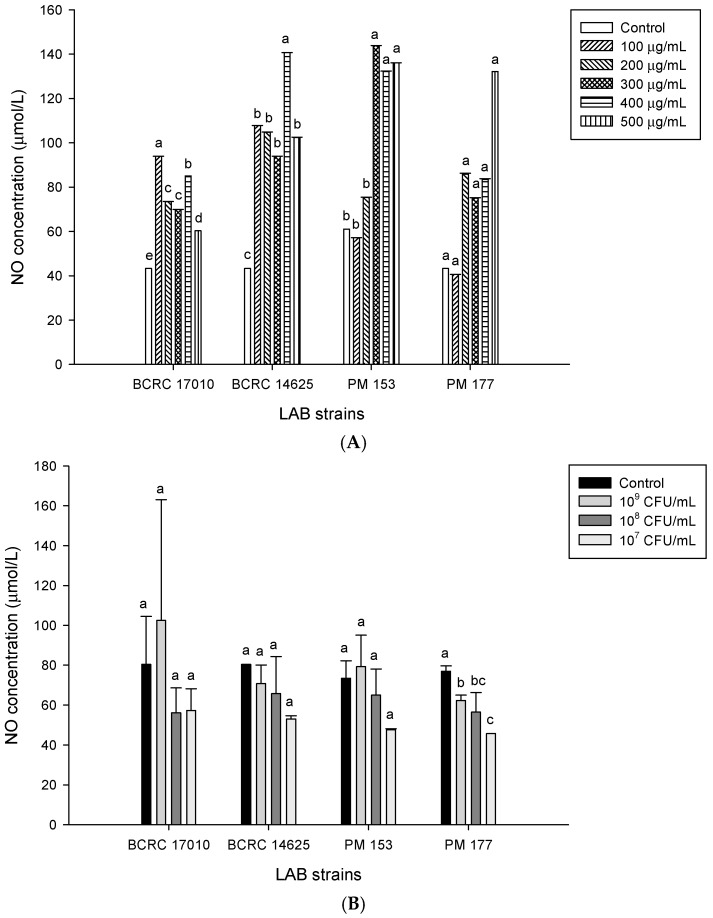
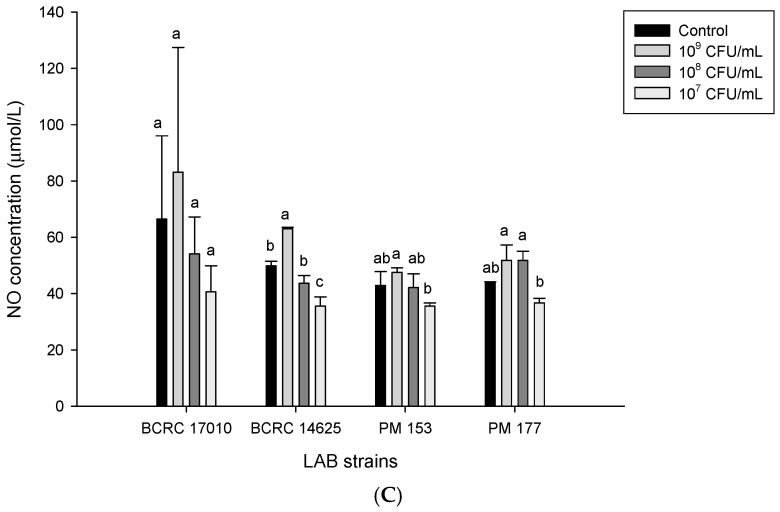
This study was conducted to investigate the inhibitory effect of Lactobacillus cells and supernatants on the growth of the human colon cancer cell line HT-29. Our study results indicated that the PM153 strain exhibits the best adhesion ability and the highest survival in the gastrointestinal tract simulation experiment. Furthermore, after an 8-h co-culture of PM153 and HT-29 cells, the PM153 strain can induce the secretion of nitric oxide from the HT-29 cells. In addition, after the co-culture of the BCRC17010 strain (10⁸ cfu/mL) and HT-29 cells, the Bax/Bcl-2 ratio in the HT-29 cells was 1.19, which showed a significant difference from the other control and LAB groups (p < 0.05), which therefore led to the inference that the BCRC17010 strain exerts a pro-apoptotic effect on the HT-29 cells. Upon co-culture with HT-29 cells for 4, 8 and 12 h, the BCRC14625 strain (10⁸ cfu/mL) demonstrated a significant increase in lactate dehydrogenase (LDH) activity (p < 0.05), causing harm to the HT-29 cell membrane; further, after an 8-h co-culture with the HT-29 cells, it induced the secretion of nitric oxide (NO) from the HT-29 cells. Some lactic acid bacteria (LAB) strains have ability to inhibit the growth of the colorectal cancer cell line HT-29 Bax/Bcl-2 pathway or NO production. In summary, we demonstrated that the BCRC17010 strain, good abilities of adhesion and increased LDH release, was the best probiotic potential for inhibition of HT-29 growth amongst the seven LAB strains tested in vitro.
Keywords: Bax/Bcl-2 ratio; HT-29 cells; Lactobacillus; interleukin-8; lactate dehydrogenase.
Conflict of interest statement
The authors declare no conflict of interest.
Figures
References
-
- American Cancer Society . Cancer Facts and Figures. American Cancer Society; Atlanta, GA, USA: 2015.
-
- Food and Agricultural Organization of the United Nations. World Health Organization . Joint FAO/WHO Working Group Report on Drafting Guidelines for the Evaluation of Probiotics in Food. Food and Agricultural Organization of the United Nations; World Health Organization; Washington, DC, USA: 2002.
-
- Havenaar R., Ten Brink B., Huis in’t Veld J.H.J. Selection of strains for Probiotic use. In: Fuller R., editor. Probiotics. The Scientific Basis. Chapman & Hall; London, UK: 1992. pp. 209–221.
MeSH terms
Substances
LinkOut - more resources
Full Text Sources
Other Literature Sources
Research Materials
Miscellaneous
