


Differences in Access to and Use of Electronic Personal Health Information Between Rural and Urban Residents in the United States
- PMID: 28075508
- PMCID: PMC5505819
- DOI: 10.1111/jrh.12228
Differences in Access to and Use of Electronic Personal Health Information Between Rural and Urban Residents in the United States
Abstract
Purpose: The increase in use of health information technologies (HIT) presents new opportunities for patient engagement and self-management. Patients in rural areas stand to benefit especially from increased access to health care tools and electronic communication with providers. We assessed the adoption of 4 HIT tools over time by rural or urban residency.
Methods: Analyses were conducted using data from 7 iterations of the National Cancer Institute's Health Information National Trends Survey (HINTS; 2003-2014). Rural/urban residency was based on the USDA's 2003 Rural-Urban Continuum Codes. Outcomes of interest included managing personal health information online; whether providers maintain electronic health records (EHRs); e-mailing health care providers; and purchasing medicine online. Bivariate analyses and logistic regression were used to assess relationships between geography and outcomes, controlling for sociodemographic characteristics.
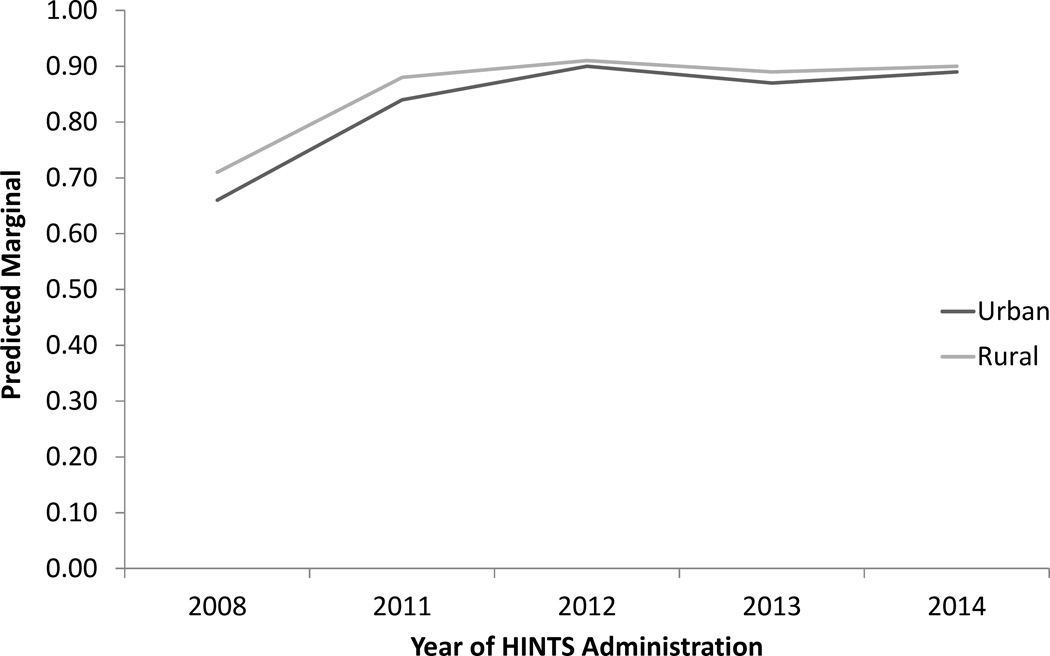
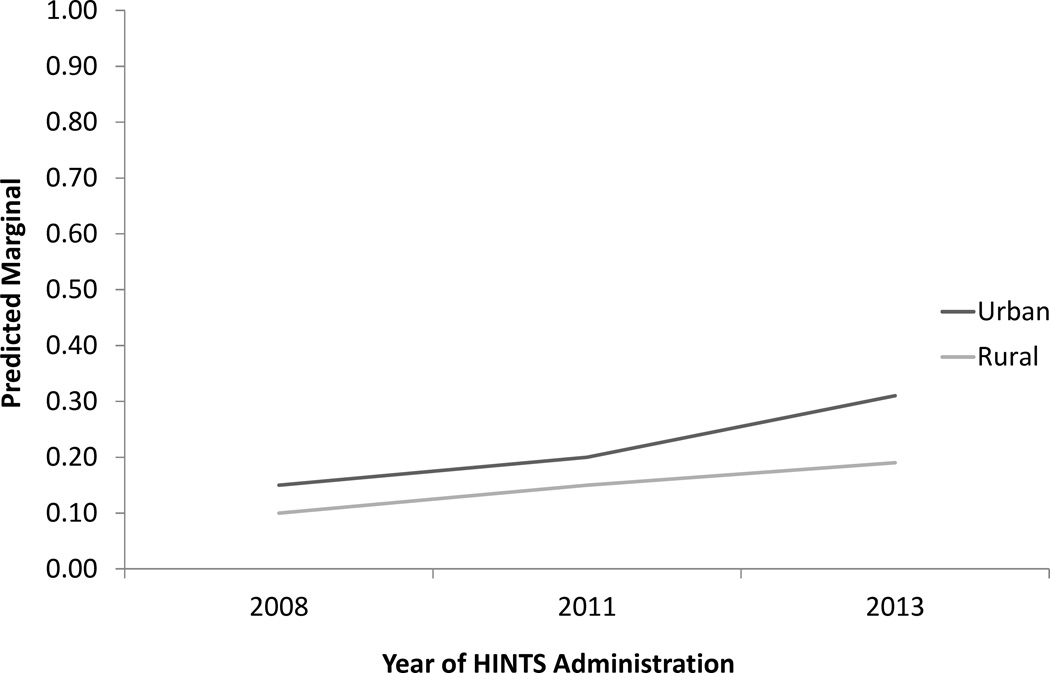
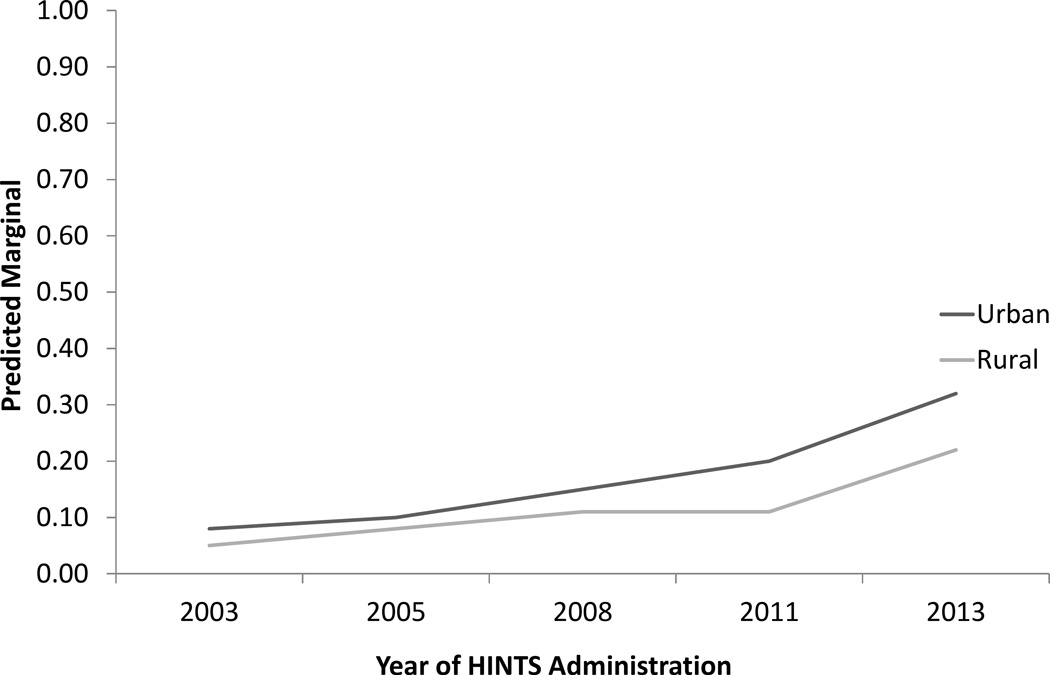
Findings: In total, 6,043 (17.6%, weighted) of the 33,749 respondents across the 7 administrations of HINTS lived in rural areas. Rural participants were less likely to report regular access to Internet (OR = 0.70, 95% CI = 0.61-0.80). Rural respondents were neither more nor less likely to report that their health care providers maintained EHRs than were urban respondents; however, they had decreased odds of managing personal health information online (OR = 0.59, 95% CI = 0.40-0.78) and e-mailing health care providers (OR = 0.62, 95% CI = 0.49-0.77).
Conclusions: The digital divide between rural and urban residents extends to HIT. Additional investigation is needed to determine whether the decreased use of HIT may be due to lack of Internet connectivity or awareness of these tools.
Keywords: access to care; health disparities; health services research; technology; utilization of health services.
© 2016 National Rural Health Association.
Figures

References
-
- Hayrinen K, Saranto K, Nykanen P. Definition, structure, content, use and impacts of electronic health records: a review of the research literature. Int J Med Inform. 2008;77(5):291–304. - PubMed
-
- The Affordable Care Act, Section by Section. [Accessed Aug 25, 2016];2010 Available at: http://www.hhs.gov/healthcare/about-the-law/read-the-law/#.
-
- O'Gorman LD, Hogenbirk JC. Driving Distance to Telemedicine Units in Northern Ontario as a Measure of Potential Access to Healthcare. Telemed J E Health. 2016;22(4):269–275. - PubMed
-
- Meyers L, Gibbs D, Thacker M, Lafile L. Building a telehealth network through collaboration: the story of the Nebraska statewide telehealth network. Crit Care Nurs Q. 2012;35(4):346–352. - PubMed
Publication types
MeSH terms
Grants and funding
LinkOut - more resources
Full Text Sources
Other Literature Sources
Medical
