


Soil, Leaf and Root Ecological Stoichiometry of Caragana korshinskii on the Loess Plateau of China in Relation to Plantation Age
- PMID: 28076357
- PMCID: PMC5226717
- DOI: 10.1371/journal.pone.0168890
Soil, Leaf and Root Ecological Stoichiometry of Caragana korshinskii on the Loess Plateau of China in Relation to Plantation Age
Abstract
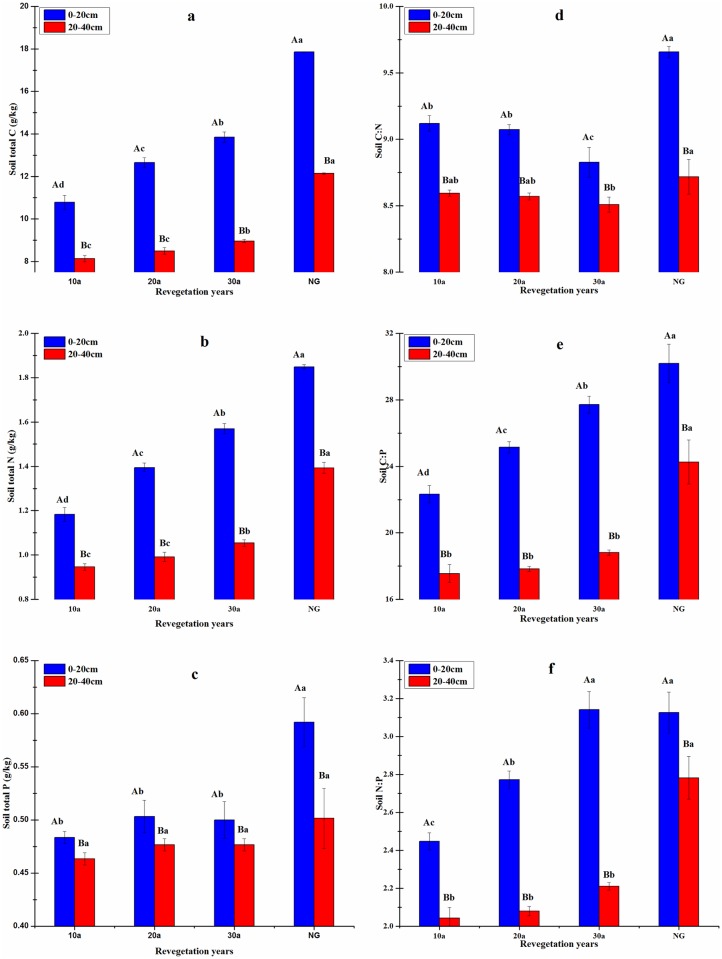
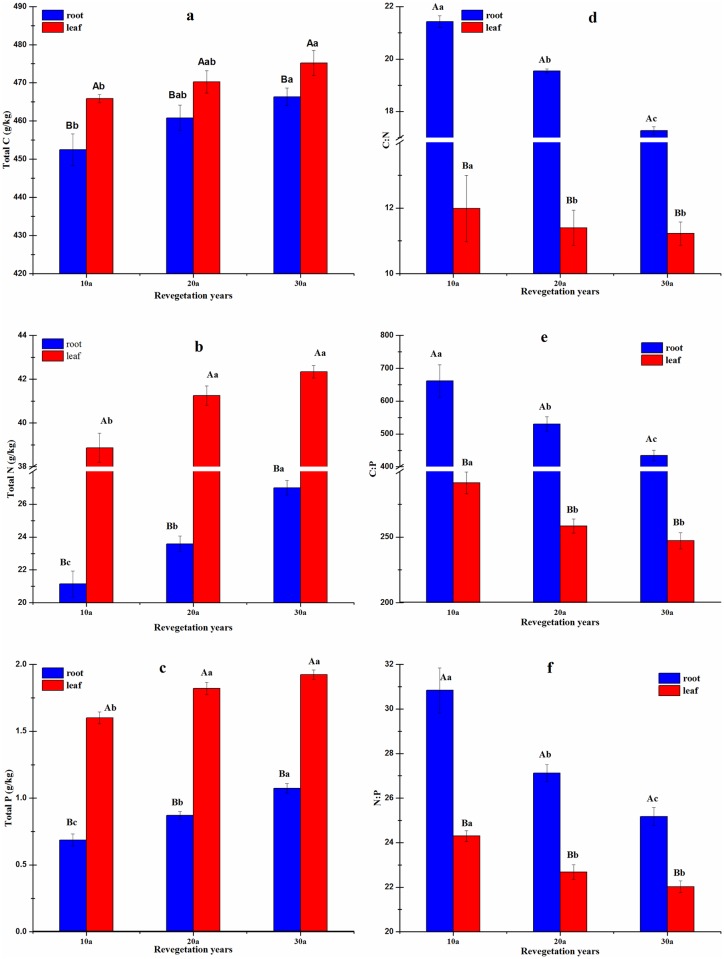
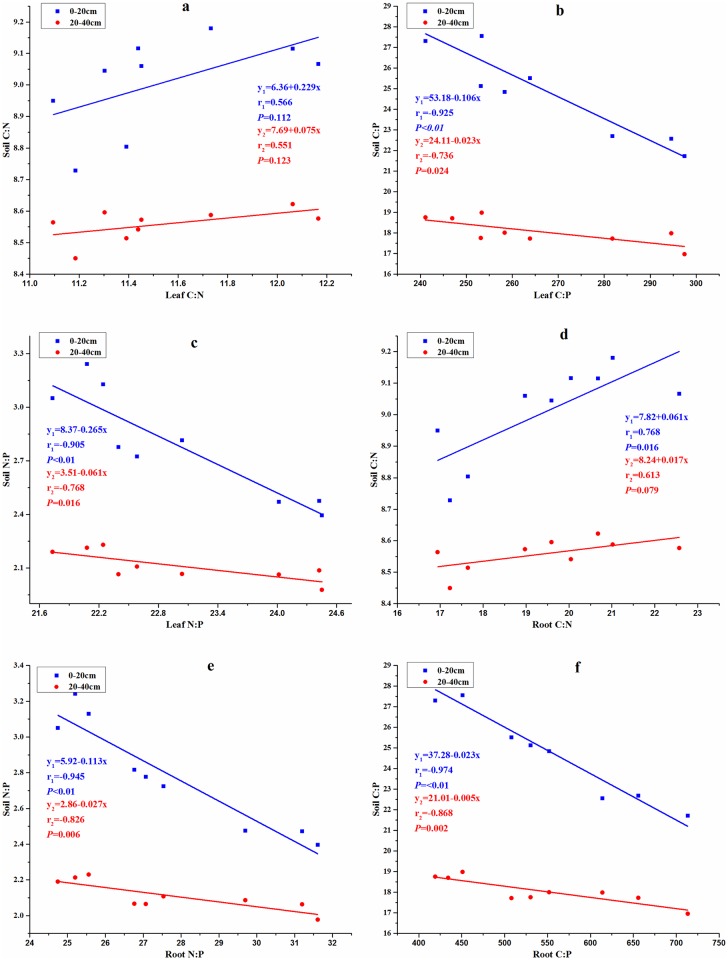
Caragana korshinskii, a leguminous shrub, a common specie, is widely planted to prevent soil erosion on the Loess Plateau. The objective of this study was to determine how the plantation ages affected soil, leaf and root nutrients and ecological stoichiometry. The chronosequence ages of C. korshinskii plantations selected for this study were 10, 20 and 30 years. Soil organic carbon (SOC) and soil total nitrogen (STN) of C. korshinskii plantations significantly increased with increase in the chronosequence age. However, soil total phosphorous (STP) was not affected by the chronosequence age. The soil C: N ratio decreased and the soil C: P and N: P ratios increased with increasing plantation age. The leaf and root concentrations of C, N, and P increased and the ratios C: N, C: P, and N: P decreased with age increase. Leaf N: P ratios were >20, indicating that P was the main factor limiting the growth of C. korshinskii. This study also demonstrated that the regeneration of natural grassland (NG) effectively preserved and enhanced soil nutrient contents. Compared with NG, shrub lands (C. korshinskii) had much lower soil nutrient concentrations, especially for long (>20 years) chronosequence age. Thus, the regeneration of natural grassland is an ecologically beneficial practice for the recovery of degraded soils in this area.
Conflict of interest statement
The authors have declared that no competing interests exist.
Figures
References
-
- Elser J, Sterner R, Gorokhova E, Fagan W, Markow T, Cotner J, et al. Biological stoichiometry from genes to ecosystems. Ecology Letters. 2000;3(6):540–50.
-
- Sterner RW, Elser JJ. Ecological stoichiometry: the biology of elements from molecules to the biosphere: Princeton University Press; 2002.
-
- Koerselman W, Meuleman AF. The vegetation N: P ratio: a new tool to detect the nature of nutrient limitation. Journal of applied Ecology. 1996:1441–50.
MeSH terms
Substances
LinkOut - more resources
Full Text Sources
Other Literature Sources
