


Fish intake and the risk of brain tumor: a meta-analysis with systematic review
- PMID: 28077138
- PMCID: PMC5225583
- DOI: 10.1186/s12937-016-0223-4
Fish intake and the risk of brain tumor: a meta-analysis with systematic review
Abstract
Background: Fish, rich in ω-3 polyunsaturated fatty acids, has been found to be associated with lower risk of several types of cancer risk, and beneficial for brain development. However, the association between fish intake and brain tumor risk is still inconsistent. Therefore, we conducted a meta-analysis to clarify the association.
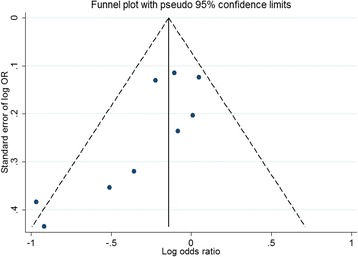
Methods: Relevant studies were identified from PubMed and EMBASE databases. The pooled relative risks were obtained by the fixed-effects model when no substantial heterogeneity was observed. Otherwise, the random-effects model was employed. Subgroup and publication bias analyses were also performed.
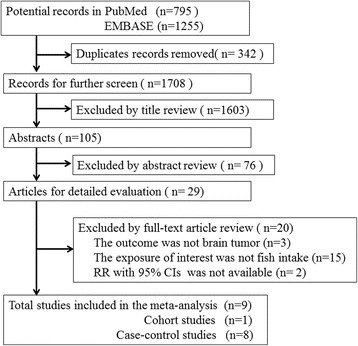
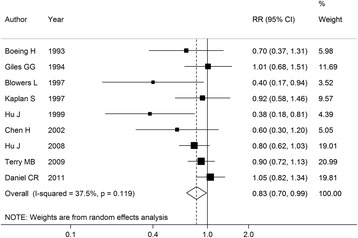
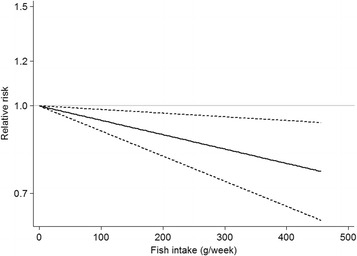
Results: Nine observational studies were included in the meta-analysis. The pooled relative risk of brain cancer for the highest vs. lowest category of fish intake was 0.83 (95% confidence interval [CI]: 0.70-0.99). No significant heterogeneity was detected. Dose-response analysis showed that the RR per 100 g/day increase in fish intake was 0.95 (95% CI: 0.91-0.98). The results remained unchanged in subgroup and sensitivity analyses.
Conclusions: The results of our meta-analysis suggest that fish intake might be associated with lower risk of brain cancer risk. The finding should be further confirmed by future cohort studies with validated questionnaires and strict control of confounders.
Keywords: Brain tumor; Fish intake; Meta-analysis; Nutrition; Risk factors.
Figures

References
Publication types
MeSH terms
Substances
LinkOut - more resources
Full Text Sources
Other Literature Sources
Medical
