


Biosimilars for the Treatment of Cancer: A Systematic Review of Published Evidence
- PMID: 28078656
- PMCID: PMC5258783
- DOI: 10.1007/s40259-016-0207-0
Biosimilars for the Treatment of Cancer: A Systematic Review of Published Evidence
Abstract
Background: Biologic treatments for cancer continue to place a significant economic burden on healthcare stakeholders. Biosimilar therapies may help reduce this burden through cost savings, thereby increasing patient access.
Objectives: The purpose of this study was to collate all published data to assess the weight of available evidence (quantity and quality) for proposed monoclonal antibody biosimilars and intended copies, for the treatment of cancer.
Methods: MEDLINE®, Embase®, and ISI Web of Science® databases were searched to September 2015. Conference proceedings (17) were searched (2012 to July 2015). Searches of the United States National Library of Medicine ClinicalTrials.gov registry were also conducted. Risk of bias assessments were undertaken to assess data strength and validity.
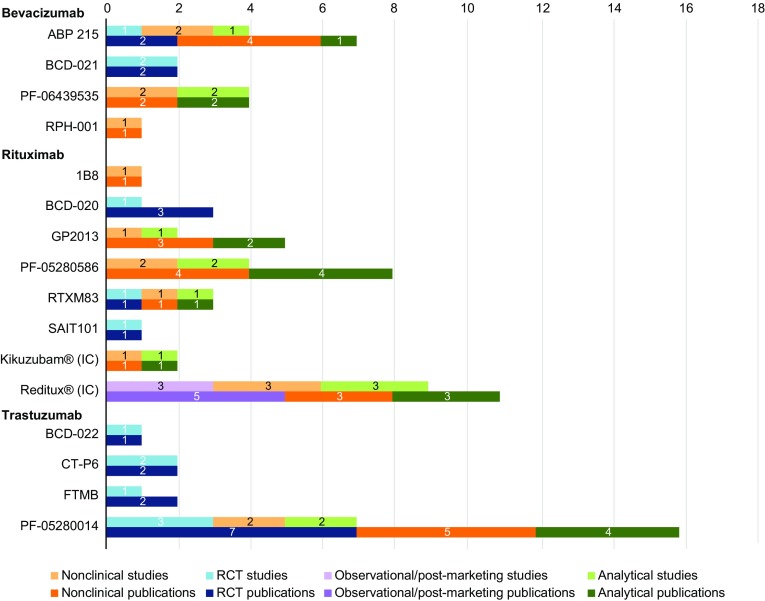
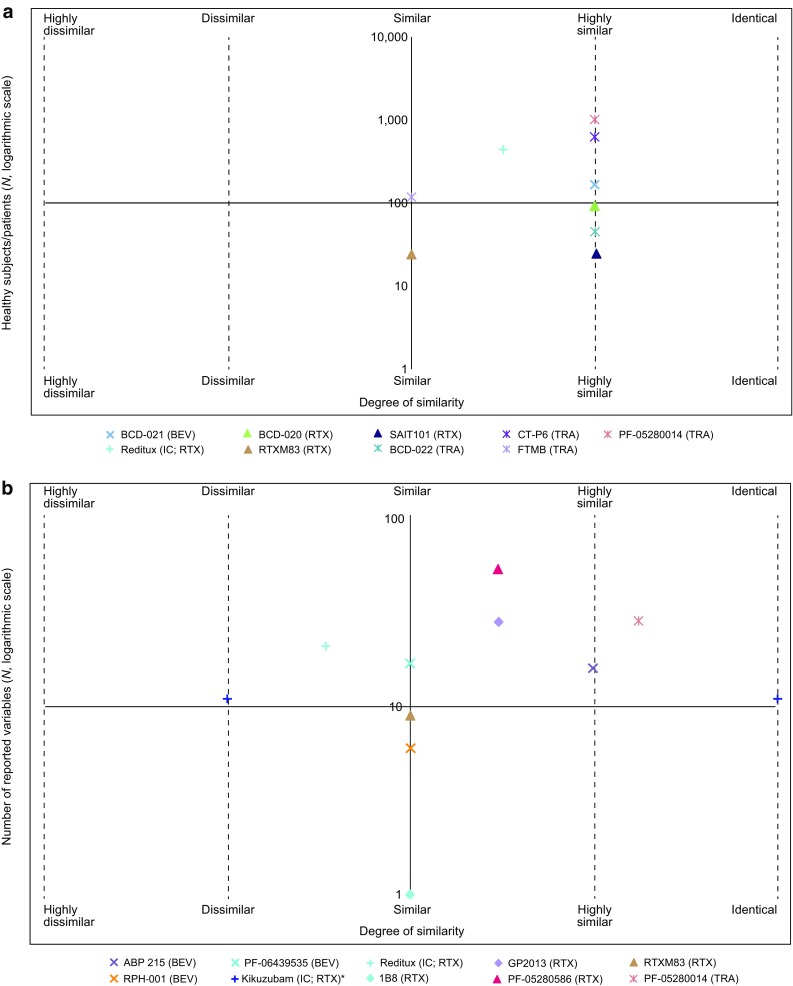
Results: Proposed biosimilars were identified in 23 studies (36 publications) in oncology and ten studies in 14 publications in oncology and chronic inflammatory diseases for bevacizumab, rituximab, and trastuzumab originators. Based on our review of the included published studies, and as inferred from the conclusions of study authors, the identified proposed biosimilars exhibit close similarity to their originators. Published data were also retrieved on intended copies of rituximab. It remains unclear what role these agents may have, as publications on rigorous clinical studies are lacking for these molecules.
Conclusion: While biosimilar products have the potential to improve patient access to important biologic therapies, robust evidence of outcomes for monoclonal antibody biosimilars in treating cancer patients, including data from comparative efficacy and safety trials, is not yet available in the published literature. Significant data gaps exist, particularly for intended copies, which reinforces the need to maintain a clear differentiation between these molecules and true biosimilars. As more biosimilars become available for use, it will be important for stakeholders to understand fully the robustness of overall evidence used to demonstrate biosimilarity and gain regulatory approval.
Conflict of interest statement
IJ, RE, and CZ are full-time employees and shareholders of Pfizer. SL is a full-time employee of Envision Pharma Group, who were paid consultants to Pfizer in connection with the development of the SLR report that forms the basis of this manuscript. He was not compensated for his role in the development of this manuscript. Funding The SLR to support this manuscript was sponsored by Pfizer Inc.
Figures
References
-
- IMS Health. Developments in cancer treatments, market dynamics, patient access and value. Global oncology trend report 2015. 2015 May 2015 [cited 2016 21 June]; Available from: http://keionline.org/sites/default/files/IIHI_Oncology_Trend_Report_2015....
-
- IMS Health. Medicines use and spending in the U.S. A review of 2015 and outlook to 2020. 2016 April 2016 [cited 2016 21 June]; Available from: https://morningconsult.com/wp-content/uploads/2016/04/IMS-Institute-US-D....
-
- IMS Health. Top 20 global products 2015. 2015 December 2015 [cited 2016 21 June]; Available from: http://www.imshealth.com/files/web/Corporate/News/Top-Line%20Market%20Da....
-
- Gori S, Di Maio M, Pinto C, Alabiso O, Baldini E, Beretta GD, et al. Differences in the availability of new anti-cancer drugs for Italian patients treated in different regions. Results of analysis conducted by the Italian Society Of Medical Oncology (AIOM). Tumori. 2010;96(6):1010–5. - PubMed
-
- Park T, Griggs SK, Suh DC. Cost effectiveness of monoclonal antibody therapy for rare diseases: a systematic review. BioDrugs. 2015;29(4):259–74. - PubMed
Publication types
MeSH terms
Substances
LinkOut - more resources
Full Text Sources
Other Literature Sources
Research Materials
