


Manipulation of the Endocannabinoid System in Colitis: A Comprehensive Review
- PMID: 28079617
- PMCID: PMC6038810
- DOI: 10.1097/MIB.0000000000001004
Manipulation of the Endocannabinoid System in Colitis: A Comprehensive Review
Abstract
Background: Inflammatory bowel disease (IBD) is a lifelong disease of the gastrointestinal tract whose annual incidence and prevalence is on the rise. Current immunosuppressive therapies available for treatment of IBD offer limited benefits and lose effectiveness, exposing a significant need for the development of novel therapies. In the clinical setting, cannabis has been shown to provide patients with IBD symptomatic relief, although the underlying mechanisms of their anti-inflammatory effects remain unclear.
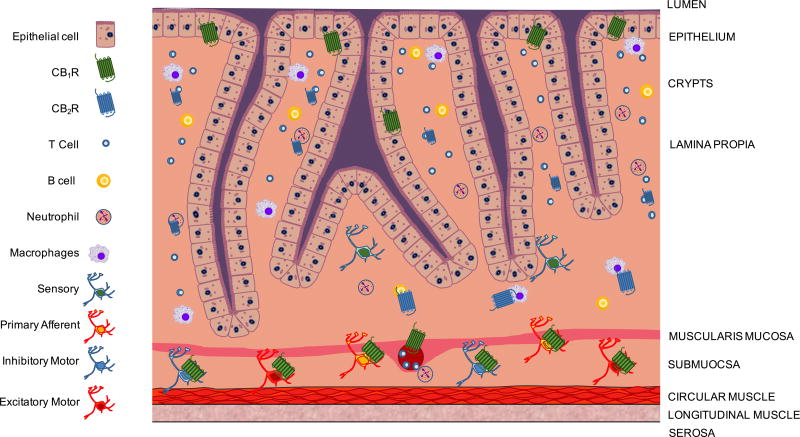
Methods: This review reflects our current understanding of how targeting the endocannabinoid system, including cannabinoid receptors 1 and 2, endogenous cannabinoids anandamide and 2-arachidonoylglycerol, atypical cannabinoids, and degrading enzymes including fatty acid amide hydrolase and monoacylglycerol lipase, impacts murine colitis. In addition, the impact of cannabinoids on the human immune system is summarized.
Results: Cannabinoid receptors 1 and 2, endogenous cannabinoids, and atypical cannabinoids are upregulated in inflammation, and their presence and stimulation attenuate murine colitis, whereas cannabinoid receptor antagonism and cannabinoid receptor deficient models reverse these anti-inflammatory effects. In addition, inhibition of endocannabinoid degradation through monoacylglycerol lipase and fatty acid amide hydrolase blockade can also attenuate colitis development, and is closely linked to cannabinoid receptor expression.
Conclusions: Although manipulation of the endocannabinoid system in murine colitis has proven to be largely beneficial in attenuating inflammation, there is a paucity of human study data. Further research is essential to clearly elucidate the specific mechanisms driving this anti-inflammatory effect for the development of therapeutics to target inflammatory disease such as IBD.
Conflict of interest statement
Conflicts of Interest:
The authors have no conflicts of interest to disclose.
Figures

References
-
- Kappelman MD, Rifas–Shiman SL, Kleinman K, et al. The Prevalence and Geographic Distribution of Crohn’s Disease and Ulcerative Colitis in the United States. Clin. Gastroenterol. Hepatol. 2007;5:1424–1429. - PubMed
-
- Cuffari C. Inflammatory bowel disease in children: a pediatrician’s perspective. Minerva Pediatr. 2006;58:139–157. - PubMed
-
- Hanauer SB, Feagan BG, Lichtenstein GR, et al. Maintenance infliximab for Crohn’s disease: the ACCENT I randomised trial. Lancet. 2002;359:1541–1549. - PubMed
-
- Izzo AA, Camilleri M. Emerging role of cannabinoids in gastrointestinal and liver diseases: basic and clinical aspects. Gut. 2008;57:1140–1155. - PubMed
Publication types
MeSH terms
Substances
Grants and funding
LinkOut - more resources
Full Text Sources
Other Literature Sources
Medical
