


Overview of chytrid emergence and impacts on amphibians
- PMID: 28080989
- PMCID: PMC5095542
- DOI: 10.1098/rstb.2015.0465
Overview of chytrid emergence and impacts on amphibians
Abstract
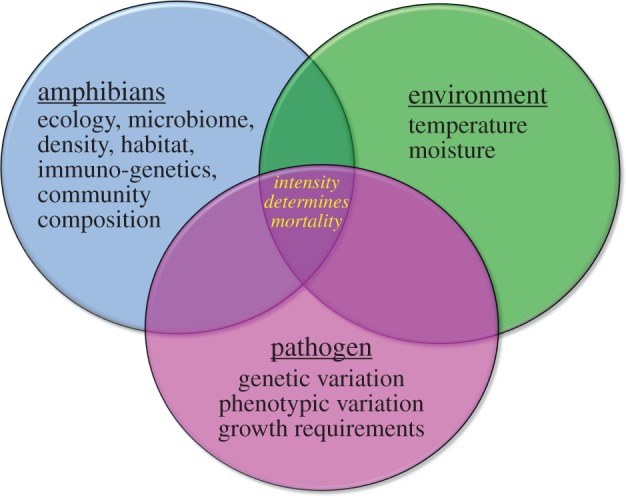
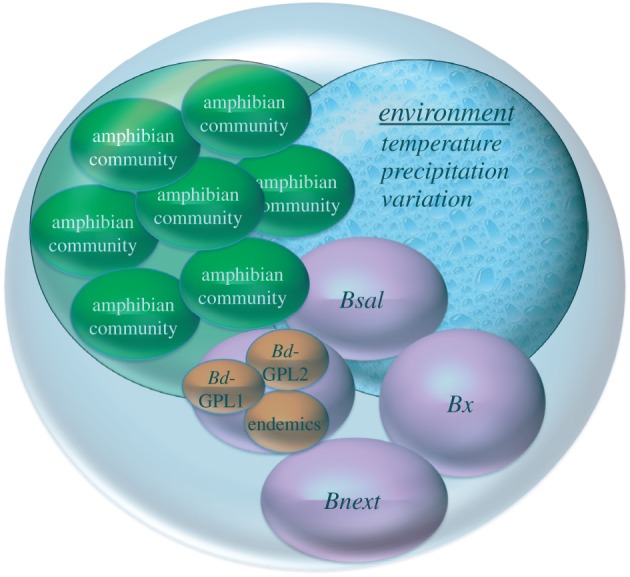
Chytridiomycosis is an emerging infectious disease of amphibians that affects over 700 species on all continents where amphibians occur. The amphibian-chytridiomycosis system is complex, and the response of any amphibian species to chytrid depends on many aspects of the ecology and evolutionary history of the amphibian, the genotype and phenotype of the fungus, and how the biological and physical environment can mediate that interaction. Impacts of chytridiomycosis on amphibians are varied; some species have been driven extinct, populations of others have declined severely, whereas still others have not obviously declined. Understanding patterns and mechanisms of amphibian responses to chytrids is critical for conservation and management. Robust estimates of population numbers are needed to identify species at risk, prioritize taxa for conservation actions, design management strategies for managing populations and species, and to develop effective measures to reduce impacts of chytrids on amphibians.This article is part of the themed issue 'Tackling emerging fungal threats to animal health, food security and ecosystem resilience'.
Keywords: amphibians; biodiversity; chytrid fungi; disease; populations.
© 2016 The Author(s).
Figures
References
-
- Blaustein AR, Wake DB. 1990. Declining amphibian populations: a global phenomenon? Trends Ecol. Evol. 7, 203–204. ( 10.1016/0169-5347(90)90129-2) - DOI
-
- Collins JP, Storfer A. 2003. Global amphibian declines: sorting the hypotheses. Divers. Distribs. 9, 89–98. ( 10.1046/j.1472-4642.2003.00012.x) - DOI
-
- Longcore JE, Pessier AP, Nichols DK. 1999. Batrachochytrium dendrobatidis gen. et sp. nov., a chytrid pathogenic to amphibians. Mycologia 91, 219–227. ( 10.2307/3761366) - DOI
Publication types
MeSH terms
LinkOut - more resources
Full Text Sources
Other Literature Sources
Medical
