


Tackling emerging fungal threats to animal health, food security and ecosystem resilience
- PMID: 28080997
- PMCID: PMC5095550
- DOI: 10.1098/rstb.2016.0332
Tackling emerging fungal threats to animal health, food security and ecosystem resilience
Abstract
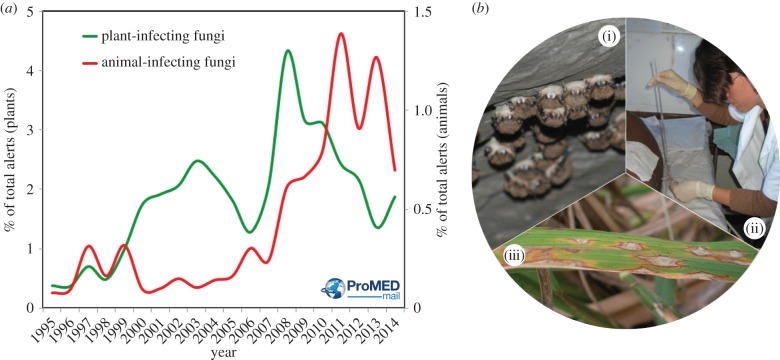
Emerging infections caused by fungi have become a widely recognized global phenomenon. Their notoriety stems from their causing plagues and famines, driving species extinctions, and the difficulty in treating human mycoses alongside the increase of their resistance to antifungal drugs. This special issue comprises a collection of articles resulting from a Royal Society discussion meeting examining why pathogenic fungi are causing more disease now than they did in the past, and how we can tackle this rapidly emerging threat to the health of plants and animals worldwide.This article is part of the themed issue 'Tackling emerging fungal threats to animal health, food security and ecosystem resilience'.
Keywords: emerging disease; fungi; mycosis.
© 2016 The Author(s).
Figures
References
-
- Gurr SJ, Samalova M, Fisher MC. 2011. The rise and rise of emerging infectious fungi challenges food security and ecosystem health. Fungal Biol. Rev. 25, 181–188. ( 10.1016/j.fbr.2011.10.004) - DOI
Publication types
MeSH terms
Grants and funding
LinkOut - more resources
Full Text Sources
Other Literature Sources
Medical
Miscellaneous
