


Comparative proteomic analysis of liver antioxidant mechanisms in Megalobrama amblycephala stimulated with dietary emodin
- PMID: 28084435
- PMCID: PMC5233964
- DOI: 10.1038/srep40356
Comparative proteomic analysis of liver antioxidant mechanisms in Megalobrama amblycephala stimulated with dietary emodin
Abstract
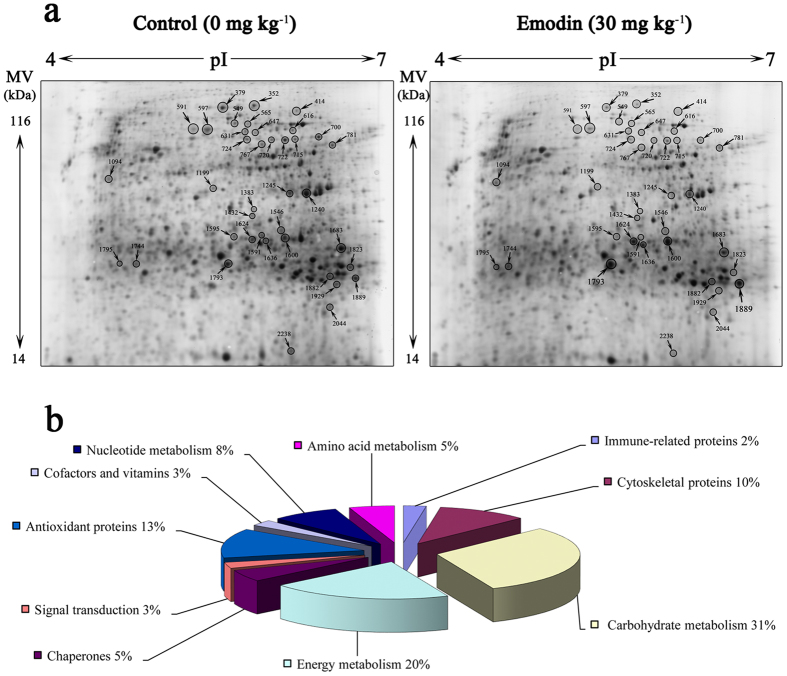
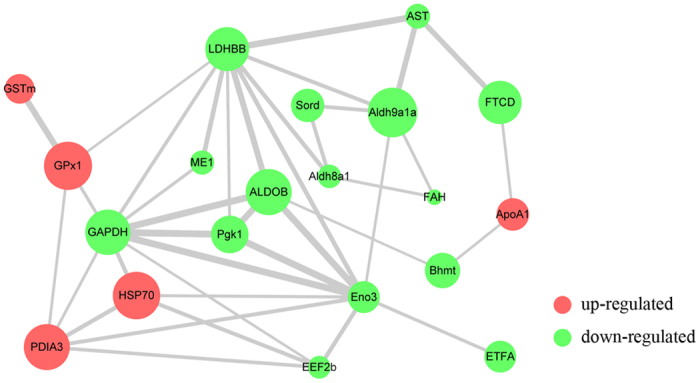
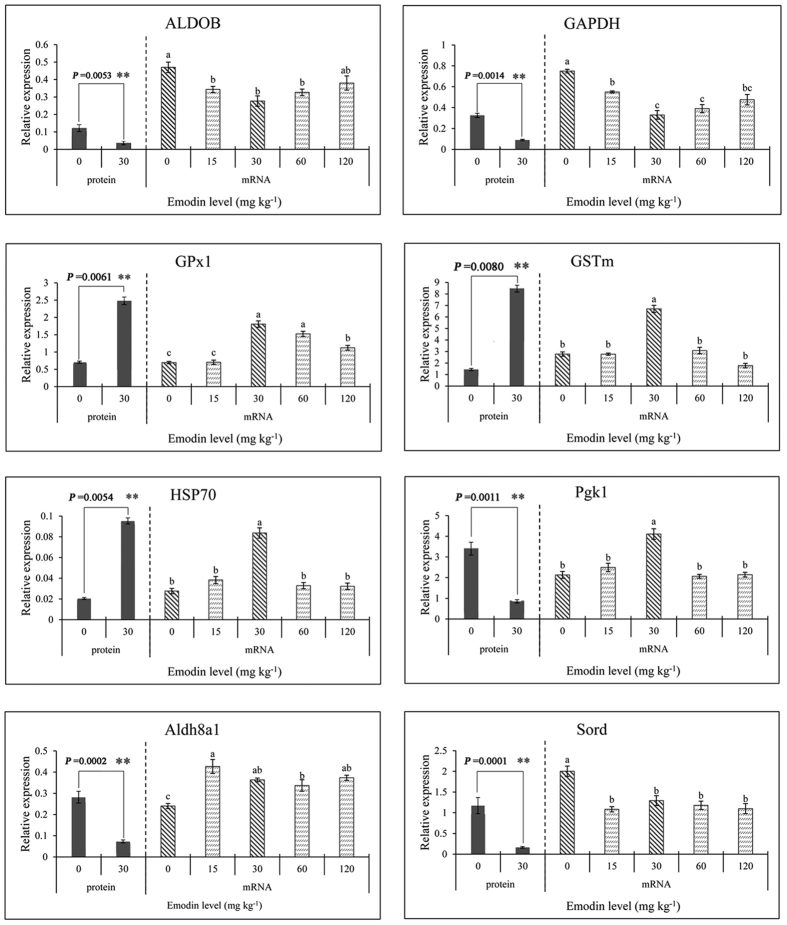
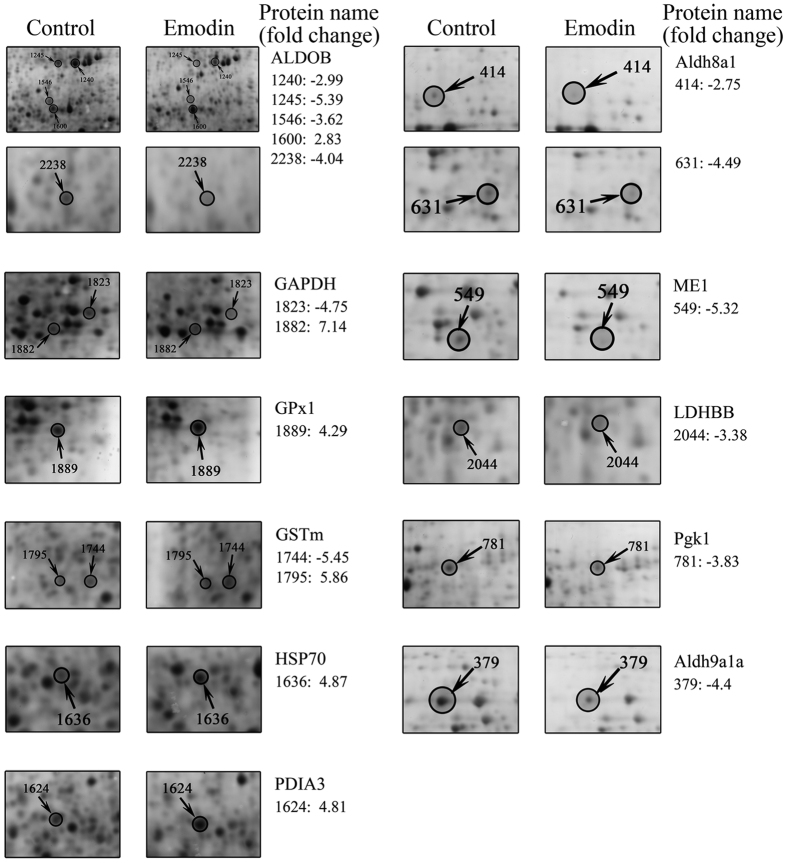
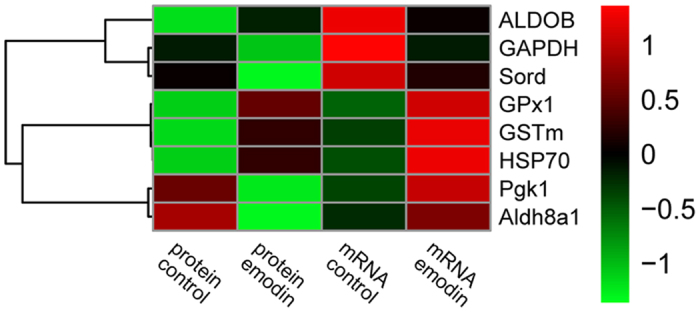
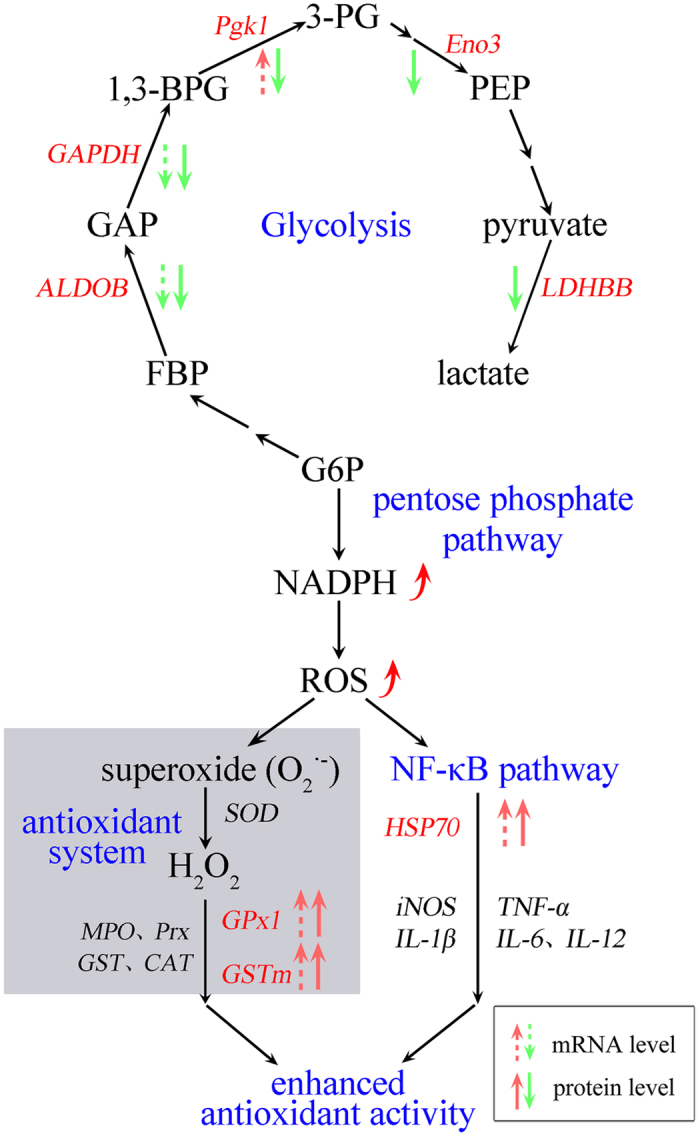
Oxidative stress is a toxicological endpoint that correlates with the nutrition status of fish through cellular damage, inflammation, and apoptosis. In order to understand the antioxidant mechanism induced by dietary emodin in Megalobrama amblycephala liver, a comparative proteomic analysis was performed to investigate the proteome alteration under emodin administration. 27 altered protein spots were separated under 30 mg kg-1 emodin stimulation based on 2-DE, and were all successfully identified using MALDI-TOF/TOF, representing 17 unique proteins. These proteins were functionally classified into antioxidant, metabolism, cytoskeleton, chaperone, signal transduction and cofactor groups. Network interaction and Gene Ontology annotation indicated 10 unique proteins were closely related to antioxidation and directly regulated by each other. Compared with the control group, administration of 30 mg kg-1 emodin significantly increased the antioxidant-related mRNA expressions of GPx1, GSTm and HSP70, but decreased the mRNA expressions of GAPDH and Sord, which was consistent with the protein expression. Nevertheless, Pgk1 and Aldh8a1 were up- and down-regulated, and ALDOB was down- and up-regulated at the mRNA and protein levels, respectively. These results revealed that the altered proteins enhanced antioxidation via complex regulatory mechanisms, and 30 mg kg-1 emodin was a suitable immunostimulant for M. amblycephala.
Figures
References
-
- Sakai M. Current research status of fish immunostimulants. Aquaculture. 172, 63–92 (1999).
-
- Purivirojkul W., Areechon N. & Srisapoome P. The Effect of peptidoglycan on Immune response in black tiger shrimp (Penaeus monodon Fabricius). Kasetsart J. (Nat Sci.). 40, 181–187 (2006).
-
- Qiao J. et al.. Proteomic identification of the related immune-enhancing proteins in shrimp Litopenaeus vannamei stimulated with vitamin C and Chinese herbs. Fish Shellfish Immunol. 31, 736–745 (2011). - PubMed
-
- Sesay D. F. et al.. Effects of dietary folic acid on the growth, digestive enzyme activity, immune response and antioxidant enzyme activity of blunt snout bream (Megalobrama amblycephala) fingerling. Aquaculture. 452, 142–150 (2016).
-
- Esteban M. A. et al.. Effect of dietary supplementation of probiotics and palm fruits extracts on the antioxidant enzyme gene expression in the mucosae of gilthead seabream (Sparus aurata L.). Fish Shellfish Immunol. 39, 532–540 (2014). - PubMed
Publication types
MeSH terms
Substances
LinkOut - more resources
Full Text Sources
Other Literature Sources
Medical
Research Materials
Miscellaneous
