


Mumps Epidemiology and Mumps Virus Genotypes Circulating in Mainland China during 2013-2015
- PMID: 28085897
- PMCID: PMC5234798
- DOI: 10.1371/journal.pone.0169561
Mumps Epidemiology and Mumps Virus Genotypes Circulating in Mainland China during 2013-2015
Abstract
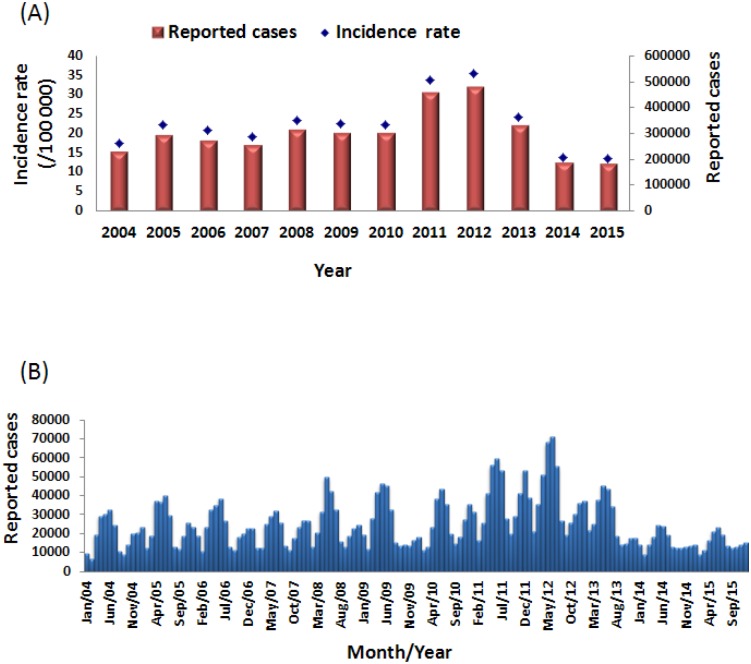
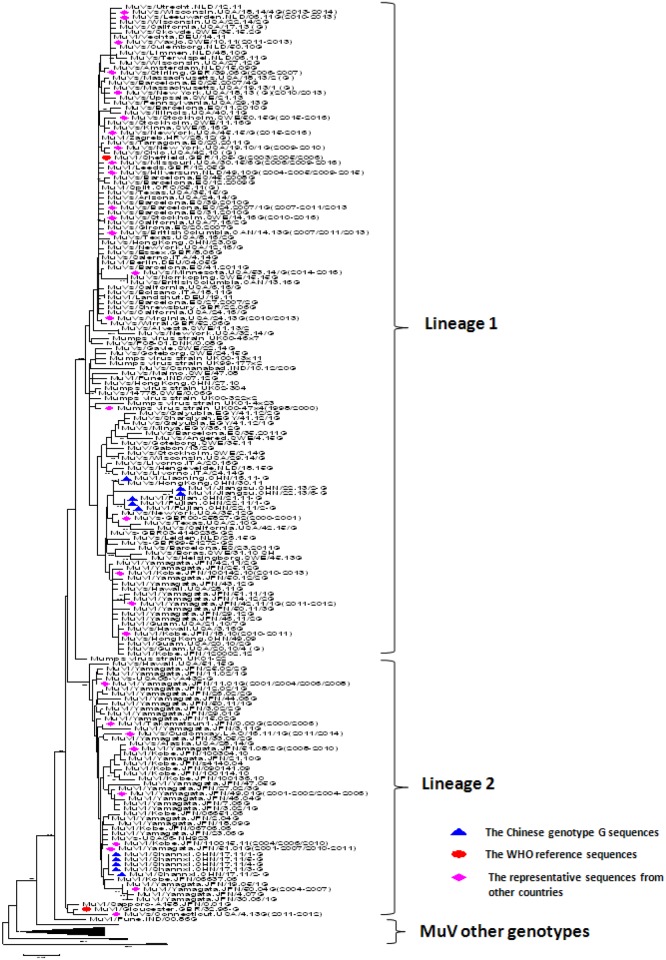
With the implementation of mumps virus (MuV) vaccination in the expanded program on immunization (EPI) in mainland China since 2008, the incidence of mumps has decreased, and the natural epidemic pattern of mumps has slightly changed during 2013-2015. The two epidemic peaks (April-July and November-December) became less obvious than those observed from 2004 to 2012. Children and adolescents younger than 15, particularly in the five-to-nine-year-old age group, remain the target group and should be the focus of high-quality immunization activities in mainland China. However, it was also found that the incidence and reported cases of mumps decreased in each age group during 2013-2015, particularly in the five-to-nine-year-old and ten-to-fourteen-year-old age groups. The proportion of mumps cases among adults in some provinces also increased. Unlike the changes in the epidemiological characteristics of mumps affected by vaccination, the data of MuV virology surveillance indicated that most of the MuV transmission chains have not yet been effectively interrupted, and MuV remains a natural epidemic pattern in mainland China. In the MuV virology surveillance, 194 MuV strains during 2013-2015 were isolated from 10 of 31 provinces in mainland China. Based on the phylogenetic analysis of the small hydrophobic (SH) gene, both genotype F (99.0%) and G (1.0%) were identified, and genotype F was still the predominant genotype continuously circulating in mainland China. Representative genotype F and G strains isolated in China from 1995 to 2012 were selected for further analysis. The results indicated that there were multiple transmission chains within genotype F, with no obvious geographical or time differences. The high genetic diversity of genotype F strains could be a result of the continuous transmission and evolution of the MuV in mainland China. Genotype G was also detected in four provinces in mainland China. Because of the limited epidemiological data, it was uncertain whether the genotype G MuV strains found in 2011 and 2013 were imported from other countries. Therefore, combined high-quality epidemiological and virological surveillance is necessary for mumps control; it can also be used to observe the changes in epidemiological characteristics and viral transmission of mumps over time after mumps-containing vaccine (MuCV) implementation and to provide a comprehensive epidemiological and genetic baseline for mumps elimination in mainland China.
Conflict of interest statement
The authors have declared that no competing interests exist.
Figures


References
-
- World Health Organization. Mumps virus nomenclature update: 2012. Wkly Epidemiol Rec. 2012;87: 217–224. - PubMed
MeSH terms
Substances
LinkOut - more resources
Full Text Sources
Other Literature Sources
Medical
Miscellaneous
