


In vivo antiplasmodial activity and toxicological assessment of hydroethanolic crude extract of Ajuga remota
- PMID: 28086782
- PMCID: PMC5237349
- DOI: 10.1186/s12936-017-1677-3
In vivo antiplasmodial activity and toxicological assessment of hydroethanolic crude extract of Ajuga remota
Abstract
Background: Malaria is one of the most life-threatening health problems worldwide and treatment has been compromised by drug resistance. Identifying lead molecules from natural products might help to find better anti-malarial drugs, since those obtained from natural sources are still effective against malarial parasites. This study aimed at investigating the in vivo antiplasmodial activity of crude extract of the leaves of Ajuga remota together with its safety in mice models.
Methods: In vivo parasite growth inhibitory effect of crude extract was assessed in mice inoculated with Plasmodium berghei (ANKA strain). The in vivo antiplasmodial activity of the test extract was performed against early infection (4-day suppressive test), curative effect against established infection and prophylactic effect against residual infection. Acute and sub-acute toxicity were carried out according to OECD guidelines.
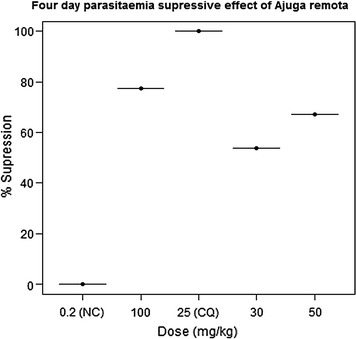
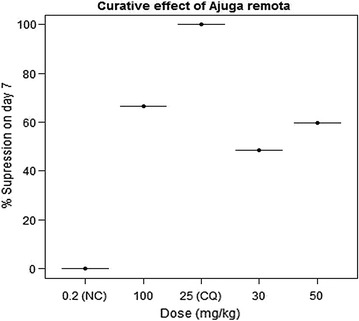
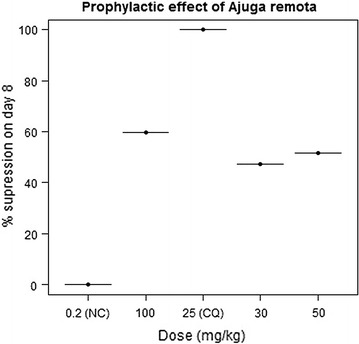
Results: In vivo parasite growth inhibition effect of hydroethanolic crude extract of A. remota was evaluated at 30, 50 and 100 mg/kg dose levels. It suppressed parasitaemia by 77.34% at 100 mg/kg dose level in the 4-day test. In curative and prophylactic potential tests, it suppressed parasitaemia by 66.67 and 59.66% at 100 mg/kg dose level, respectively. In vivo toxicity tests revealed no toxicity. All parasitaemia suppressions were statistically significant at P < 0.05 as compared to the vehicle-treated group. The crude extract also prolonged survival time in a dose dependent manner.
Conclusions: The investigation results suggest that the leave extract of Ajuga remota possesses antimalarial activity.
Keywords: Ajuga remota; Malaria; Plasmodium berghei (ANKA strain).
Figures
References
-
- WHO. World malaria report. Geneva: World Health Organization;2014.
-
- Mace KE, Chalwe V, Katalenich BL, Nambozi M, Mubikayi L, Mulele CK, et al. Evaluation of sulfadoxine-pyrimethamine for intermittent preventive treatment of malaria in pregnancy: a retrospective birth outcomes study in Mansa, Zambia. Malar J. 2015;14:69. doi: 10.1186/s12936-015-0576-8. - DOI - PMC - PubMed
-
- Hedberg I, Kelbessa E, Edwards S, Demissew S, Persson E. Flora of Ethiopia and Eritrea. Uppsala; 2006. p. 527–28.
Publication types
MeSH terms
Substances
LinkOut - more resources
Full Text Sources
Other Literature Sources
Medical
