


Compendium of TCDD-mediated transcriptomic response datasets in mammalian model systems
- PMID: 28086803
- PMCID: PMC5237151
- DOI: 10.1186/s12864-016-3446-z
Compendium of TCDD-mediated transcriptomic response datasets in mammalian model systems
Abstract
Background: 2,3,7,8-tetrachlorodibenzo-p-dioxin (TCDD) is the most potent congener of the dioxin class of environmental contaminants. Exposure to TCDD causes a wide range of toxic outcomes, ranging from chloracne to acute lethality. The severity of toxicity is highly dependent on the aryl hydrocarbon receptor (AHR). Binding of TCDD to the AHR leads to changes in transcription of numerous genes. Studies evaluating the transcriptional changes brought on by TCDD may provide valuable insight into the role of the AHR in human health and disease. We therefore compiled a collection of transcriptomic datasets that can be used to aid the scientific community in better understanding the transcriptional effects of ligand-activated AHR.
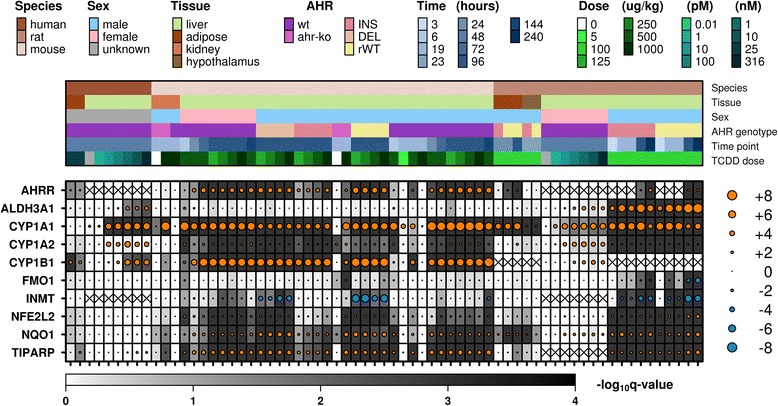
Results: Specifically, we have created a datasets package - TCDD.Transcriptomics - for the R statistical environment, consisting of 63 unique experiments comprising 377 samples, including various combinations of 3 species (human derived cell lines, mouse and rat), 4 tissue types (liver, kidney, white adipose tissue and hypothalamus) and a wide range of TCDD exposure times and doses. These datasets have been fully standardized using consistent preprocessing and annotation packages (available as of September 14, 2015). To demonstrate the utility of this R package, a subset of "AHR-core" genes were evaluated across the included datasets. Ahrr, Nqo1 and members of the Cyp family were significantly induced following exposure to TCDD across the studies as expected while Aldh3a1 was induced specifically in rat liver. Inmt was altered only in liver tissue and primarily by rat-AHR.
Conclusions: Analysis of the "AHR-core" genes demonstrates a continued need for studies surrounding the impact of AHR-activity on the transcriptome; genes believed to be consistently regulated by ligand-activated AHR show surprisingly little overlap across species and tissues. Until now, a comprehensive assessment of the transcriptome across these studies was challenging due to differences in array platforms, processing methods and annotation versions. We believe that this package, which is freely available for download ( http://labs.oicr.on.ca/boutros-lab/tcdd-transcriptomics ) will prove to be a highly beneficial resource to the scientific community evaluating the effects of TCDD exposure as well as the variety of functions of the AHR.
Keywords: AHR; Microarray datasets; R; TCDD.
Figures
References
-
- Shen ES, Whitlock JP., Jr Protein-DNA interactions at a dioxin-responsive enhancer. Mutational analysis of the DNA-binding site for the liganded Ah receptor. J Biol Chem. 1992;267(10):6815–6819. - PubMed
Publication types
MeSH terms
Substances
Grants and funding
LinkOut - more resources
Full Text Sources
Other Literature Sources
Miscellaneous
