Review
. 2017 Feb;33(2):143-154.
doi: 10.1016/j.tig.2016.12.002. Epub 2017 Jan 10.

Lingering Questions about Enhancer RNA and Enhancer Transcription-Coupled Genomic Instability

Affiliations
Review

Lingering Questions about Enhancer RNA and Enhancer Transcription-Coupled Genomic Instability

Gerson Rothschild et al. Trends Genet. 2017 Feb.

Abstract

Intergenic and intragenic enhancers found inside topologically associated regulatory domains (TADs) express noncoding RNAs, known as enhancer RNAs (eRNAs). Recent studies have indicated these eRNAs play a role in gene regulatory networks by controlling promoter and enhancer interactions and topology of higher-order chromatin structure. Misregulation of enhancer and promoter associated noncoding RNAs (ncRNAs) could stabilize deleterious secondary DNA structures, noncoding RNA associated DNA/RNA hybrid formation, and promote collisions of transcription complexes with replisomes. It is revealing that many chromosomal aberrations, some associated with malignancies, are present inside enhancer and/or promoter sequences. Here, we expand on current concepts to discuss enhancer RNAs and enhancer transcription, and how enhancer transcription influences genomic organization and integrity.

Keywords: RNA exosome; bidirectional transcription; enhancer RNA; enhancer transcription; long noncoding RNA.


Figures

Figure 1
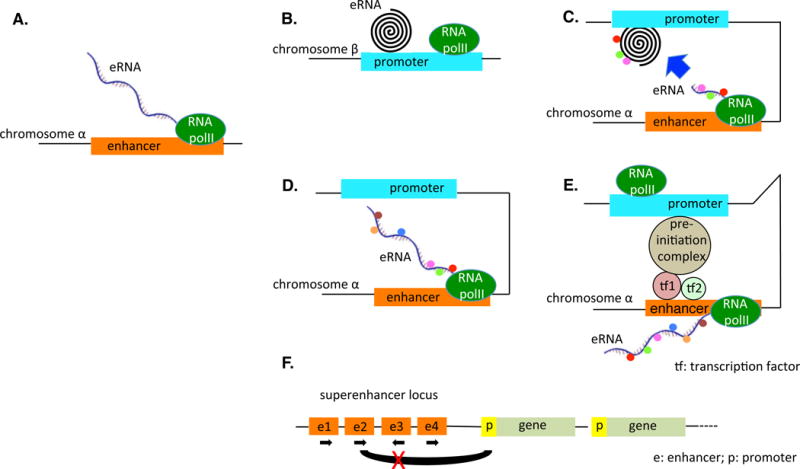
Figure 1. [CK11]Models for Various Classes of Enhancers and Their Mechanism of Function
(A) eRNA is generated on chromosome α[CK12]. (B) eRNA acts in trans affecting a gene on a different chromosome (β). (C) eRNA acts in trans affecting a gene on the same chromosome. (D) eRNA acts in cistrans. The transcript of the eRNA, bound by various proteins, binds to the target and influences expression. Alteration of the sequence of the transcript, thereby altering protein factor binding, helps to determine whether the sequence of the transcript itself or the act of transcription is critical. (E) cis model postulating that the eRNA transcript itself is not important; rather, the act of transcription of the enhancer allows the preinitiation complex to form a bridge between the enhancer region and the target region. (F) Superenhancer locus in which poorly understood interactions between various enhancers in various orientations may affect gene expression. The black loop between the second enhancer and the promoter of the first gene, for example, may function under circumstances but be blocked if the third enhancer, transcribed in the opposite orientation, is activated. Abbreviations: e, enhancer; eRNA, enhancer RNA; p, promoter; RNA polII, RNA polymerase II; tf, transcription factor.[CK13]
Figure 2
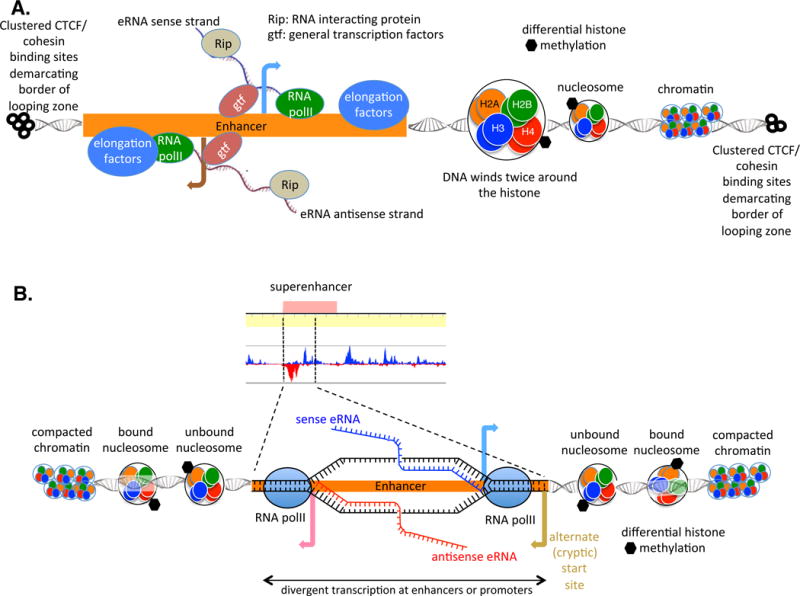
Figure 2. (Key Figure). Divergent Transcription at Enhancer Sequence
(A) Sense and antisense eRNA transcripts generated from an enhancer element. Transcripts may loop around and affect gene regulation by binding to promoters, as modeled in Figure 1. Note the presence of the clustered CTCF- and cohesin-binding sites, which demarcate the TAD. Looping between enhancers and promoters is believed to occur within a TAD but not between TADs. Looping occurs in open chromatin so that as distance from the enhancer increases, histones are compacted into nucleosomes and then further compacted into heterochromatin. Superenhancers are defined by altered histone methylation/acetylation. (B) In a superenhancer (series of enhancers in close proximity to one another causing high enhancer density), transcription of sense and antisense eRNAs in opposite orientations (by divergent enhancers) may mark the site for the cellular machinery as a location to which looping occurs. The antisense transcript may stall due to various hindrances, causing ‘flap-back’ of the nascent RNA and generating RNA–DNA structures called R loops. R loops attract AID whose activity causes alterations in the DNA and may allow looping to other areas (AID not shown in figure). Alternate (or cryptic) start sites may likewise generate transcripts (transcript not portrayed in figure). Abbreviations: AID, activation-induced deaminase; CTCF, [CK14]; eRNA, enhancer RNA; gtf, general transcription factor; Rip, RNA-interacting protein; RNA polII; RNA polymerase II; TAD, topologically associated domain.
Figure 3
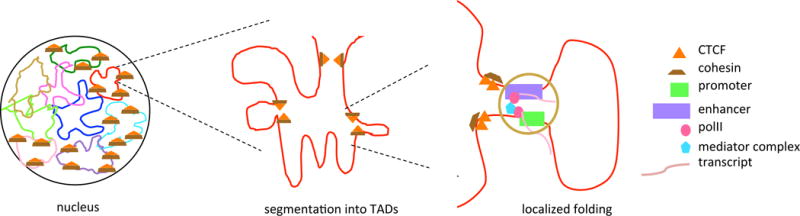
Figure 3. High Resolution of Genome Structure and Looping
(A) Schematic of a mammalian nucleus with nine chromosomes indicated. Five of the chromosomes have TADs demarcated by CTCF/cohesin protein aggregates. (B) Magnified view of a TAD demarcated by CTCF/cohesin boundary marks. Note that subloops occur within the TAD – potentially bringing together a number of loops so that different promoters and enhancers interact with distant DNA sites concurrently (not indicated in figure) – but looping between TADs is thought not to occur except in states of disease. (C) Magnified view of the extrusion complex in B. Note the mediator complex interacting with the polymerases. Abbreviations: CTCF, [CK15]; TAD, topologically associated domain.
Figure 4
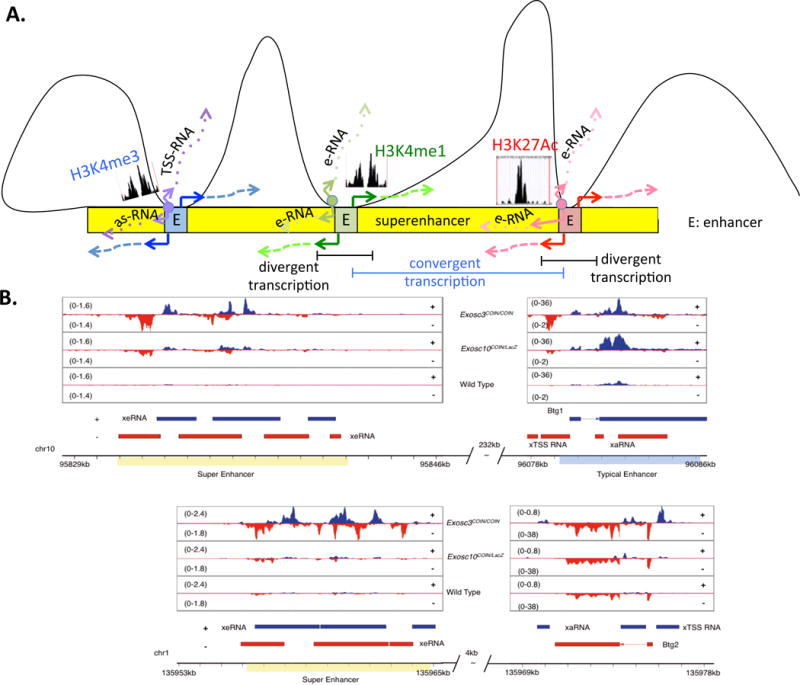
Figure 4. Clustering of Sense–Antisense-Expressing Genes around Superenhancers
(A) A schematic showing (from left) a promoter (enriched for H3K4me3 marks and expressing TSS- and as-RNAs), (middle) an enhancer (enriched for H3K4me1 marks and expressing bidirectional enhancer RNAs), and (right) a superenhancer (enriched for H3K27Ac marks and expressing bidirectional enhancer RNAs) interacting with three separate enhancer loci within a superenhancer locus (blue, green, and red loci within the yellow superenhancer). Bidirectional transcription marks each of the three loci, potentially marking them as candidates for interaction with the superenhancer locus. Divergent transcripts are transcribed in opposite orientations (highlighted in black bar) but two closely-spaced divergent transcripts may form a situation of convergent transcription (highlighted in blue bar). (B) IGV[CK16] reads from cultured splenocytes illustrate that synthesis of as-RNAs may permit functional engagement with superenhancer elements to form higher-order chromosomal structures. (Top) A superenhancer–enhancer (overlapping the Btg1 gene) pair separated by a distance of 232 kb, expressing exosome-linked se-RNAs and TSS-RNAs, respectively. (Bottom) A superenhancer–enhancer (overlapping the Btg2 gene) pair separated by a distance of 4 kb, expressing exosome-linked se-RNAs and as-RNAs, respectively. Unshown: in examples where the enhancer–superenhancer are separated by distances >310 kb, the enhancer is less likely to express exosome-linked TSS-RNAs. Adapted from [12]. Abbreviations: as-RNA, antisense RNA; E, enhancer; eRNA, enhancer RNA; se-RNA, superenhancer RNA; TSS-RNA, transcription start site RNA.

References

    1. Feng Y, et al. Methods for the study of long noncoding RNA in cancer cell signaling. Methods Mol Biol. 2014;1165:115–143. - PMC - PubMed
    1. Mullokandov G, et al. High-throughput assessment of microRNA activity and function using microRNA sensor and decoy libraries. Nat Methods. 2012;9:840–846. - PMC - PubMed
    1. Hennessy E, O’Driscoll L. MicroRNA expression analysis: techniques suitable for studies of intercellular and extracellular microRNAs. Methods Mol Biol. 2011;784:99–107. - PubMed
    1. Siomi MC. PIWI-Interacting RNAs : Methods And Protocols[CK9]
    1. Carmichael GG. Regulatory Non-Coding RNAs : Methods and Protocols

Publication types