


How prepared are UK medical graduates for practice? A rapid review of the literature 2009-2014
- PMID: 28087554
- PMCID: PMC5253586
- DOI: 10.1136/bmjopen-2016-013656
How prepared are UK medical graduates for practice? A rapid review of the literature 2009-2014
Abstract
Objective: To understand how prepared UK medical graduates are for practice and the effectiveness of workplace transition interventions.
Design: A rapid review of the literature (registration #CRD42013005305).
Data sources: Nine major databases (and key websites) were searched in two timeframes (July-September 2013; updated May-June 2014): CINAHL, Embase, Educational Resources Information Centre, Health Management Information Consortium, MEDLINE, MEDLINE in Process, PsycINFO, Scopus and Web of Knowledge.
Eligibility criteria for selecting studies: Primary research or studies reporting UK medical graduates' preparedness between 2009 and 2014: manuscripts in English; all study types; participants who are final-year medical students, medical graduates, clinical educators, patients or NHS employers and all outcome measures.
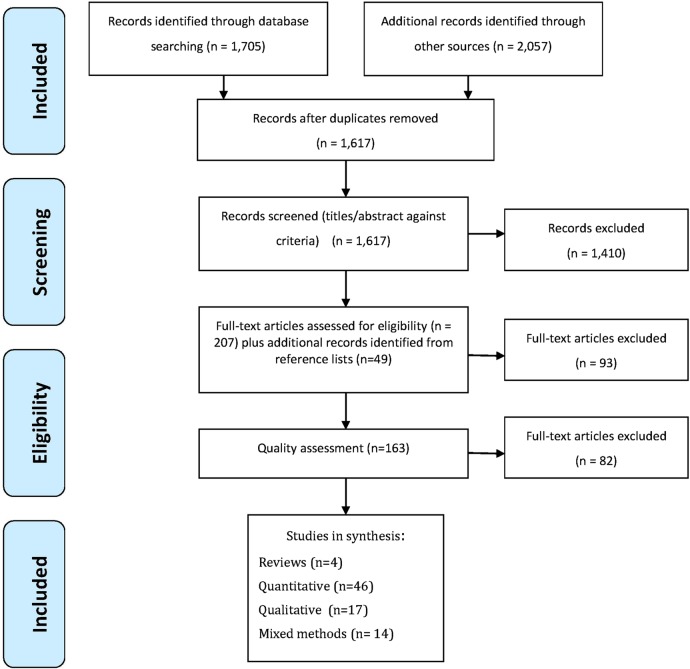
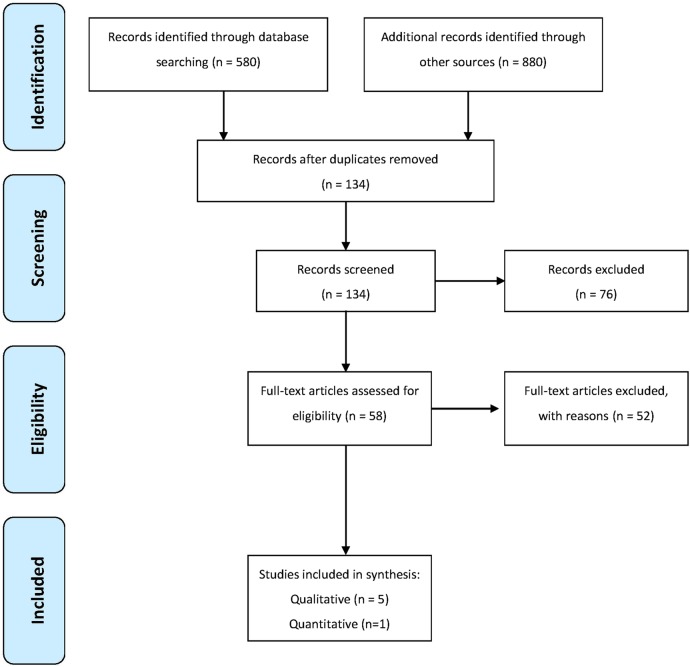
Data extraction: At time 1, three researchers screened manuscripts (for duplicates, exclusion/inclusion criteria and quality). Remaining 81 manuscripts were coded. At time 2, one researcher repeated the process for 2013-2014 (adding six manuscripts). Data were analysed using a narrative synthesis and mapped against Tomorrow's Doctors (2009) graduate outcomes.
Results: Most studies comprised junior doctors' self-reports (65/87, 75%), few defined preparedness and a programmatic approach was lacking. Six themes were highlighted: individual skills/knowledge, interactional competence, systemic/technological competence, personal preparedness, demographic factors and transitional interventions. Graduates appear prepared for history taking, physical examinations and some clinical skills, but unprepared for other aspects, including prescribing, clinical reasoning/diagnoses, emergency management, multidisciplinary team-working, handover, error/safety incidents, understanding ethical/legal issues and ward environment familiarity. Shadowing and induction smooth transition into practice, but there is a paucity of evidence around assistantship efficacy.
Conclusions: Educational interventions are needed to address areas of unpreparedness (eg, multidisciplinary team-working, prescribing and clinical reasoning). Future research in areas we are unsure about should adopt a programmatic and rigorous approach, with clear definitions of preparedness, multiple stakeholder perspectives along with multisite and longitudinal research designs to achieve a joined-up, systematic, approach to understanding future educational requirements for junior doctors.
Keywords: BASIC SCIENCES; EDUCATION & TRAINING (see Medical Education & Training); GENERAL MEDICINE (see Internal Medicine); INTENSIVE & CRITICAL CARE.
Published by the BMJ Publishing Group Limited. For permission to use (where not already granted under a licence) please go to http://www.bmj.com/company/products-services/rights-and-licensing/.
Conflict of interest statement
Conflicts of Interest: None declared.
Figures
References
-
- Royal College of General Practitioners. The 2022 GP: a vision for general practice in the future NHS. London: Royal College of General Practitioners, 2013. http://wwwrcgporguk/campaign-home/~/media/files/policy/a-z-policy/the-20....
-
- Boyd CM, Fortin M. Future of multimorbidity research: how should understanding of multimorbidity inform health system design? Public Health Rev 2010;33:451–74.
Publication types
MeSH terms
LinkOut - more resources
Full Text Sources
Other Literature Sources
