


Modulation of neuroinflammation and pathology in the 5XFAD mouse model of Alzheimer's disease using a biased and selective beta-1 adrenergic receptor partial agonist
- PMID: 28089846
- PMCID: PMC5385159
- DOI: 10.1016/j.neuropharm.2017.01.010
Modulation of neuroinflammation and pathology in the 5XFAD mouse model of Alzheimer's disease using a biased and selective beta-1 adrenergic receptor partial agonist
Abstract
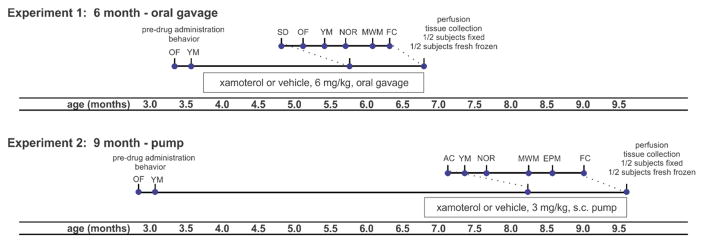
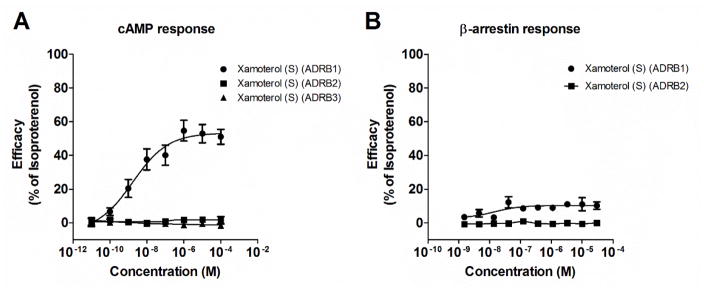
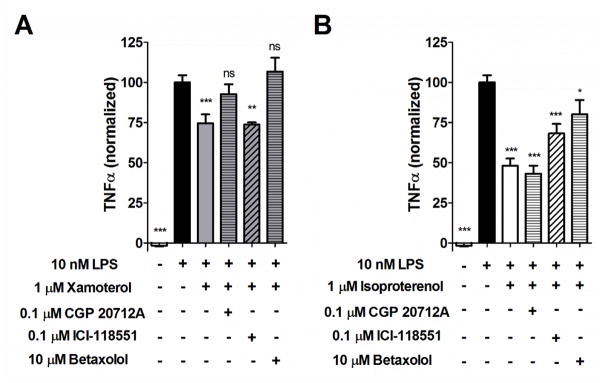
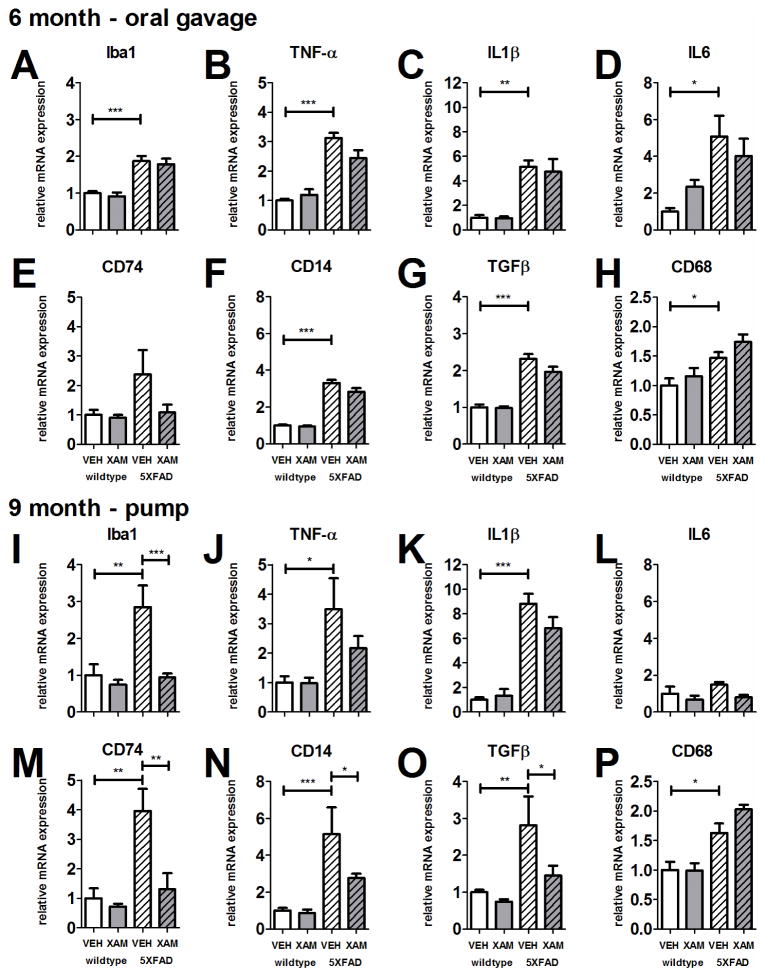
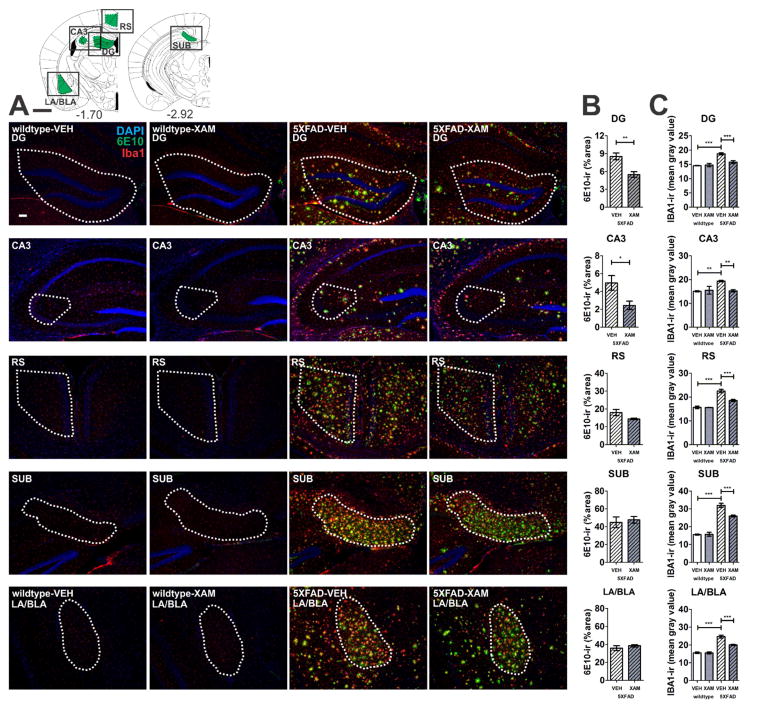
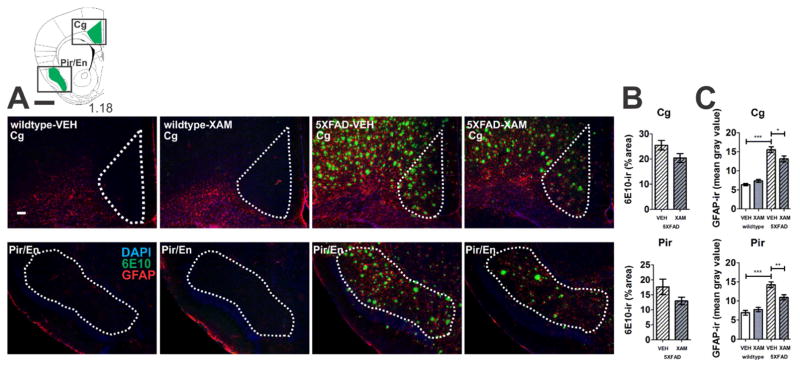
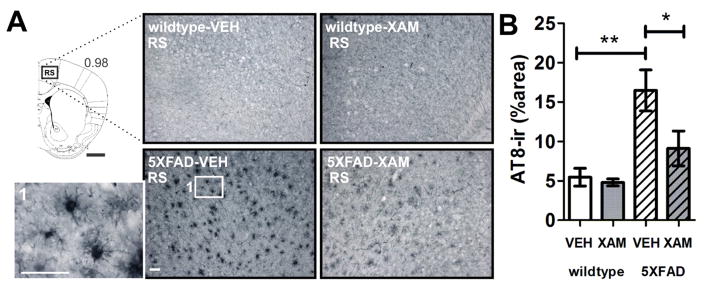
Degeneration of noradrenergic neurons occurs at an early stage of Alzheimer's Disease (AD). The noradrenergic system regulates arousal and learning and memory, and has been implicated in regulating neuroinflammation. Loss of noradrenergic tone may underlie AD progression at many levels. We have previously shown that acute administration of a partial agonist of the beta-1 adrenergic receptor (ADRB1), xamoterol, restores behavioral deficits in a mouse model of AD. The current studies examined the effects of chronic low dose xamoterol on neuroinflammation, pathology, and behavior in the pathologically aggressive 5XFAD transgenic mouse model of AD. In vitro experiments in cells expressing human beta adrenergic receptors demonstrate that xamoterol is highly selective for ADRB1 and functionally biased for the cAMP over the β-arrestin pathway. Data demonstrate ADRB1-mediated attenuation of TNF-α production with xamoterol in primary rat microglia culture following LPS challenge. Finally, two independent cohorts of 5XFAD and control mice were administered xamoterol from approximately 4.0-6.5 or 7.0-9.5 months, were tested in an array of behavioral tasks, and brains were examined for evidence of neuroinflammation, and amyloid beta and tau pathology. Xamoterol reduced mRNA expression of neuroinflammatory markers (Iba1, CD74, CD14 and TGFβ) and immunohistochemical evidence for microgliosis and astrogliosis. Xamoterol reduced amyloid beta and tau pathology as measured by regional immunohistochemistry. Behavioral deficits were not observed for 5XFAD mice. In conclusion, chronic administration of a selective, functionally biased, partial agonist of ADRB1 is effective in reducing neuroinflammation and amyloid beta and tau pathology in the 5XFAD model of AD.
Keywords: 5XFAD; Alzheimer's disease; Amyloid beta; Beta-1 adrenergic receptor; Betaxolol hydrochloride (PubChem CID: 107952); CGP 20712A (PubChem CID: 2685); ICI-118551 (PubChem CID: 5484725); Isoproterenol (PubChem CID: 3779); Neuroinflammation; Xamoterol; Xamoterol (PubChem CID: 155774).
Copyright © 2017 Elsevier Ltd. All rights reserved.
Conflict of interest statement
Cortice Biosciences has licensed a patent for xamoterol from Stanford University. MS previously served as a paid scientific advisor for Cortice until May 2016. This work was not designed, initiated or funded by Cortice.
Figures
References
-
- Blanchard V, Moussaoui S, Czech C, Touchet N, Bonici B, Planche M, et al. Time sequence of maturation of dystrophic neurites associated with Abeta deposits in APP/PS1 transgenic mice. Exp Neurol. 2003;184:247–263. - PubMed
-
- Bondareff W, Mountjoy CQ, Roth M, Rossor MN, Iversen LL, Reynolds GP, et al. Neuronal degeneration in locus ceruleus and cortical correlates of Alzheimer disease. Alzheimer Dis Assoc Disord. 1987;1:256–262. - PubMed
-
- Braak H, Thal DR, Ghebremedhin E, Del TK. Stages of the pathologic process in Alzheimer disease: age categories from 1 to 100 years. J Neuropathol Exp Neurol. 2011;70:960–969. - PubMed
Publication types
MeSH terms
Substances
Grants and funding
LinkOut - more resources
Full Text Sources
Other Literature Sources
Medical
Molecular Biology Databases
Research Materials
