Clinical characteristics and molecular pathology of skull ectopic thyroid cancer
- PMID: 28090518
- PMCID: PMC5220041
- DOI: 10.21037/atm.2016.12.19
Clinical characteristics and molecular pathology of skull ectopic thyroid cancer
Abstract
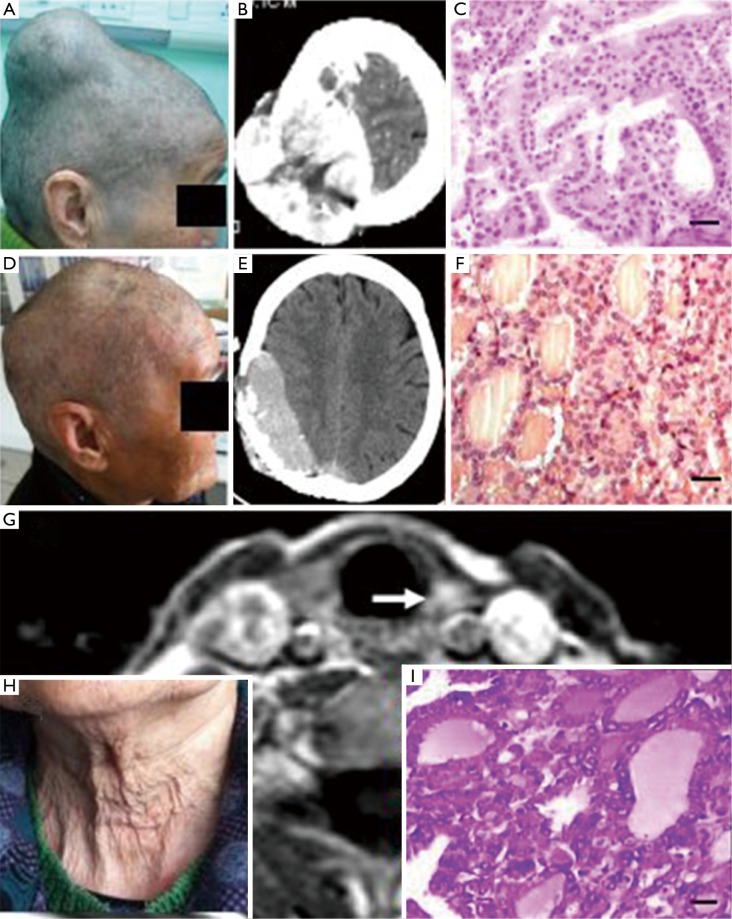
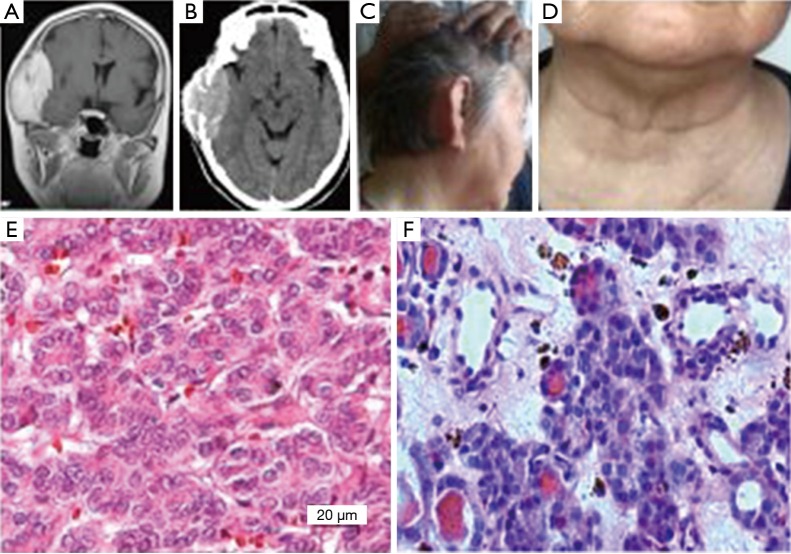
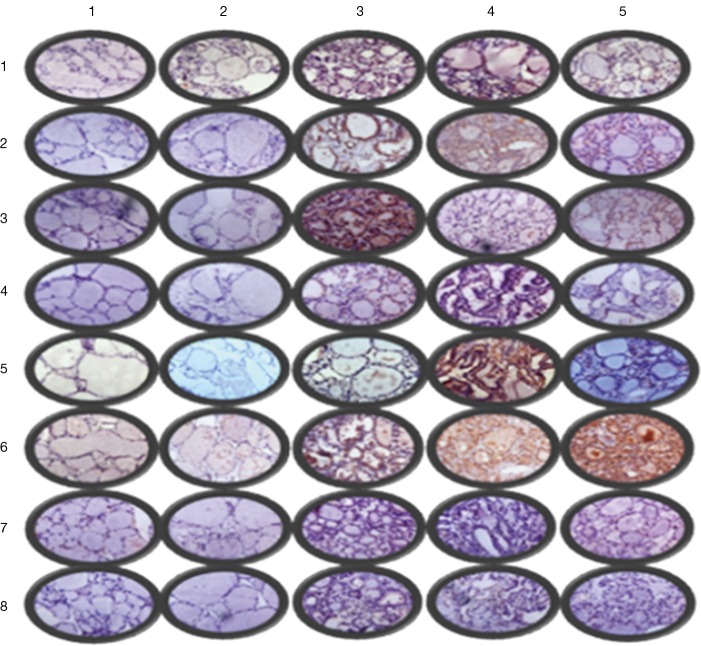
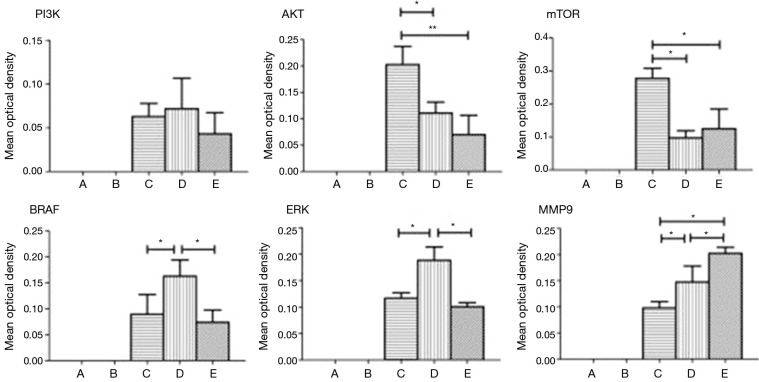
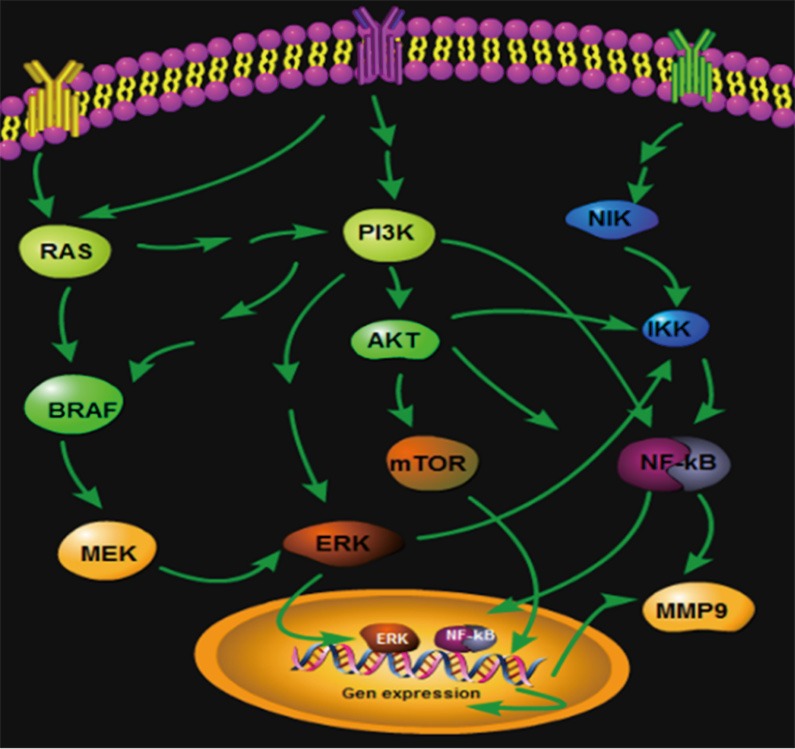
Thyroid cancer is very common, but skull ectopic thyroid cancer has not been reported in 50 years of literatures in foreign countries. There are only four cases of the skull ectopic thyroid cancer reported in more than 30 years of domestic literature including the cases in this report. This paper aims to investigate the clinical characteristics and possible molecular mechanisms of this rare disease. Five keywords of "thyroid gland", "ectopic thyroid", "thyroid cancer", "ectopic thyroid cancer" and "metastatic thyroid cancer" were included and 50 years of literatures in the PubMed-MEDLINE and Wanfang database were reviewed. By combining the test data of 2 cases of surgical patient tissue microarray specimens-molecular immunology pathology, the possible molecular mechanisms were analyzed and molecular regulation network diagram was drawn. The skull ectopic thyroid cancer has not been reported in 50 years of literatures in foreign countries and there are only four cases of the skull ectopic thyroid cancer reported in more than 30 years of domestic literature including the cases in this report. The molecular expressions of skull ectopic thyroid cancer, orthotopic thyroid cancer, and metastatic thyroid cancer were not the same: (I) AKT (P=0.012, 0.002) and mTOR (P=0.002, 0.004) were highly expressed in the skull ectopic thyroid cancer; (II) BRAF (P=0.029, 0.014) and ERK (P=0.002, 0.001) were highly expressed in orthotopic thyroid cancer; (III) MMP-9 (P=0.023, 0.016) was highly expressed in metastatic thyroid cancer. According to the molecular information base, the PI3K is predicted to be a key crossing gene of the above three signaling pathways, which showed no significant differences in these three thyroid cancers (P=0.692, 0.388, 0.227), but PI3K has regulation roles in the three signaling pathways of Akt/mTOR, MAPK, and NF-κB. PI3K gene is an important starting gene of thyroid cancers. After the canceration starts, due to the fact that the local microenvironments of thyroid cancers in different parts are different, the thyroid cancers are regulated by different signaling pathways. The ectopic thyroid cancer was correlated with Akt/mTOR pathway high expression; orthotopic thyroid was related with MAPK/BRAF/ERK signaling pathway high expression; and the metastatic thyroid cancer was related with NFkB/MMP9 high expression.
Keywords: Ectopic thyroid; ectopic thyroid carcinoma; metastatic thyroid carcinoma; molecular pathway; thyroid carcinoma.
Conflict of interest statement
The authors have no conflicts of interest to declare.
Figures
References
-
- Cordes S, Nelson JJ. Papillary carcinoma arising in median ectopic thyroid tissue: management of the thyroid gland. Ear Nose Throat J 2010;89:E4-7. - PubMed
-
- Xiao H, Huang Q, Dong J, et al. The analysis on the relationship between expressions of ABCG2, VEGF, IGFBP-2 and EGFR in glioma tissue microarray and prognosis. Chinese Journal of Neuromedicine 2007;6:878-82.
-
- Xu J, Cai J, Jin X, et al. PIG3 plays an oncogenic role in papillary thyroid cancer by activating the PI3K/AKT/PTEN pathway. Oncol Rep 2015;34:1424-30. - PubMed
Publication types
LinkOut - more resources
Full Text Sources
Other Literature Sources
Research Materials
Miscellaneous