


Treatment outcomes for multidrug-resistant tuberculosis under DOTS-Plus: a systematic review and meta-analysis of published studies
- PMID: 28093078
- PMCID: PMC5240443
- DOI: 10.1186/s40249-016-0214-x
Treatment outcomes for multidrug-resistant tuberculosis under DOTS-Plus: a systematic review and meta-analysis of published studies
Abstract
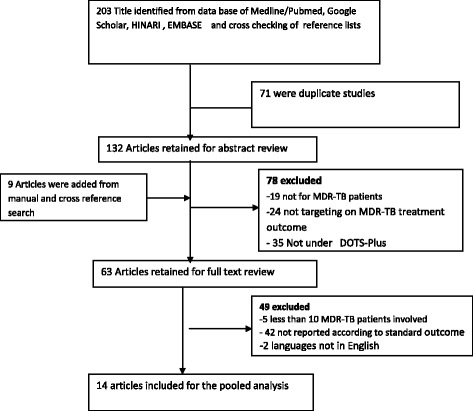
Background: Anti-tuberculosis drug resistance is a major public health problem that threatens the progress made in tuberculosis care and control worldwide. Treatment success rates of multidrug-resistant tuberculosis (MDR-TB) is a key issue that cannot be ignored. There is a paucity of evidence that assessed studies on the treatment of MDR-TB, which focus on the effectiveness of the directly observed treatment, short-course (DOTS)-Plus program. Therefore, it is crucial to assess and summarize the overall treatment outcomes for MDR-TB patients enrolled in the DOTS-Plus program in recent years. The purpose of this study was to thus assess and summarize the available evidence for MDR-TB treatment outcomes under DOTS-Plus.
Methods: A systematic review and meta-analysis of published literature was conducted. Original studies were identified using the databases MEDLINE®/PubMed®, Hinari, and Google Scholar. Heterogeneity across studies was assessed using the Cochran's Q test and I2 statistic. Pooled estimates of treatment outcomes were computed using the random effect model.
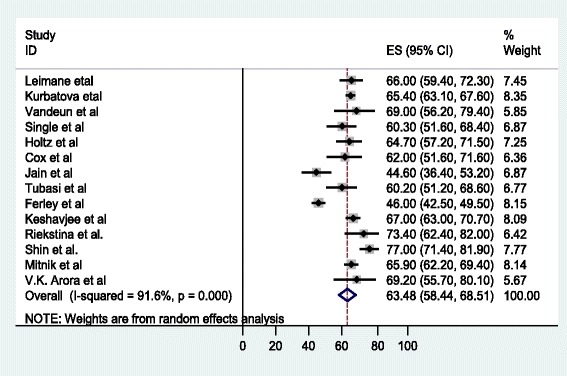
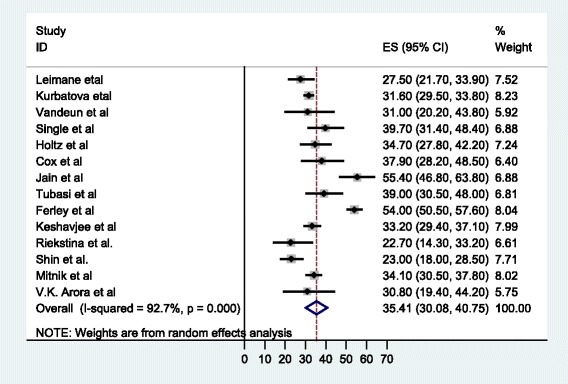
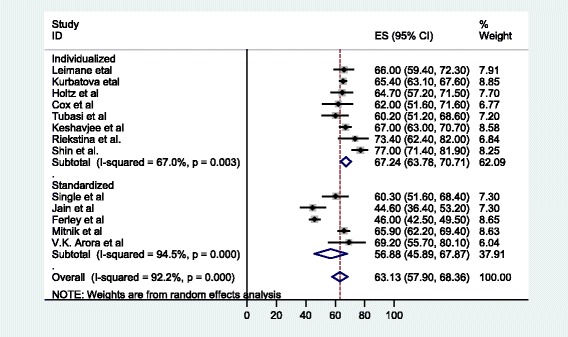
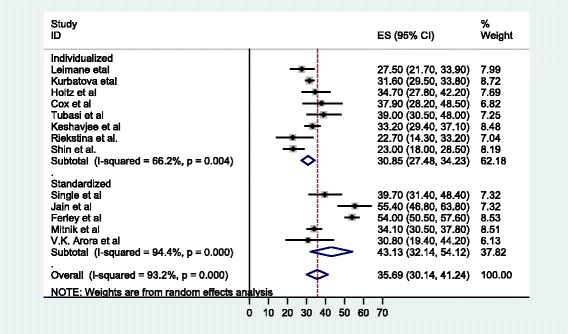
Results: Based on the 14 observational studies included in the meta-analysis, it was determined that 5 047 patients reported treatment outcomes. Of these, the pooled prevalence, 63.5% (95% CI: 58.4-68.5%) successfully completed full treatment (cured or treatment completed) with a pooled cure rate of 55.6%, whereas 12.6% (95% CI: 9.0-16.2%) of the patients died, 14.2% (95% CI: 11.6-16.8%) defaulted from therapy, and 7.6% (95% CI: 5.6-9.7%) failed therapy. Overall 35.4% (95% CI: 30-40.8%) of patients had unsuccessful treatment outcomes. An unsatisfactorily high percentage 43% (95% CI: 32-54%) of unsuccessful treatment outcomes was observed among patients who were enrolled in standardized treatment regimens.
Conclusion: This study revealed that patients with MDR-TB exhibited a very low treatment success rate compared to the World Health Organization 2015 target of at least 75 to 90%. The high default rate observed by conducting this literature review could possibly explain the spread of the MDR-TB strain in various populations. A better treatment success rate was observed among patients in individualized treatment regimens than in standardized ones. Conducting further individual-based meta-analysis is recommended to identify potential factors for defaulting treatment using large-scale and multi-center studies.
Keywords: DOTS-Plus; Multidrug resistance; Multidrug-resistant tuberculosis; Treatment outcomes; Tuberculosis.
Figures
References
-
- World Health Organization update on multi-drug resistance tuberculosis, October 2014. http://www.who.int/tb/challenges/mdr/. Accessed 12 Dec 2015.
-
- Central TB Division, Directorate General of Health Services, Ministry of Health & Family Welfare. DOTS-Plus Guidelines 2006. Nirman Bhavan, New Delhi: Revised National Tuberculosis Control Programme; pp. 1–46.
-
- Nathanson E, Gupta R, Huamani P, et al. Adverse events in the treatment of multidrug-resistant tuberculosis: results from the DOTS-Plus initiative. Int J Tuberc Lung Dis. 2004;8:1382–1384. - PubMed
Publication types
MeSH terms
Substances
LinkOut - more resources
Full Text Sources
Other Literature Sources
