


Test expectancy and memory for important information
- PMID: 28095010
- PMCID: PMC5449225
- DOI: 10.1037/xlm0000360
Test expectancy and memory for important information
Abstract
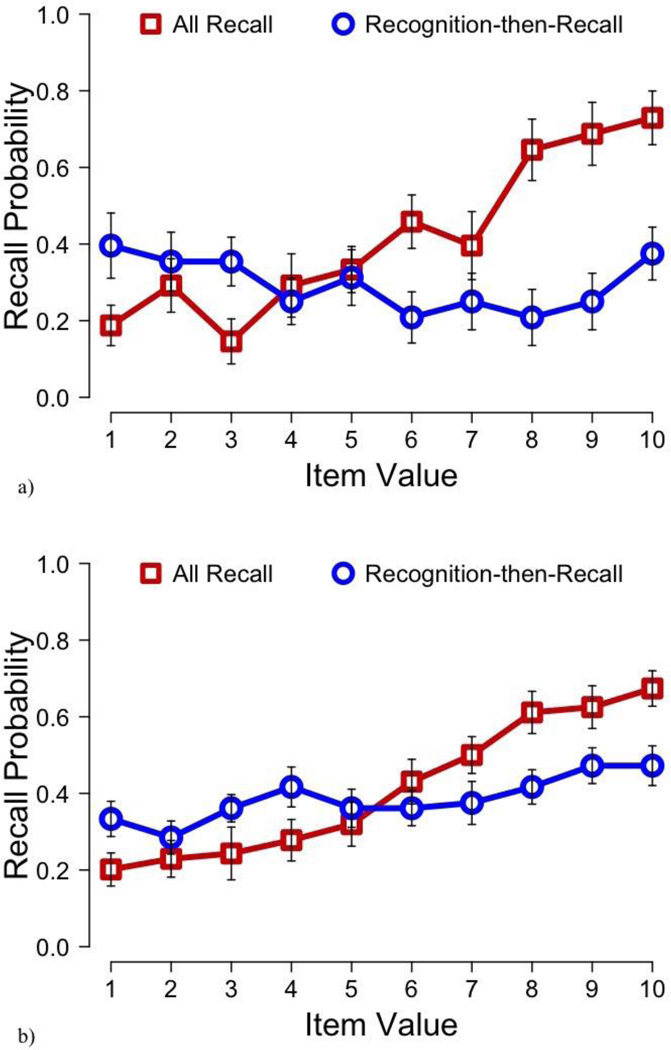
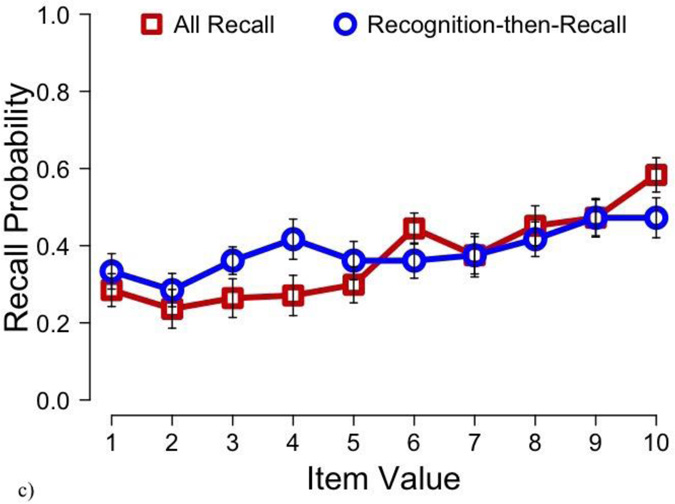
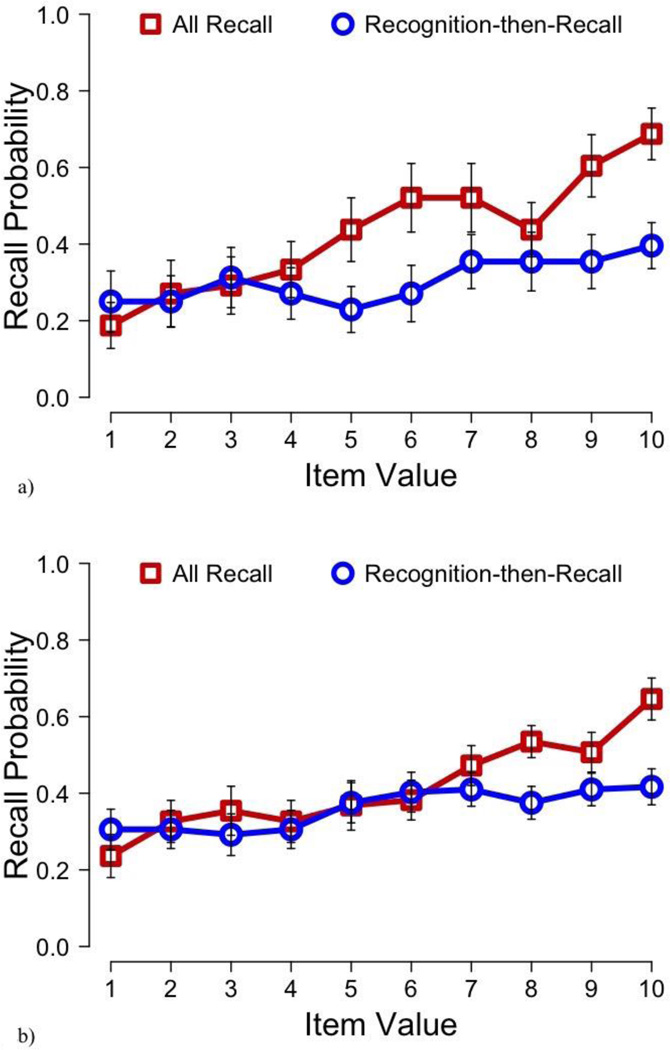
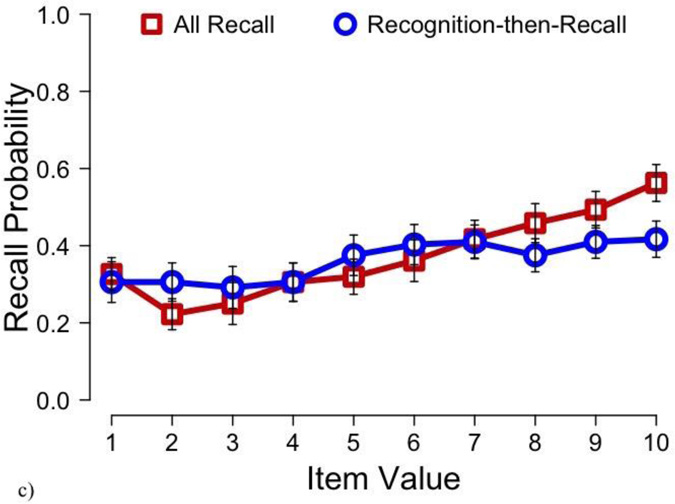
Prior research suggests that learners study and remember information differently depending upon the type of test they expect to later receive. The current experiments investigate how testing expectations impact the study of and memory for valuable information. Participants studied lists of words ranging in value from 1 to 10 points with the goal being to maximize their score on a later memory test. Half of the participants were told to expect a recognition test after each list, whereas the other half were told to expect a recall test. After several lists of receiving tests congruent with expectations, participants studying for a recognition test instead received an unexpected recall test. In Experiment 1, participants who had studied for a recognition test recalled less of the valuable information than participants anticipating the recall format. These participants continued to attend less to item value on future (expected) recall tests than participants who had only ever experienced recall testing. When the recognition tests were made more demanding in Experiment 2, value-based recall improved relative to Experiment 1: though memory for the valuable information remained superior when participants studied with the expectation of having to recall the information, there were no longer significant differences after accounting for recall testing experience. Thus, recall-based testing encouraged strategic, value-based encoding and enhanced retrieval of important information, whereas recognition testing in some cases limited value-based study and memory. These results extend prior work concerning the impact of testing expectations on memory, offering further insight into how people study important information. (PsycINFO Database Record
(c) 2017 APA, all rights reserved).
Figures
References
-
- Anderson JR, Bower GH. Recognition and retrieval processes in free recall. Psychological Review. 1972;79:97–123.
-
- Anderson JR, Bower GH. A propositional theory of recognition memory. Memory & Cognition. 1974;2:406–412. - PubMed
-
- Ariel R, Dunlosky J, Bailey H. Agenda-based regulation of study-time allocation: When agendas override item-based monitoring. Journal of Experimental Psychology: General. 2009;138(3):432–447. - PubMed
-
- Balota DA, Yap MJ, Cortese MJ, Hutchison KA, Kessler B, Loftis B, Neely JH, Nelson DL, Simpson GB, Treiman R. The English Lexicon Project. Behavior Research Methods. 2007;39:445–459. - PubMed
-
- Balota DA, Neely JH. Test-expectancy and word-frequency effects in recall and recognition. Journal of Experimental Psychology: Human Learning and Memory. 1980;6:576–587.
MeSH terms
Grants and funding
LinkOut - more resources
Full Text Sources
Other Literature Sources
