


Epidemiology of parainfluenza infection in England and Wales, 1998-2013: any evidence of change?
- PMID: 28095926
- PMCID: PMC9507836
- DOI: 10.1017/S095026881600323X
Epidemiology of parainfluenza infection in England and Wales, 1998-2013: any evidence of change?
Abstract
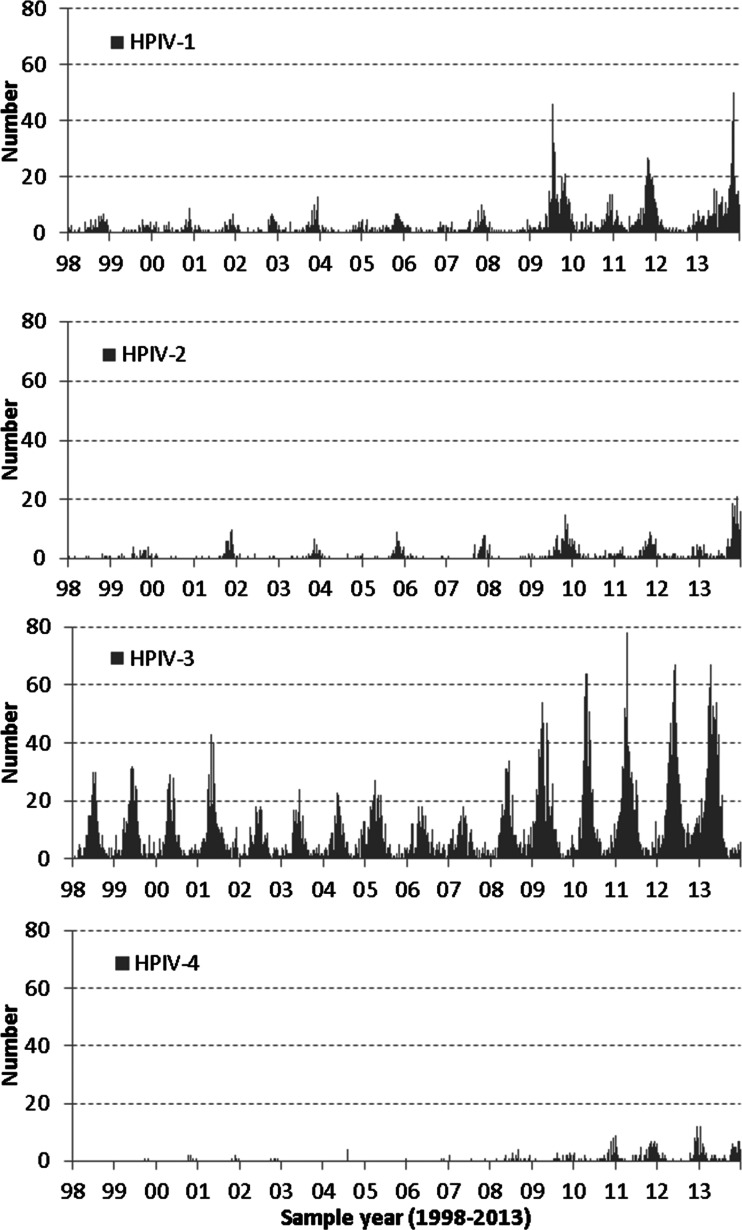
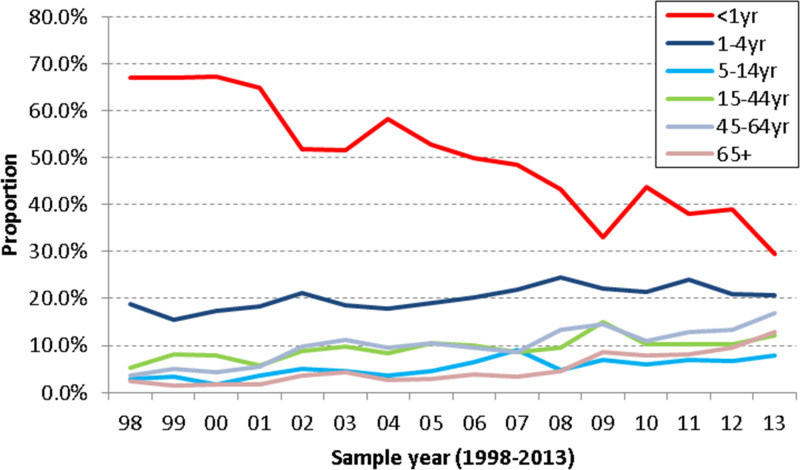
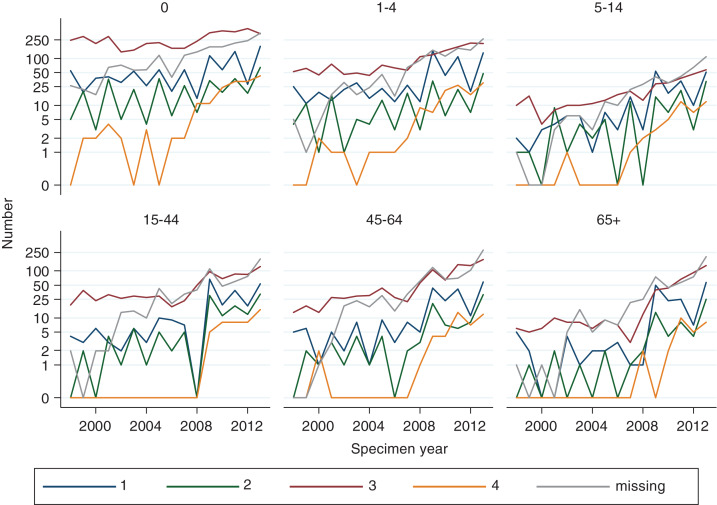
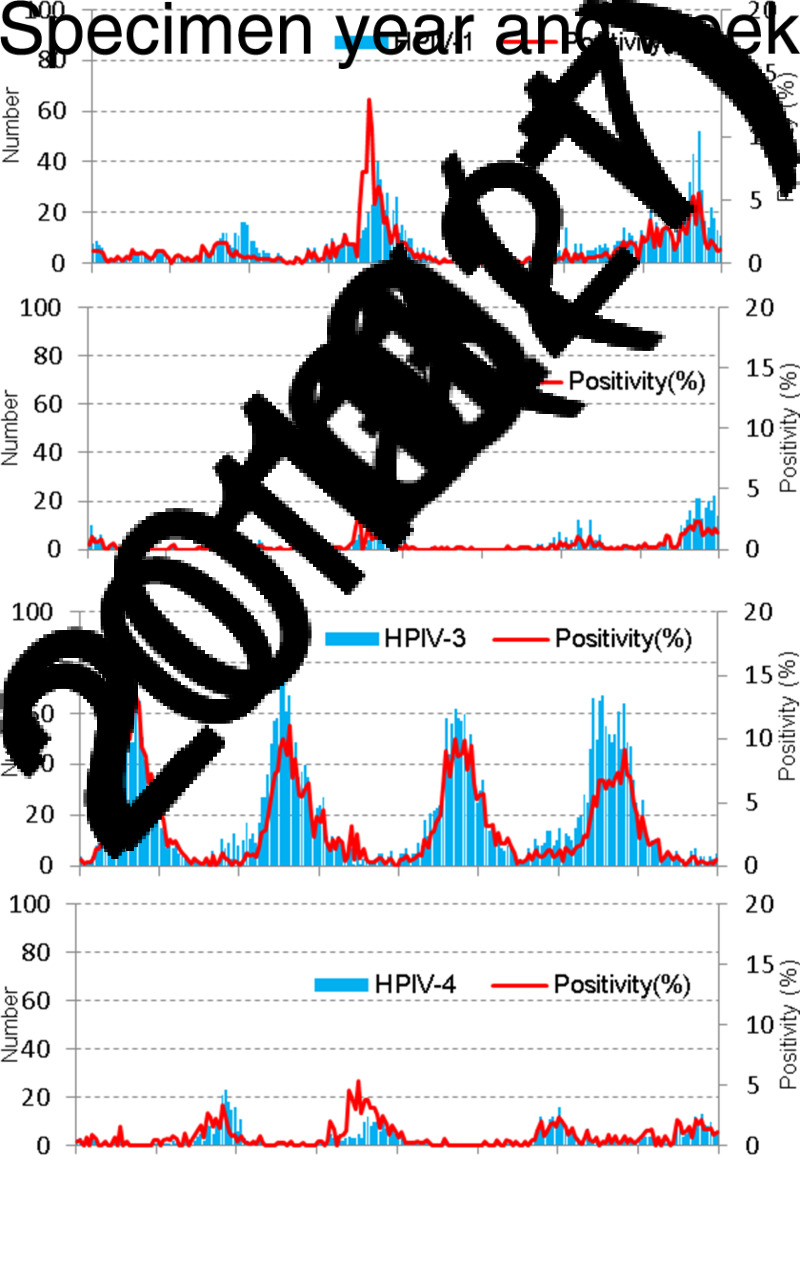
Human parainfluenza virus (HPIV) infections are one of the commonest causes of upper and lower respiratory tract infections. In order to determine if there have been any recent changes in HPIV epidemiology in England and Wales, laboratory surveillance data between 1998 and 2013 were analysed. The UK national laboratory surveillance database, LabBase, and the newly established laboratory-based virological surveillance system, the Respiratory DataMart System (RDMS), were used. Descriptive analysis was performed to examine the distribution of cases by year, age, sex and serotype, and to examine the overall temporal trend using the χ 2 test. A random-effects model was also employed to model the number of cases. Sixty-eight per cent of all HPIV detections were due to HPIV type 3 (HPIV-3). HPIV-3 infections were detected all year round but peaked annually between March and June. HPIV-1 and HPIV-2 circulated at lower levels accounting for 20% and 8%, respectively, peaking during the last quarter of the year with a biennial cycle. HPIV-4 was detected in smaller numbers, accounting for only 4% and also mainly observed in the last quarter of the year. However, in recent years, HPIV-4 detection has been reported much more commonly with an increase from 0% in 1998 to 3·7% in 2013. Although an overall higher proportion of HPIV infection was reported in infants (43·0%), a long-term decreasing trend in proportion in infants was observed. An increase was also observed in older age groups. Continuous surveillance will be important in tracking any future changes.
Keywords: England and Wales; epidemiology; laboratory surveillance; parainfluenza; seasonality; temporal trend.
Conflict of interest statement
None.
Figures
References
-
- CDC. National Center for Infectious Disease – The Respiratory and Enteric Viruses Branch (http://www.cdc.gov/ncidod/dvrd/revb/index.htm). 2007.
-
- Fry AM, et al. Seasonal trends of human parainfluenza viral infections: United States, 1990–2004. Clinical Infectious Diseases 2006; 43: 1016–1022. - PubMed
-
- Hall CB. Respiratory syncytial virus and parainfluenza virus. New England Journal of Medicine 2001; 344: 1917–1928. - PubMed
-
- Glezen WP, et al. Parainfluenza virus type 3: seasonality and risk of infection and reinfection in young children. Journal of Infectious Diseases 1984; 150: 851–857. - PubMed
MeSH terms
LinkOut - more resources
Full Text Sources
Other Literature Sources
