Review
. 2017 Jan-Feb;18(1):42-53.
doi: 10.3348/kjr.2017.18.1.42. Epub 2017 Jan 5.

Immune-Checkpoint Inhibitors in the Era of Precision Medicine: What Radiologists Should Know

Affiliations
Review

Immune-Checkpoint Inhibitors in the Era of Precision Medicine: What Radiologists Should Know

Marta Braschi-Amirfarzan et al. Korean J Radiol. 2017 Jan-Feb.

Abstract

Over the past five years immune-checkpoint inhibitors have dramatically changed the therapeutic landscape of advanced solid and hematologic malignancies. The currently approved immune-checkpoint inhibitors include antibodies to cytotoxic T-lymphocyte antigen-4, programmed cell death (PD-1), and programmed cell death ligand (PD-L1 and PD-L2). Response to immune-checkpoint inhibitors is evaluated on imaging using the immune-related response criteria. Activation of immune system results in a unique toxicity profile termed immune-related adverse events. This article will review the molecular mechanism, clinical applications, imaging of immune-related response patterns and adverse events associated with immune-checkpoint inhibitors.

Keywords: Immune-checkpoint inhibitor; Immune-related Response Criteria; Response; Toxicity.


Conflict of interest statement

Disclosures: Dr. Nishino’s disclosures: Consulting or Advisory Role: Bristol-Myers Squibb, Toshiba Medical Systems, Worldcare Clinical Research Funding: Merck (Inst), Canon (Inst) Dr. Hodi’s disclosures: Consulting or Advisory Role: Merck Sharp & Dohme, Novartis, Genentech, Amgen Research Funding: Bristol-Myers Squibb (Inst), Merck Sharp & Dohme (Inst), Genentech (Inst), Novartis (Inst) Patents, Royalties, Other Intellectual Property: Patent pending as per institutional policy; patent pending royalties received on MICA related disorders application to institution per institutional intellectual property policy Travel, Accommodations, Expenses: Novartis, Bristol-Myers Squibb Other Relationship: Bristol-Myers Squibb, Genentech

Figures
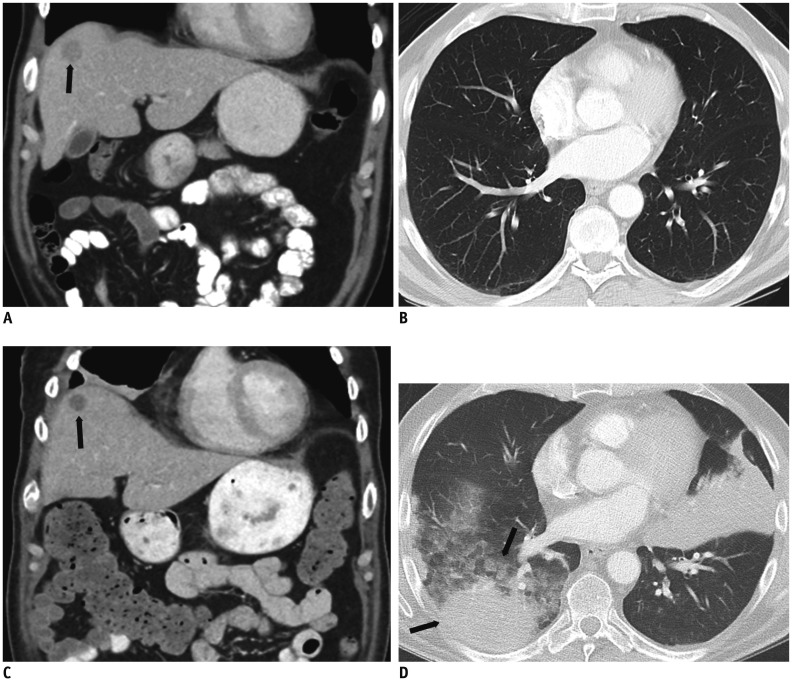
Fig. 1
Fig. 1. 62-year-old male with history of ocular melanoma metastatic to liver.
A, B. Contrast enhanced coronal abdominal CT image shows single solid hepatic metastasis (black arrow, A); lung parenchyma is normal. C, D. After 8 weeks of treatment with combination therapy Ipilimumab/Nivolumab, patient presents to emergency department complaining of shortness of breath. While contrast enhanced coronal abdominal CT image shows decreased size and density of hepatic metastasis (black arrow, C), suggesting response to treatment, new lung consolidative opacities are concerning for drug pneumonitis (black arrows, D).
Fig. 2
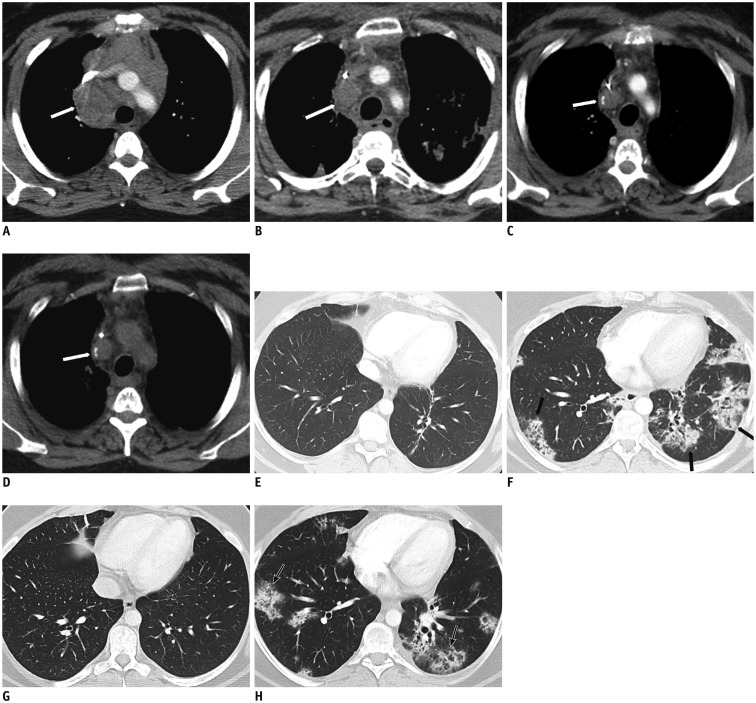
Fig. 2. 33-year-old woman with history of Hodgkin’s lymphoma.
A, E. Axial contrast enhanced CT image of mediastinum shows bulky mediastinal adenopathy (white arrow, A); lung parenchyma is normal. B, F. After 12 weeks of treatment with Nivolumab, while mediastinal lymph nodes have significantly decreased (white arrow, B), new parenchymal patchy bilateral opacities suggest drug pneumonitis (black arrows, F). C, G. Nivolumab was stopped, high dose therapy with corticosteroid initiated. After 4 weeks of steroid, axial CT image of lung parenchyma demonstrates resolution of pneumonitis, while mediastinal disease continues to decrease (white arrow). D, H. After steroid taper, while mediastinal adenopathy has not significantly changed (white arrow), axial chest CT in lung window shows recurrent pneumonitis (black arrows).
Fig. 3
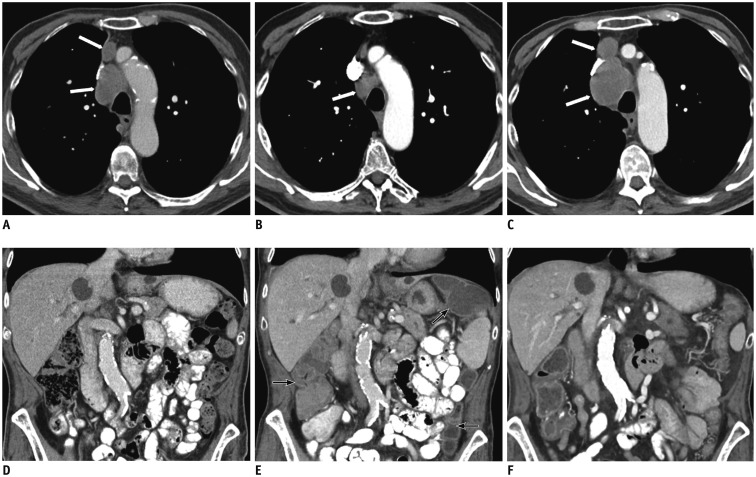
Fig. 3. 73-year-old gentleman with history of recurrent squamous cell lung cancer.
A, D. Axial contrast-enhanced CT image of mediastinum shows mediastinal adenopathy (white arrows, A); coronal abdominal image is unremarkable. B, E. After 4 weeks of treatment with Nivolumab, while mediastinal lymph nodes have significantly decreased (white arrow, B), visualized colon is hyperemic and fluid filled, suggesting colitis (black arrows, E). C, F. Nivolumab was stopped, high dose therapy with corticosteroid initiated. After 8 weeks, restaging contrast-enhanced abdominal CT shows resolution of colitis, but there has been significant increased in size of mediastinal adenopathy (white arrows, C).
Fig. 4
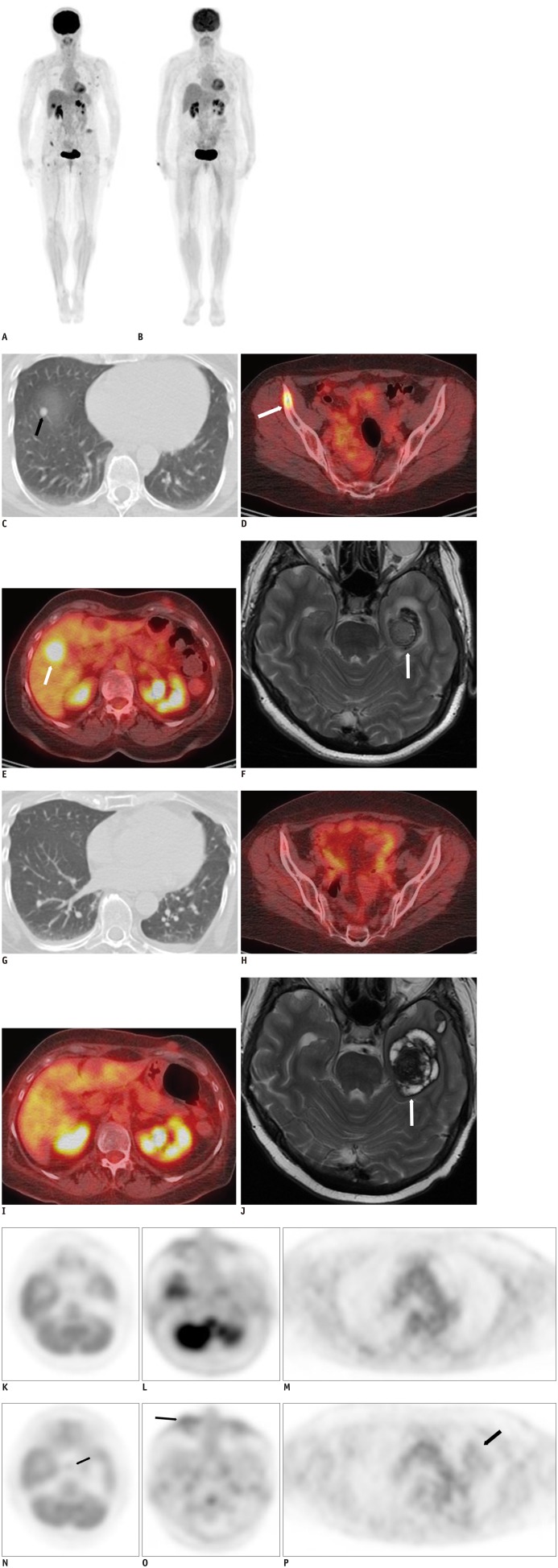
Fig. 4. 59-year-old female with history of left arm melanoma, metastatic to lung, bones, liver brain and subcutaneous tissue, before and after 12 weeks of treatment with Ipilimumab.
A. Whole body MIP F-FDG PET/CT image at baseline demonstrates tracer uptake within lung, bones, liver and subcutaneous tissue, suggesting widespread metastatic disease. B. Whole body MIP F-FDG PET/CT image after 12 weeks of treatment with Ipilimumab demonstrates interval resolution of tracer avidity at sites of metastases. F-FDG = fludeoxyglucose, MIP = maximum intensity projection, PET = positron emission tomography C-F. Axial CT image in lung window, fused PET/CT images of pelvis and liver, contrast enhanced T2 weighted MRI image of brain demonstrate right lower lobe nodule (black arrow, C), right iliac bone (white arrow, D), right liver (white arrow, E) and left temporal lobe metastases (white arrow, F). F-FDG = fludeoxyglucose, MIP = maximum intensity projection, PET = positron emission tomography G-J. Restaging imaging at 12 weeks after induction treatment with Ipilimumab show significant decrease of lung nodule, significant decrease uptake of right iliac bone lesion, of liver metastasis and decreased enhancement of brain metastasis (white arrow), suggesting response to treatment. K-M. Axial PET image of brain at level of hypophysis, mid face and mid thorax before treatment show physiologic tracer uptake. N-P. Restaging PET images at 12 weeks after induction treatment with Ipilimumab show interval increased uptake within hypophysis (black arrow, N), in region of palpebrae (black arrow, O) and left lung parenchyma (black arrow, P), which suggest drug associated hypophysitis, blepharoconjunctivitis and pneumonitis. F-FDG = fludeoxyglucose, MIP = maximum intensity projection, PET = positron emission tomography

References

    1. Hodi FS, O’Day SJ, McDermott DF, Weber RW, Sosman JA, Haanen JB, et al. Improved survival with ipilimumab in patients with metastatic melanoma. N Engl J Med. 2010;363:711–723. - PMC - PubMed
    1. Rosenberg SA. Adoptive immunotherapy of cancer: accomplishments and prospects. Cancer Treat Rep. 1984;68:233–255. - PubMed
    1. Jiang T, Zhou C, Ren S. Role of IL-2 in cancer immunotherapy. Oncoimmunology. 2016;5:e1163462. - PMC - PubMed
    1. Yoo S, Choi SY, You D, Kim CS. New drugs in prostate cancer. Prostate Int. 2016;4:37–42. - PMC - PubMed
    1. Chen Y, Liu D. Chimeric antigen receptor (CAR)-directed adoptive immunotherapy: a new era in targeted cancer therapy. Stem Cell Investig. 2014;1:2. - PMC - PubMed

MeSH terms