


Antibody Responses to Trivalent Inactivated Influenza Vaccine in Health Care Personnel Previously Vaccinated and Vaccinated for The First Time
- PMID: 28098157
- PMCID: PMC5241813
- DOI: 10.1038/srep40027
Antibody Responses to Trivalent Inactivated Influenza Vaccine in Health Care Personnel Previously Vaccinated and Vaccinated for The First Time
Abstract
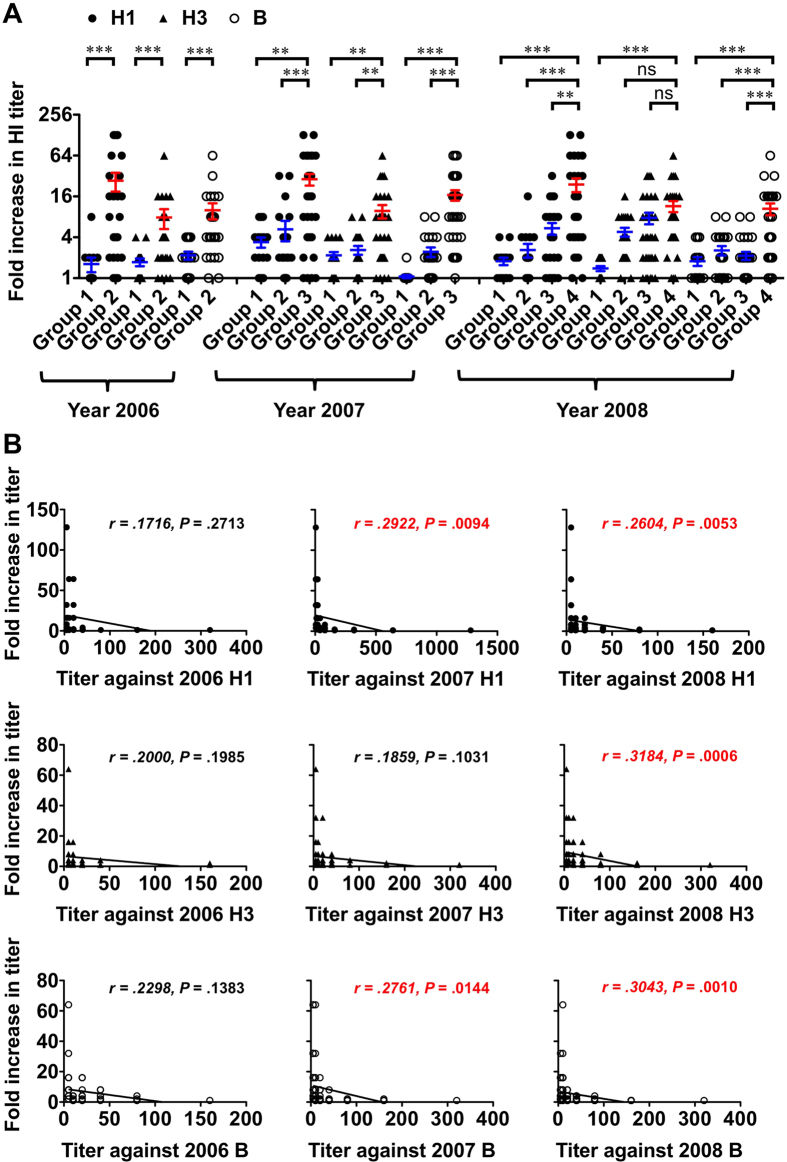
Inactivated influenza vaccination induces a hemagglutinin-specific antibody response to the strain used for immunization. Annual vaccination is strongly recommended for health care personnel. However, it is debatable if repeated vaccination would affect the antibody response to inactivated influenza vaccine through the time. We enrolled health care personnel who had repeated and first trivalent inactivated influenza vaccination in 2005-2008. Serological antibody responses were measured by hemagglutination-inhibition (HI) test. Subjects with repeated vaccination had higher pre-vaccination and lower post-vaccination HI titer than those with first vaccination, although serological responses between groups might vary with different antigen types and while the drifted strain was introduced in the vaccine. Higher fold rise in the HI titer was observed in the group with first than repeated vaccination and the fold increase in the HI titer was inversely correlated with pre-vaccination titer in 2007 and 2008. Nevertheless, no significant difference in the day 28 seroprotection rate was observed between groups with repeated and first vaccination in most circumstances. Further studies are needed to understand the long-term effect of repeated vaccination on the antibody response both at the serological and repertoire levels among health care personnel.
Figures
References
Publication types
MeSH terms
Substances
LinkOut - more resources
Full Text Sources
Other Literature Sources
Medical
