


Prognostic value of inflammation-based markers in patients with recurrent malignant obstructive jaundice treated by reimplantation of biliary metal stents: A retrospective observational study
- PMID: 28099348
- PMCID: PMC5279093
- DOI: 10.1097/MD.0000000000005895
Prognostic value of inflammation-based markers in patients with recurrent malignant obstructive jaundice treated by reimplantation of biliary metal stents: A retrospective observational study
Abstract
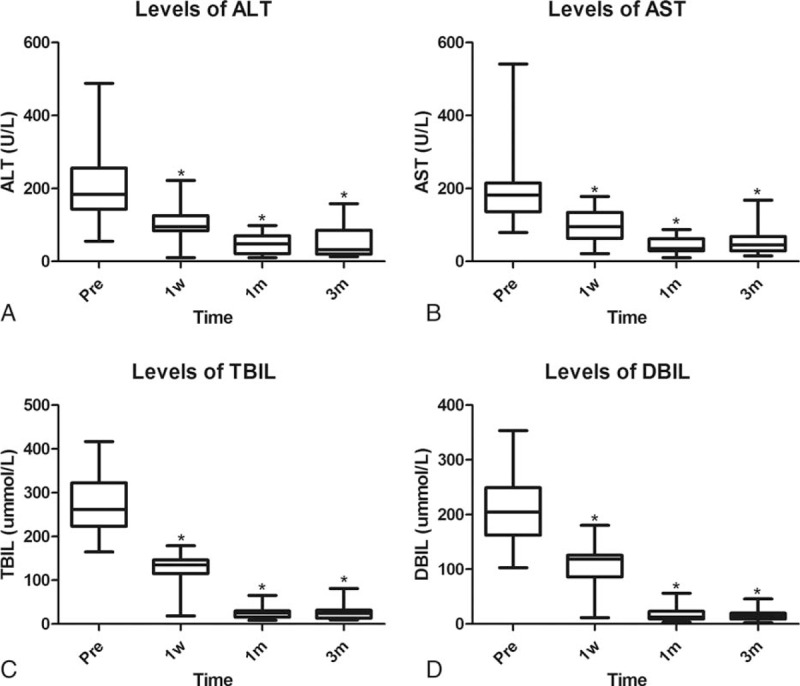
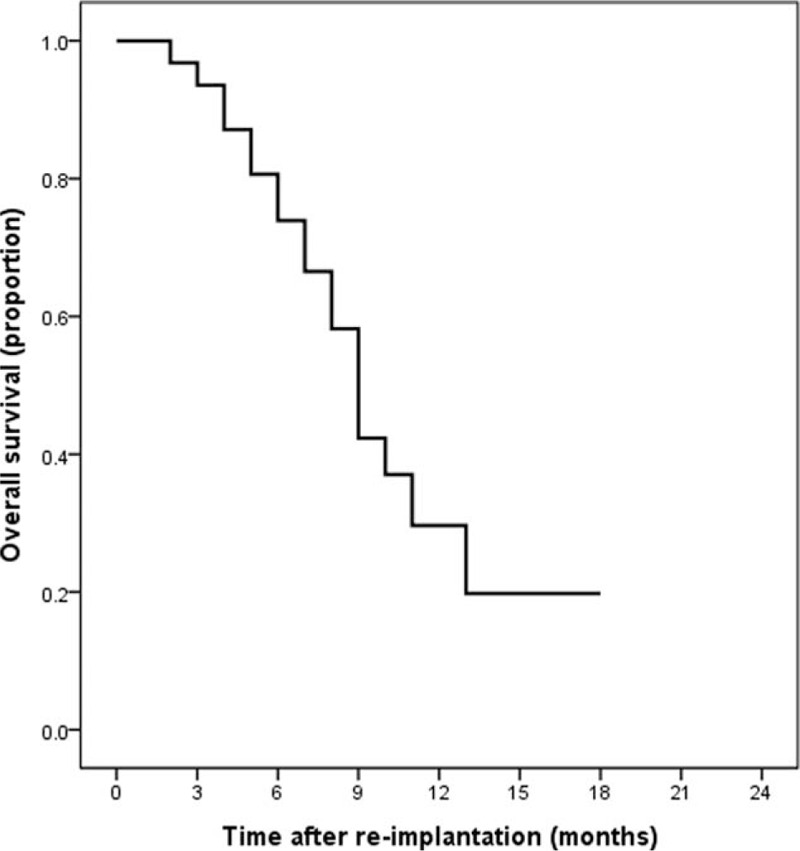
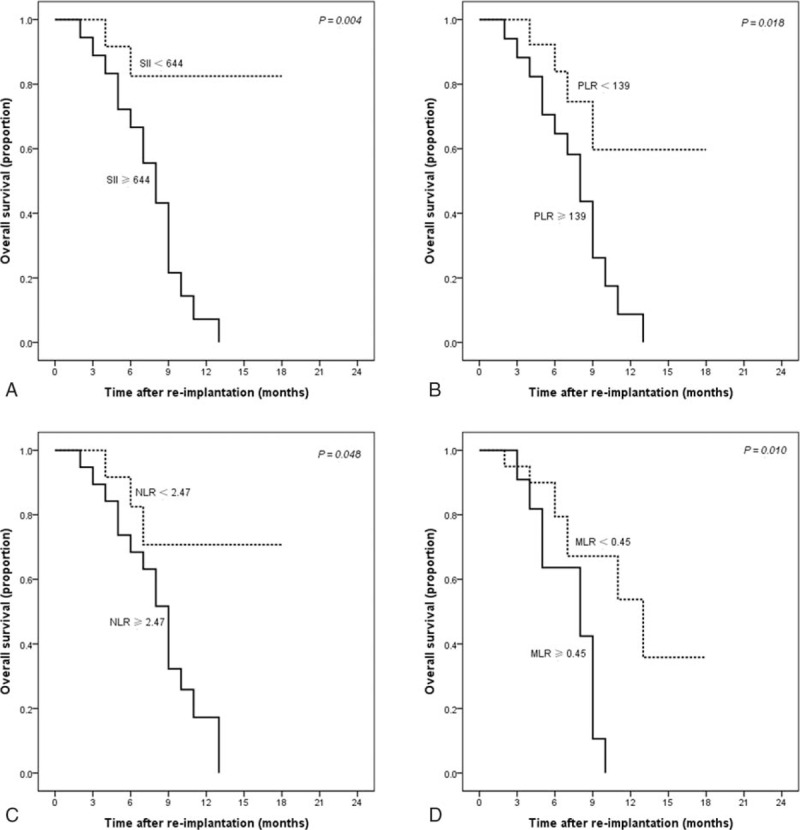
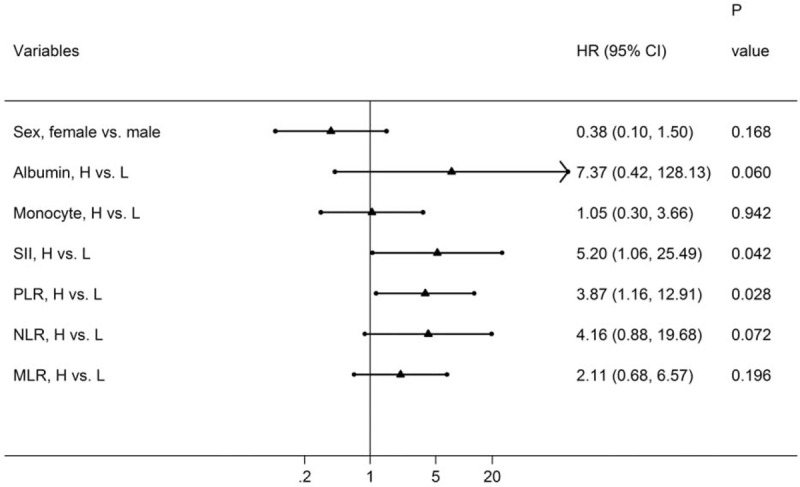
We aimed to assess the therapeutic effect of reimplantation of biliary metal stents by percutaneous transhepatic cholangial drainage (PTCD) in patients with recurrent malignant obstructive jaundice (MOJ). Furthermore, we explored the prognostic value of inflammation-based markers in these patients.We reviewed 33 cases of recurrent MOJ after implantation of biliary metal stents by PTCD, all of which underwent reimplantation of stents under digital subtraction angiography guidance. Levels of alanine aminotransferase (ALT), aspartate aminotransferase (AST), and bilirubin were compared between before and after reimplantation (1 week, 1 month, and 3 months postoperatively). Preoperative clinical data were collected to calculate the inflammation-based markers, including systemic immune-inflammation index (SII, neutrophil × platelets/ lymphocyte), platelets-to-lymphocyte ratio (PLR), neutrophil-to-lymphocyte ratio (NLR), and monocyte-to-lymphocyte ratio (MLR). The primary outcome was overall survival (OS), which was estimated by the Kaplan-Meier method and Cox regression analysis.The levels of ALT, AST, total bilirubin, and direct bilirubin significantly reduced after the reimplantation operation. During a median follow-up time of 10 months, 18 (54.5%) patients died. Gender, albumin, SII, PLR, NLR, and MLR were found to be associated with OS by the log-rank test and univariate analysis. Multivariate Cox analysis identified elevated levels of SII and PLR as significant factors for predicting poor OS.Reimplantation is clinically feasible in patients with recurrent MOJ after implantation of biliary metal stents. SII and PLR are independent, useful inflammation-based prognostic models for predicting outcomes in these patients.
Conflict of interest statement
The authors have no conflicts of interest to disclose.
Figures
References
-
- Wang L, Yu WF. Obstructive jaundice and perioperative management. Acta Anaesthesiol Taiwan 2014;52:22–9. - PubMed
-
- Hucl T. Malignant biliary obstruction. Cas Lek Cesk 2016;155:30–7. - PubMed
-
- Chen Y, Wang XL, Yan ZP, et al. The use of (1)(2)(5)I seed strands for intraluminal brachytherapy of malignant obstructive jaundice. Cancer Biother Radiopharm 2012;27:317–23. - PubMed
-
- Fei SX, Liu HC, Sun Z, et al. Evaluation of the curative effect of biliary stents combined with 125I particles for intracavitary treatment of malignant jaundice in cholangiocarcinoma. Chin J Clin Oncol 2015;45:564–9.
-
- Isayama H, Nakai Y, Kogure H, et al. Biliary self-expandable metallic stent for unresectable malignant distal biliary obstruction: which is better: covered or uncovered? Dig Endosc 2013;25(suppl 2):71–4. - PubMed
Publication types
MeSH terms
Substances
LinkOut - more resources
Full Text Sources
Other Literature Sources
