. 2017 Jan 18;12(1):e0170089.
doi: 10.1371/journal.pone.0170089. eCollection 2017.

The Differential Effects of Anesthetics on Bacterial Behaviors

Affiliations

The Differential Effects of Anesthetics on Bacterial Behaviors

Matthew Chamberlain et al. PLoS One. .

Abstract

Volatile anesthetics have been in clinical use for a long period of time and are considered to be promiscuous by presumably interacting with several ion channels in the central nervous system to produce anesthesia. Because ion channels and their existing evolutionary analogues, ion transporters, are very important in various organisms, it is possible that volatile anesthetics may affect some bacteria. In this study, we hypothesized that volatile anesthetics could affect bacterial behaviors. We evaluated the impact of anesthetics on bacterial growth, motility (swimming and gliding) and biofilm formation of four common bacterial pathogens in vitro. We found that commonly used volatile anesthetics isoflurane and sevoflurane affected bacterial motility and biofilm formation without any effect on growth of the common bacterial pathogens studied here. Using available Escherichia coli gene deletion mutants of ion transporters and in silico molecular docking, we suggested that these altered behaviors might be at least partly via the interaction of volatile anesthetics with ion transporters.


Conflict of interest statement

The authors have declared that no competing interest exist.

Figures
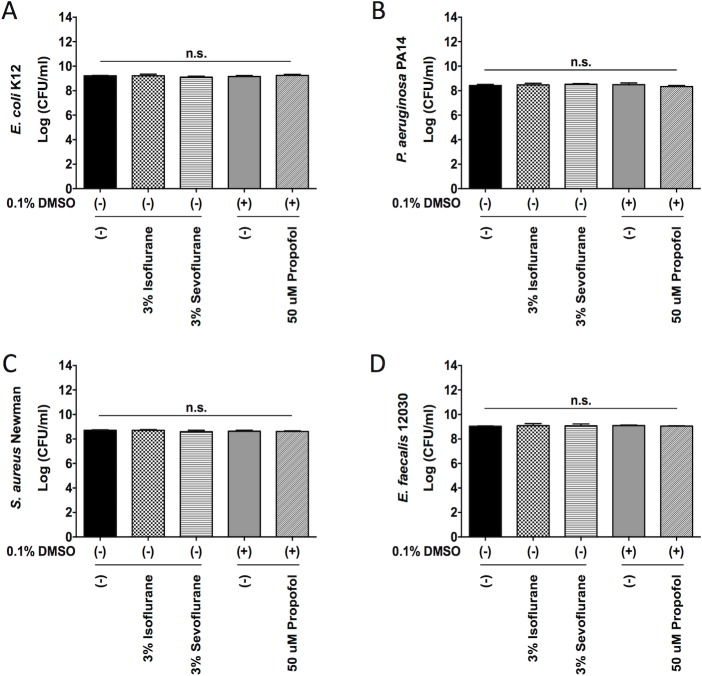
Fig 1
Fig 1. The effect of anesthetics on bacterial growth.
The growth of E. coli (A), P. aeruginosa (B), S. aureus (C), and E. faecalis (D) under isoflurane, sevoflurane or propofol at various concentrations is shown. Data are shown as mean +/- S.D. of 4 replicates. Statistical analysis was performed using one-way analysis of variance with Bonferroni post hoc analysis. No statistical significance was noted. n.s. = not significant. CFU = colony forming unit.
Fig 2
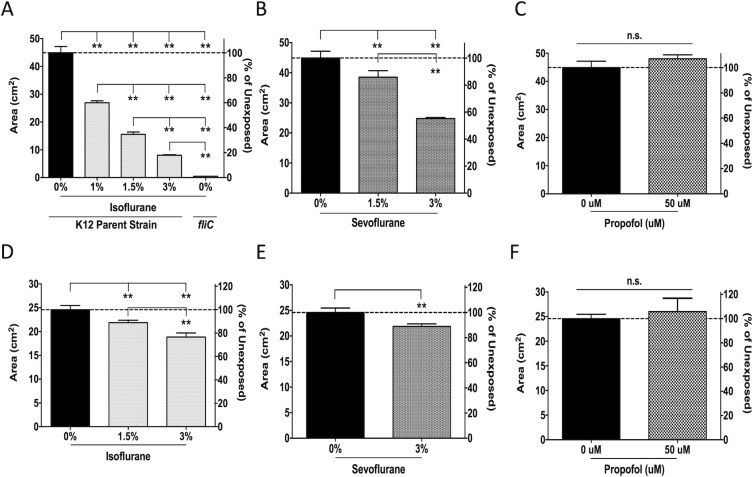
Fig 2. The effect of anesthetics on bacterial swimming.
Areas (cm2) of motility halos formed by E. coli K12 parent strain (A-C) and P. aeruginosa (D-F) exposed to isoflurane, sevoflurane or propofol at various concentrations are shown. E. coli K12 fliC deletion mutant, which lacks flagellin, was included as a control strain with no motility in (A). Data shown as mean ± SD; n = 4 for all conditions. Statistical analysis was performed using one-way analysis of variance with Bonferroni post hoc analysis for A, B and D. C, E, and F were analyzed using an unpaired t-test. * and ** denote p < 0.05 and p < 0.01, respectively. n.s. = not significant.
Fig 3
Fig 3. The effect of isoflurane on E. coli motility and flagellin expression.
(A) The motility of E. coli K12 parent strain was observed in 2% PEG aqueous solution. A group of E. coli cells were exposed to isoflurane for 5 minutes before subjecting to microscope analysis. Movement over 10 second was tracked using MetaMorph software. (B) Flagellin expression was examined with or without isoflurane exposure for the indicated durations. GAPDH was used as a loading control [46]. fliC deletion mutant was used as a negative control of flagellin expression
Fig 4
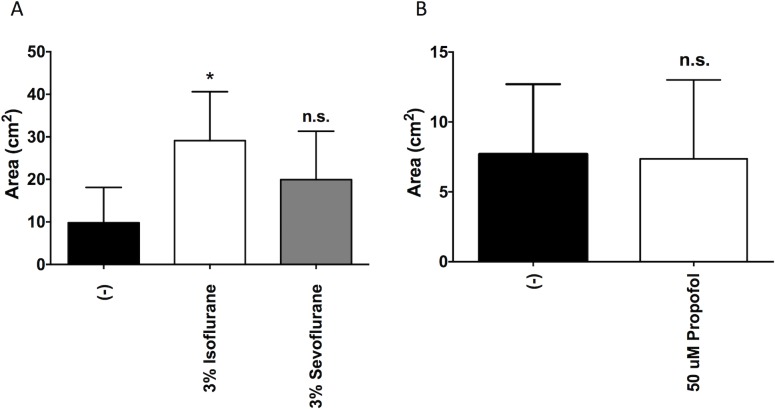
Fig 4. The effect of anesthetics on S. aureus gliding.
Areas (cm2) of gliding formation of Newman S. aureus after exposure to isoflurane or sevoflurane (A) or propofol (B) for 19 hours are shown. Data shown as mean ± SD; n = 4 for A; n = 8 for B. Statistical analysis was performed using one-way analysis of variance with Bonferroni post hoc analysis for A. B was analyzed using an unpaired t-test. * denotes p<0.05. n.s. = not significant.
Fig 5
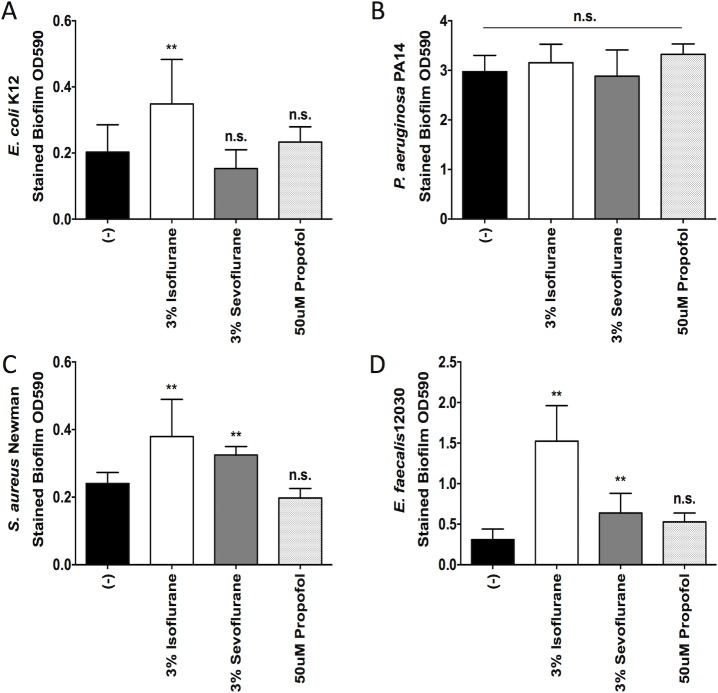
Fig 5. The effect of anesthetics on bacterial biofilm formation.
The biofilm formation of E. coli (A), P. aeruginosa (B), S. aureus (C), and E. faecalis (D) after exposure to isoflurane, sevoflurane or propofol is shown. Data are shown as mean +/- S.D. of 8–12 replicates. Statistical analysis was performed using one-way analysis of variance with Bonferroni post hoc analysis. * and ** denote p < 0.05 and p < 0.01 of non-exposure vs exposure, respectively. n.s. = not significant.
Fig 6
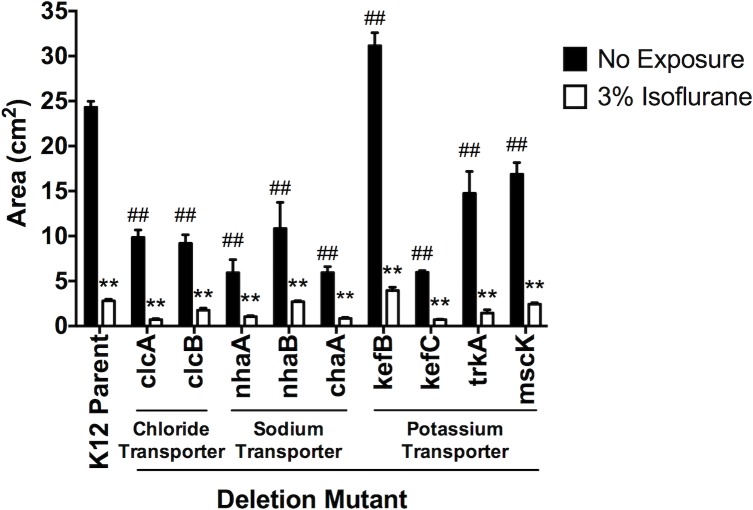
Fig 6. The effect of isoflurane on swimming of E. coli K12 parent strain and ion transporter deletion mutants.
The effect of isoflurane on the swimming of E. coli K12 strains is shown. Data are shown as mean +/- S.D. of 4 replicates. Statistical analysis was performed using two-way analysis of variance with Bonferroni post hoc analysis for differences between non-exposure and exposure groups. * and ** denote p<0.05 and p<0.01, respectively. For differences between deletion mutants and the K12 parent strain within the non-exposure group, statistical analysis was performed using one-way analysis of variance with Bonferroni post hoc analysis. # and ## denote p<0.05 and p<0.01, respectively.
Fig 7
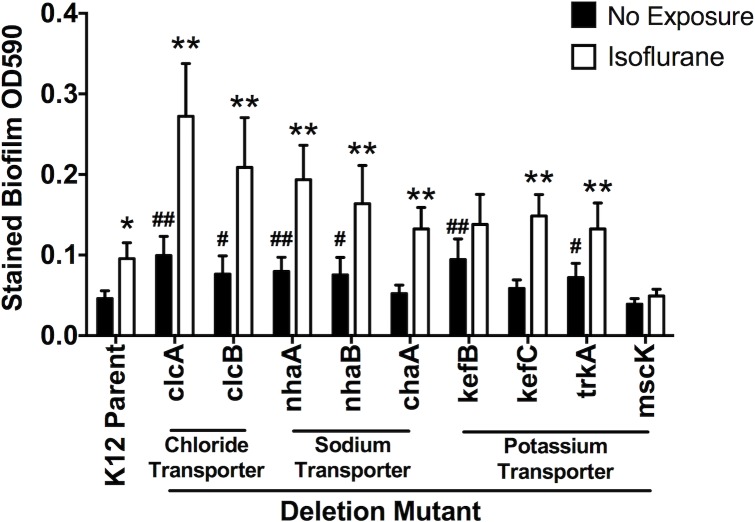
Fig 7. The effect of isoflurane on biofilm formation of E. coli K12 parent strain and ion transporter deletion mutants.
The effect of isoflurane on biofilm formed by E. coli K12 strains is shown. Data are shown as mean +/- S.D. of 8 replicates. Statistical analysis was performed using two-way analysis of variance with Bonferroni post hoc analysis for differences between non-exposure and exposure groups. * and ** denote p<0.05 and p<0.01, respectively. For differences between deletion mutants and the K12 parent strain within the non-exposure group, statistical analysis was performed using one-way analysis of variance with Bonferroni post hoc analysis. # and ## denote p<0.05 and p<0.01, respectively.
Fig 8
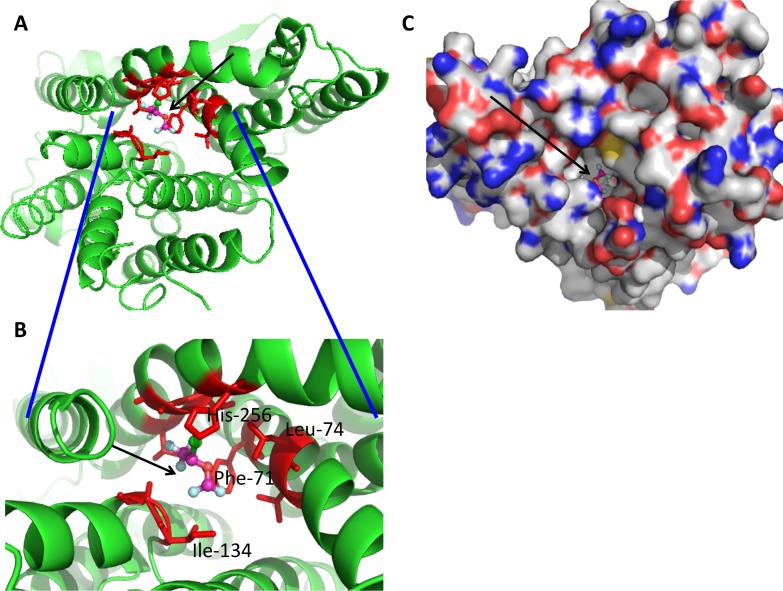
Fig 8. Docking simulation of isoflurane onto NhaA protein (PDB ID: 1ZCD).
Docked image of isoflurane is shown (arrow). In isoflurane, light blue; floride, green; chloride and orange; oxygen. Red residues are within 4 angstroms of isoflurane. (A) Docked image in cartoon. (B) Blowout image of docked site. (C) Docked image in surface.

References

    1. Eckenhoff RG. Promiscuous ligands and attractive cavities: how do the inhaled anesthetics work? Mol Interv. 2001;1(5):258–68. - PubMed
    1. Jurd R, Arras M, Lambert S, Drexler B, Siegwart R, Crestani F, et al. General anesthetic actions in vivo strongly attenuated by a point mutation in the GABA(A) receptor beta3 subunit. FASEB J. 2003;17(2):250–2. 10.1096/fj.02-0611fje - DOI - PubMed
    1. Rello J, Lisboa T, Lujan M, Gallego M, Kee C, Kay I, et al. Severity of pneumococcal pneumonia associated with genomic bacterial load. Chest. 2009;136(3):832–40. 10.1378/chest.09-0258 - DOI - PubMed
    1. Nilsson AC, Bjorkman P, Welinder-Olsson C, Widell A, Persson K. Clinical severity of Mycoplasma pneumoniae (MP) infection is associated with bacterial load in oropharyngeal secretions but not with MP genotype. BMC Infect Dis. 2010;10:39 PubMed Central PMCID: PMCPMC2837002. 10.1186/1471-2334-10-39 - DOI - PMC - PubMed
    1. Darton T, Guiver M, Naylor S, Jack DL, Kaczmarski EB, Borrow R, et al. Severity of meningococcal disease associated with genomic bacterial load. Clin Infect Dis. 2009;48(5):587–94. 10.1086/596707 - DOI - PubMed

MeSH terms

LinkOut - more resources