. 2016 Nov-Dec;91(6):716-725.
doi: 10.1590/abd1806-4841.20165358.

Palmar hyperhidrosis: clinical, pathophysiological, diagnostic and therapeutic aspects

Affiliations

Palmar hyperhidrosis: clinical, pathophysiological, diagnostic and therapeutic aspects

Flávio Ramalho Romero et al. An Bras Dermatol. 2016 Nov-Dec.

Abstract

Palmar hyperhidrosis affects up to 3% of the population and inflict significant impact on quality of life. It is characterized by chronic excessive sweating, not related to the necessity of heat loss. It evolves from a localized hyperactivity of the sympathetic autonomic system and can be triggered by stressful events. In this study, the authors discuss clinical findings, pathophysiological, diagnostic and therapeutic issues (clinical and surgical) related to palmar hyperhidrosis.


Conflict of interest statement

none

Figures
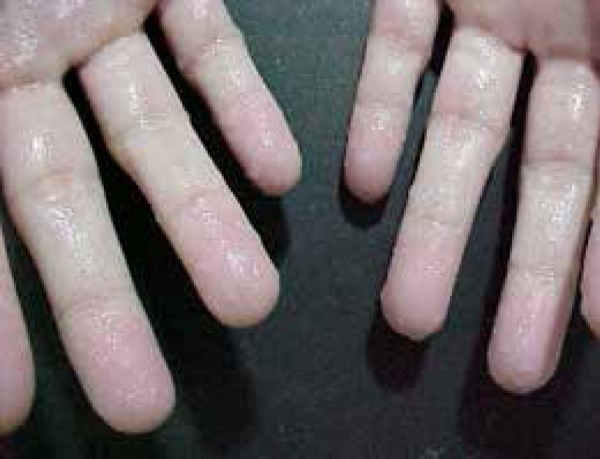
Figure 1
Figure 1. Palmar hyperhidrosis. Spont aneous sweat dripping in both hands, without relation with the need to control body temperature
Figure 2
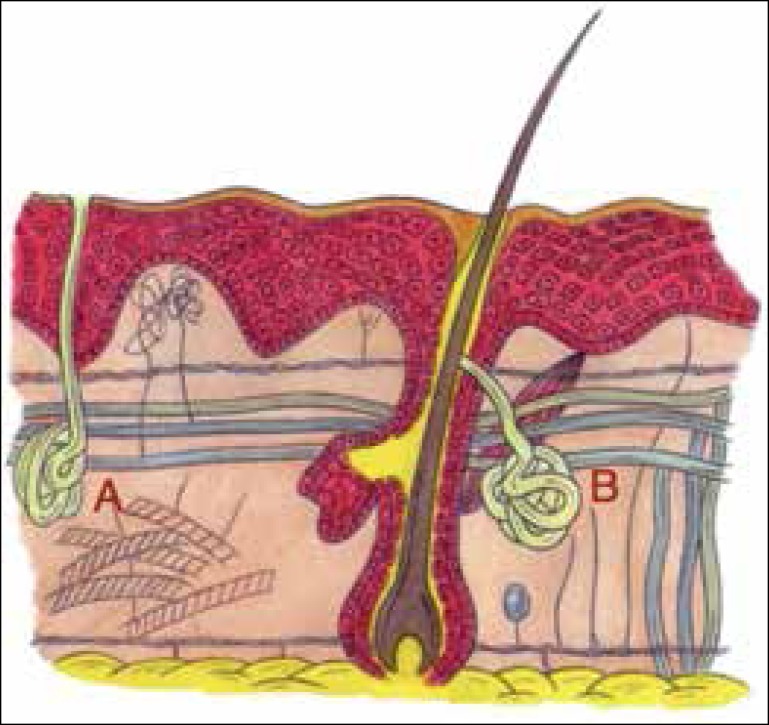
Figure 2. Scheme of the histological aspect of eccrine (A) and apocrine (B) sweat glands, and their relation to the skin structure
Figure 3
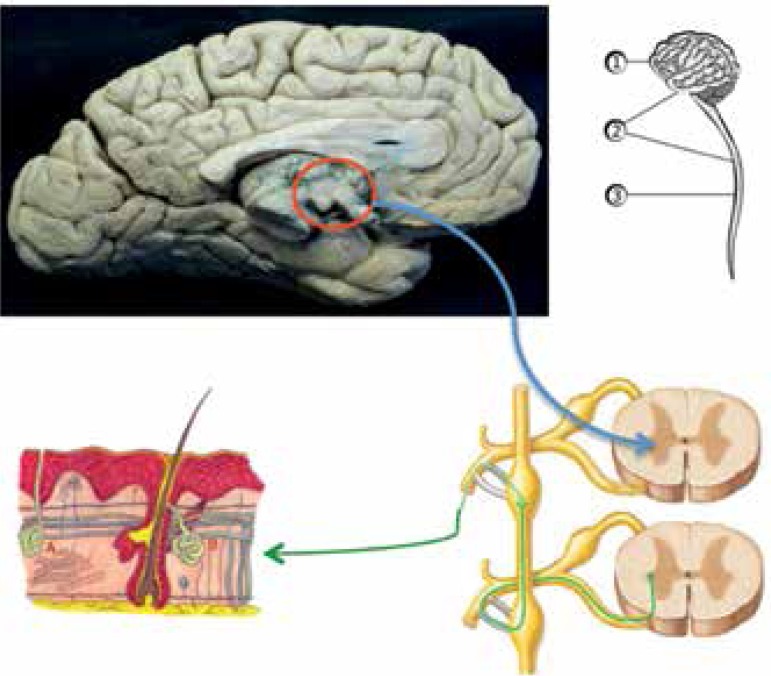
Figure 3. Scheme of the sympathetic pathway of sweat control. Top left image shows the region where the hypothalamus is located, in parasagittal section of anatomical specimen (red circle). Top right image shows the relation between the brain (1) and the cervical and thoracic spinal cords (2) and lumbar (3). The blue arrow represents the location of the synapse between the first neuron and the second neuron of the pathway in Clarke's column of the thoracic spine. Lower right image is an axial section of cord, with the area of the synapse between the second and third neurons located in the ganglion of the sympathetic chain (green line). The green arrow represents the third neuron, which triggers the stimulus on the sweat glands by the acetylcholine neurotransmitter. Bottom left image shows the scheme of the histological structures of the skin and its relation with the eccrine (A) and apocrine (B) sweat glands
Figure 4
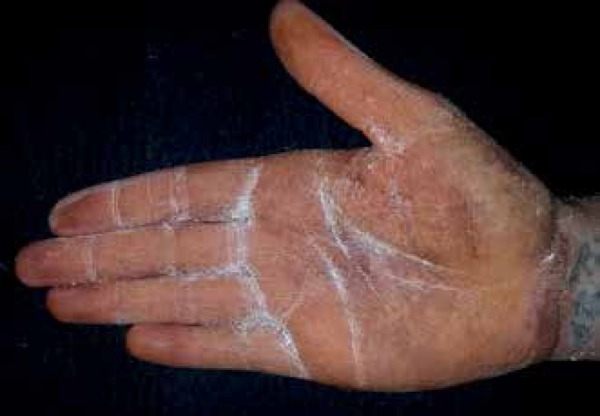
Figure 4. Minor test (starch-iodine). Complexation reaction between iodine and amylose, precipitated by sweat. It allows the identification of areas of increased sweating
Figure 5
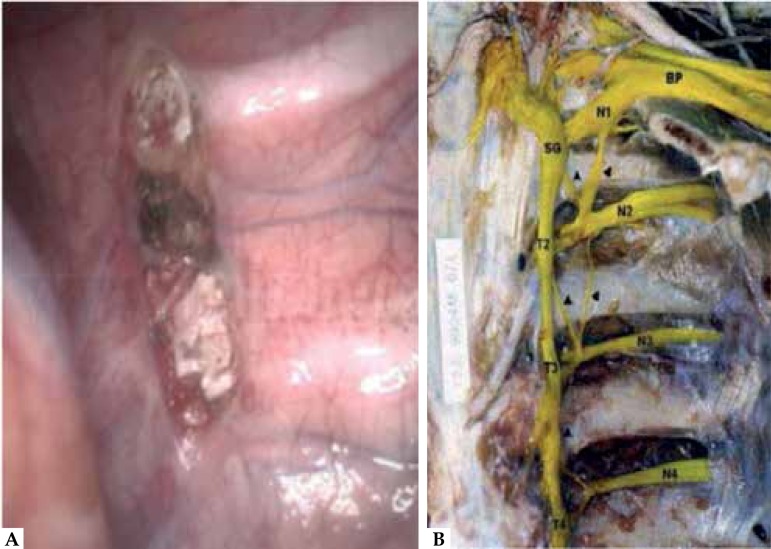
Figure 5. Intraoperative image of video-assisted thoracoscopic sympathectomy (A). Scheme of the anatomical relations of the thoracic sympathetic trunk (B)
Figure 6
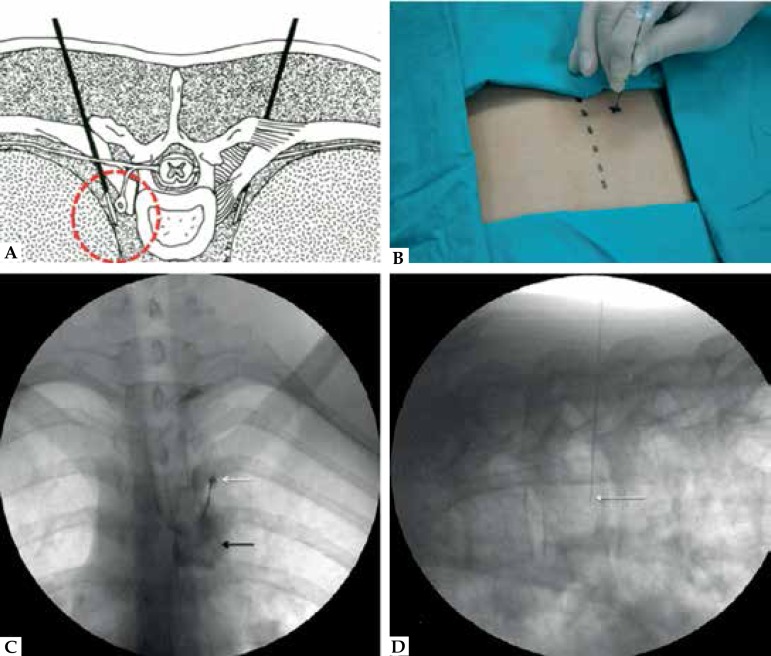
Figure 6. Example of percutaneous thoracic sympathectomy in the T4 ganglion. A. Illustration of proper needle position, parallel to the ganglion of the thoracic chain. B. Positioning the needle in the skin for beginning of puncture. C. Anteroposterior view of fluoroscopic showing the proper position of the needle (white arrow) above the head of the rib (black arrow). D. View in profile of fluoroscopy showing the correct position of the needle (white arrow)

References

    1. de Campos JR, Kauffman P, Werebe Ede C, Andrade Filho LO, Kusniek S, Wolosker N, et al. Quality of life, before and after thoracic sympathectomy: report on 378 operated patients. Ann Thorac Surg. 2003;76:886-91. - PubMed
    2. de Campos JR, Kauffman P, Werebe Ede C, Andrade LO, Filho, Kusniek S, Wolosker N, et al. Quality of life, before and after thoracic sympathectomy report on 378 operated patients. Ann Thorac Surg. 2003;76:886–891. - PubMed
    1. Hornberger J, Grimes K, Naumann M, Glaser DA, Lowe NJ, Naver H, et al. Recognition, diagnosis and treatment of primary focal hyperhidrosis. J Am Acad Dermatol. 2004;51:274-86. - PubMed
    2. Hornberger J, Grimes K, Naumann M, Glaser DA, Lowe NJ, Naver H, et al. Recognition, diagnosis and treatment of primary focal hyperhidrosis. J Am Acad Dermatol. 2004;51:274–286. - PubMed
    1. Eisenach JH, Atkinson JL, Fealey RD. Hyperhidrosis: evolving therapies for a well-established phenomenon. Mayo Clin Proc. 2005;80:657-66. - PubMed
    2. Eisenach JH, Atkinson JL, Fealey RD. Hyperhidrosis evolving therapies for a well-established phenomenon. Mayo Clin Proc. 2005;80:657–666. - PubMed
    1. Wörle B, Rapprich S, Heckmann M. Definition and treatment of primary hyperhidrosis. J Dtsch Dermatol Ges. 2007;5:625-8. - PubMed
    2. Wörle B, Rapprich S, Heckmann M. Definition and treatment of primary hyperhidrosis. J Dtsch Dermatol Ges. 2007;5:625–628. - PubMed
    1. Vetrugno R, Liguori R, Cortelli P, Montagna P. Sympathetic skin response: basical mechanisms and clinical applications. Clin Auton Res. 2003;13:256-70. - PubMed
    2. Vetrugno R, Liguori R, Cortelli P, Montagna P. Sympathetic skin response basical mechanisms and clinical applications. Clin Auton Res. 2003;13:256–270. - PubMed

Supplementary concepts

LinkOut - more resources