


Getting ahead of yourself: Parafoveal word expectancy modulates the N400 during sentence reading
- PMID: 28101830
- PMCID: PMC5603229
- DOI: 10.3758/s13415-016-0492-6
Getting ahead of yourself: Parafoveal word expectancy modulates the N400 during sentence reading
Abstract
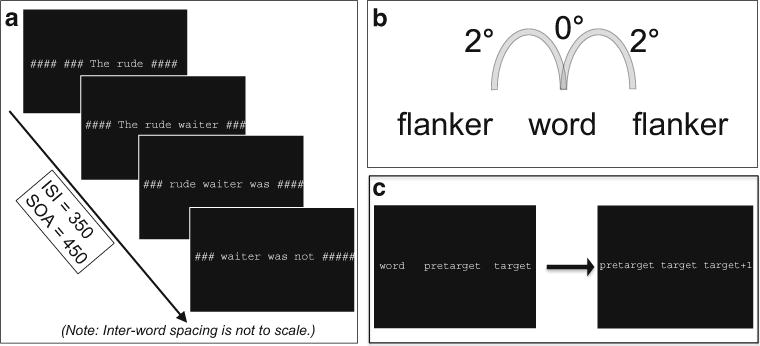
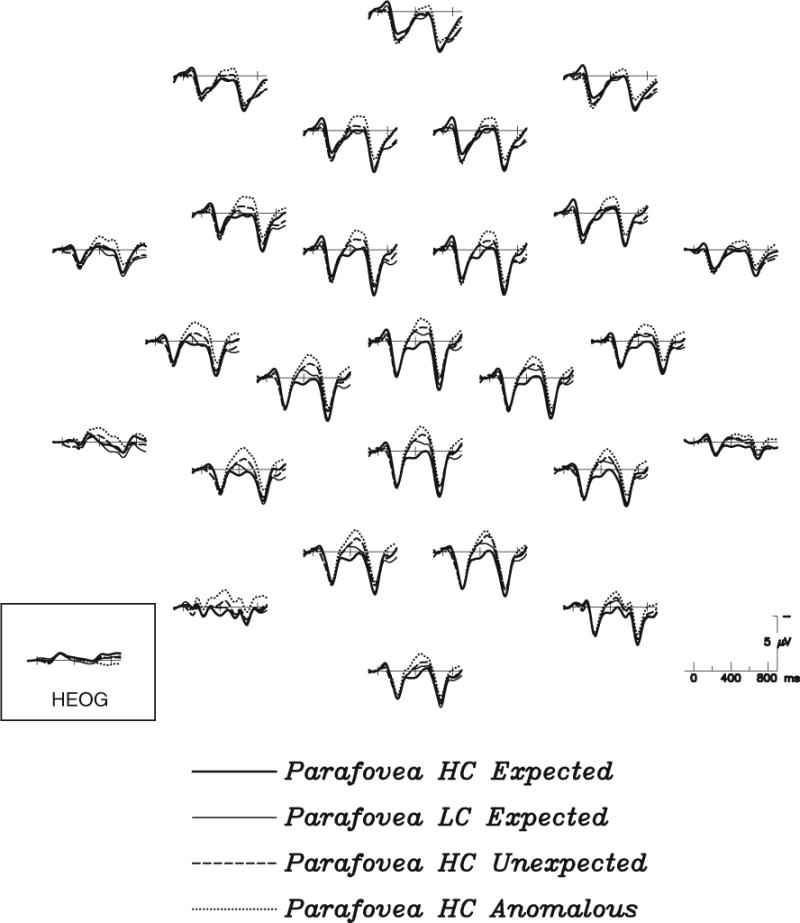
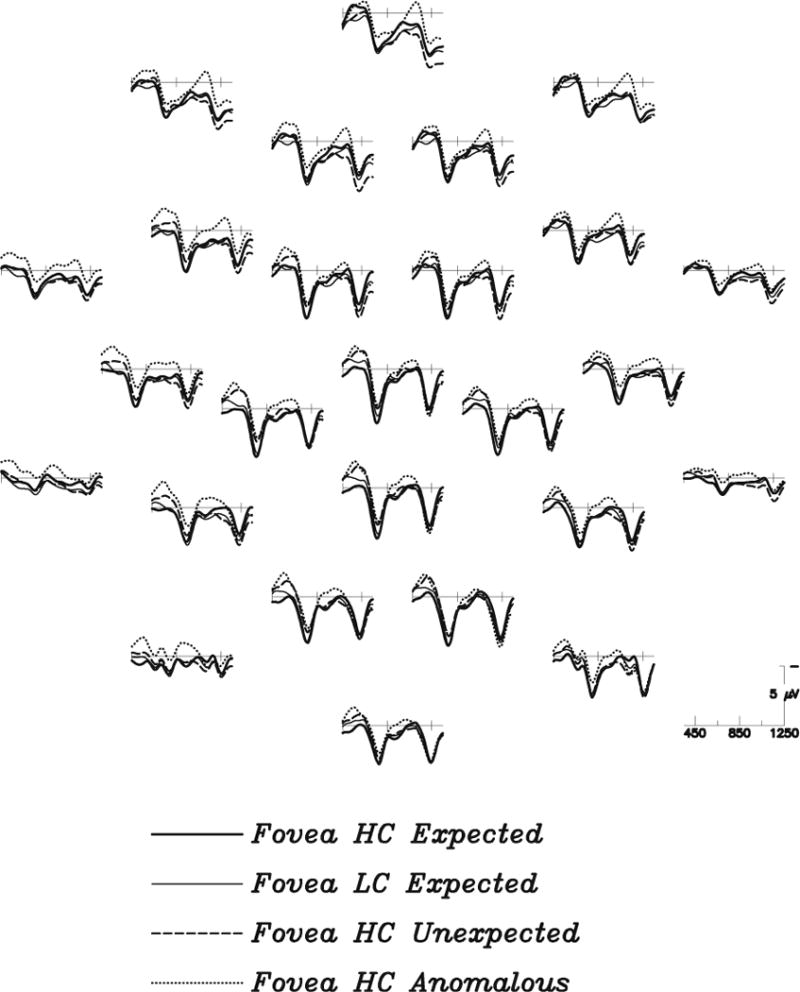
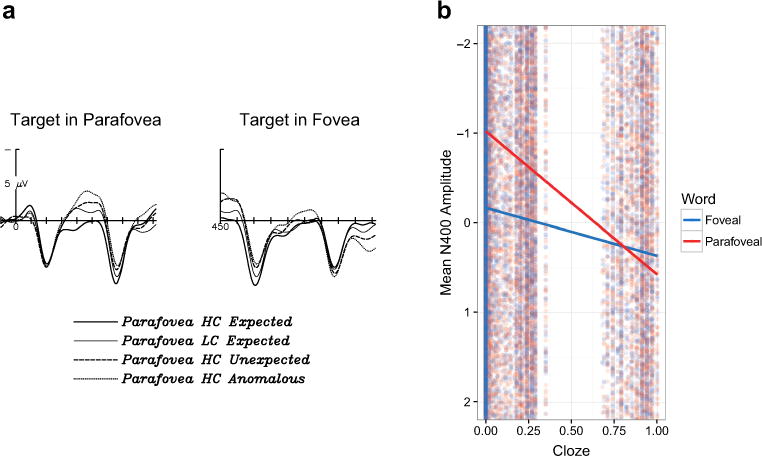
An important question in the reading literature regards the nature of the semantic information readers can extract from the parafovea (i.e., the next word in a sentence). Recent eye-tracking findings have found a semantic parafoveal preview benefit under many circumstances, and findings from event-related brain potentials (ERPs) also suggest that readers can at least detect semantic anomalies parafoveally (Barber, Van der Meij, & Kutas, Psychophysiology, 50(1), 48-59, 2013). We use ERPs to ask whether fine-grained aspects of semantic expectancy can affect the N400 elicited by a word appearing in the parafovea. In an RSVP-with-flankers paradigm, sentences were presented word by word, flanked 2° bilaterally by the previous and upcoming words. Stimuli consisted of high constraint sentences that were identical up to the target word, which could be expected, unexpected but plausible, or anomalous, as well as low constraint sentences that were always completed with the most expected ending. Findings revealed an N400 effect to the target word when it appeared in the parafovea, which was graded with respect to the target's expectancy and congruency within the sentence context. Furthermore, when targets appeared at central fixation, this graded congruency effect was mitigated, suggesting that the semantic information gleaned from parafoveal vision functionally changes the semantic processing of those words when foveated.
Keywords: ERPs; Lexical access; Parafoveal processing; Semantics.
Figures
References
-
- Baccino T, Manunta Y. Eye-fixation-related potentials: Insight into parafoveal processing. Journal of Psychophysiology. 2005;19(3):204–215.
-
- Balota DA. Automatic semantic activation and episodic memory encoding. Journal of Verbal Learning and Verbal Behavior. 1983;22:88–104.
-
- Balota DA, Pollatsek A, Rayner K. The interaction of contextual constraints and parafoveal visual information in reading. Cognitive Psychology. 1985;17(3):364–390. - PubMed
-
- Balota DA, Yap MJ, Cortese MJ, Hutchison KA, Kessler B, Loftis B, Treiman R. The English Lexicon Project. Behavior Research Methods. 2007;39:445–459. - PubMed
Publication types
MeSH terms
Grants and funding
LinkOut - more resources
Full Text Sources
Other Literature Sources
