


Neuropeptide Y resists excess loss of fat by lipolysis in calorie-restricted mice: a trait potential for the life-extending effect of calorie restriction
- PMID: 28101970
- PMCID: PMC5334538
- DOI: 10.1111/acel.12558
Neuropeptide Y resists excess loss of fat by lipolysis in calorie-restricted mice: a trait potential for the life-extending effect of calorie restriction
Abstract
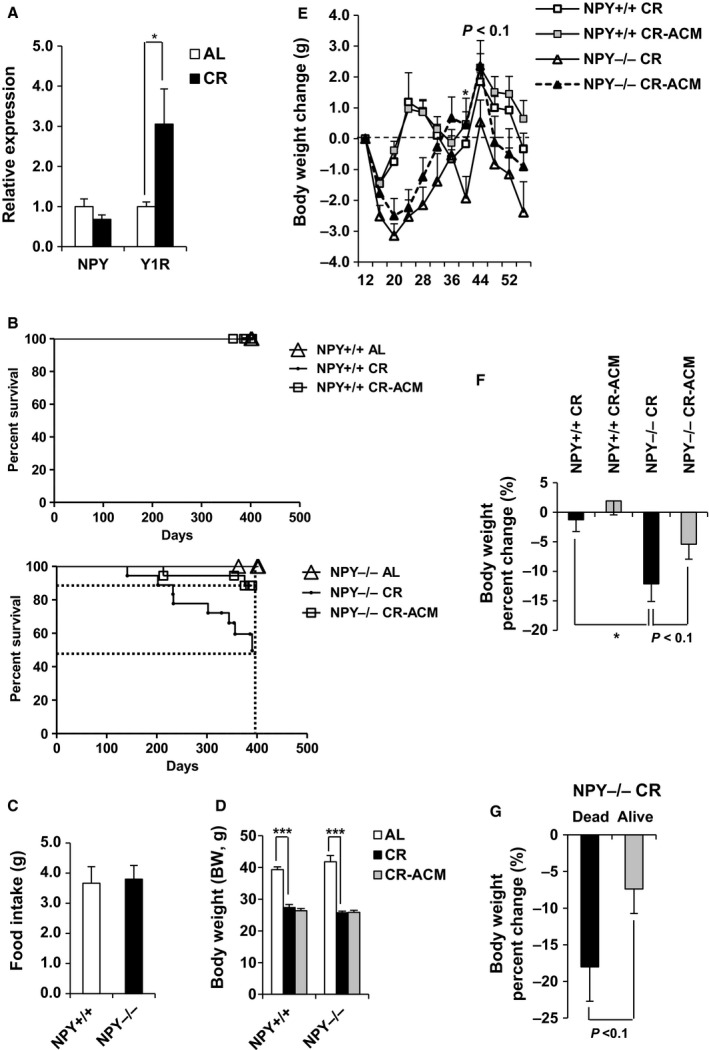
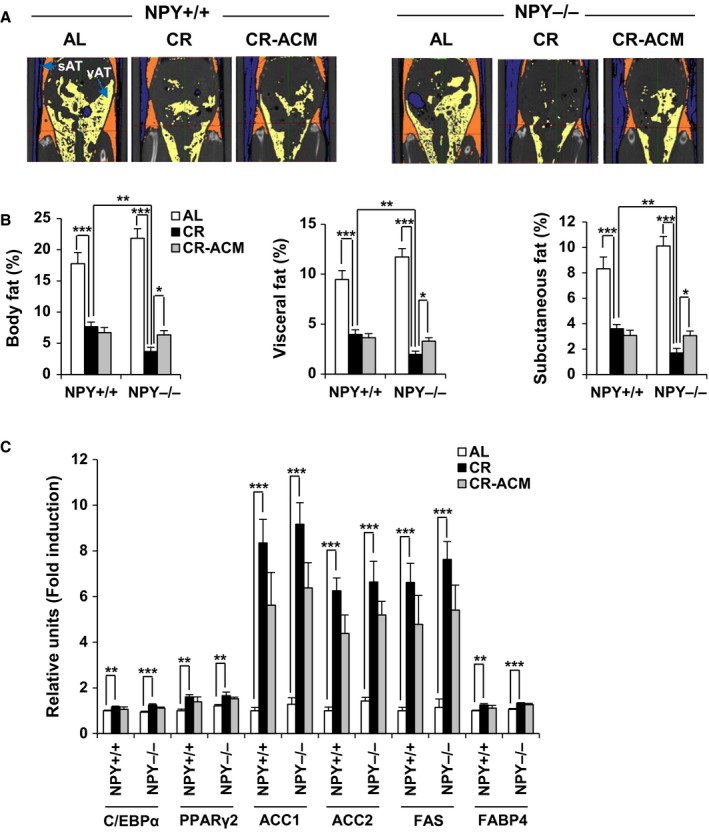
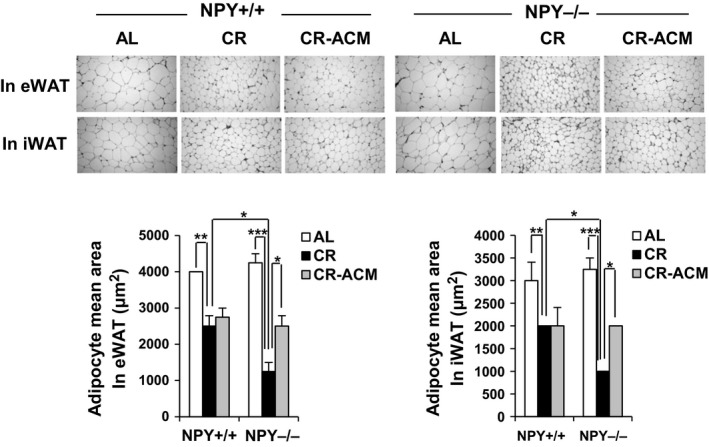
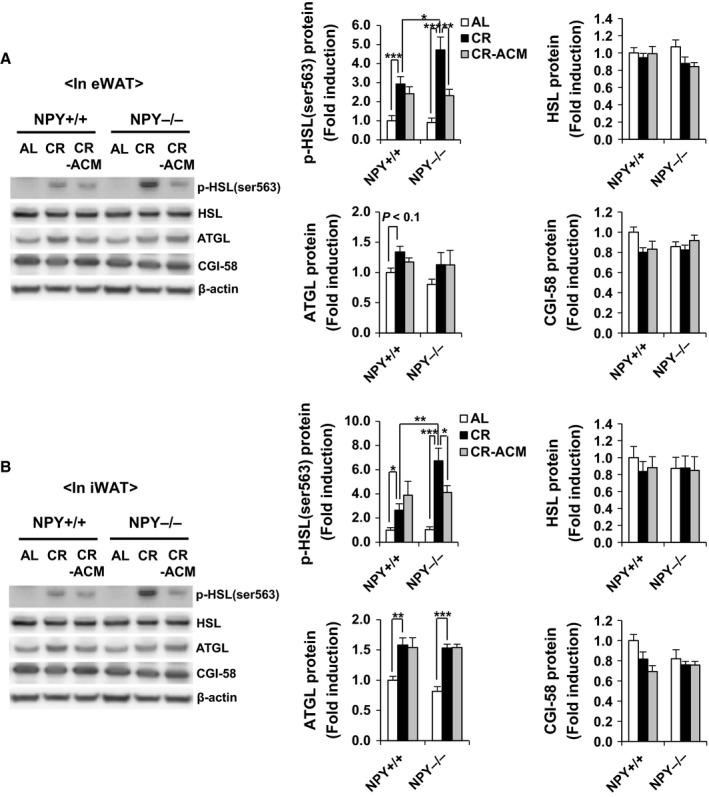
Neuropeptide Y (NPY) is an orexigenic peptide that plays an essential role in caloric restriction (CR)-mediated lifespan extension. However, the mechanisms underlying the NPY-mediated effects in CR are poorly defined. Here, we report that NPY deficiency in male mice during CR increases mortality in association with lipodystrophy. NPY-/- mice displayed a rapid decrease in body weight and fat mass, as well as increased lipolysis during CR. These alterations in fat regulation were inhibited by the lipolysis inhibitor, acipimox, a treatment associated with reduced mortality. The lipolytic/thermogenic signaling, β3-adrenergic receptor/hormone sensitive lipase, was markedly activated in white adipose tissue of NPY-/- mice compared with that of NPY+/+ mice, and thermogenesis was controlled by NPY under negative energy balance. These results demonstrate the critical role of NPY in the regulation of lipid metabolic homeostasis and survival via control of lipolysis and thermogenesis in a state of negative energy balance.
Keywords: adipose tissue; aging; calorie restriction; lipolysis; neuropeptide Y.
© 2016 The Authors. Aging Cell published by the Anatomical Society and John Wiley & Sons Ltd.
Figures
References
-
- Arch JR, Wilson S (1996) Prospects for beta 3‐adrenoceptor agonists in the treatment of obesity and diabetes. Int. J. Obes. Relat. Metab. Disord. 20, 191–199. - PubMed
-
- Arner P, Langin D (2014) Lipolysis in lipid turnover, cancer cachexia, and obesity‐induced insulin resistance. Trends Endocrinol. Metab. 25, 255–262. - PubMed
-
- Blüher M, Michael MD, Peroni OD, Ueki K, Carter N, Kahn BB, Kahn CR (2002) Adipose tissue selective insulin receptor knockout protects against obesity and obesity‐related glucose intolerance. Dev. Cell 3, 25–38. - PubMed
-
- Blum D, Omlin A, Baracos VE, Solheim TS, Tan BH, Stone P, Kaasa S, Fearon K, Strasser F, European Palliative Care Research Collaborative (2011) Cancer cachexia: a systematic literature review of items and domains associated with involuntary weight loss in cancer. Crit. Rev. Oncol. Hematol. 80, 114–144. - PubMed
Publication types
MeSH terms
Substances
LinkOut - more resources
Full Text Sources
Other Literature Sources
Molecular Biology Databases
Miscellaneous
