


Prevalence and Determinants of Oral Human Papillomavirus Infection in 500 Young Adults from Italy
- PMID: 28103272
- PMCID: PMC5245874
- DOI: 10.1371/journal.pone.0170091
Prevalence and Determinants of Oral Human Papillomavirus Infection in 500 Young Adults from Italy
Abstract
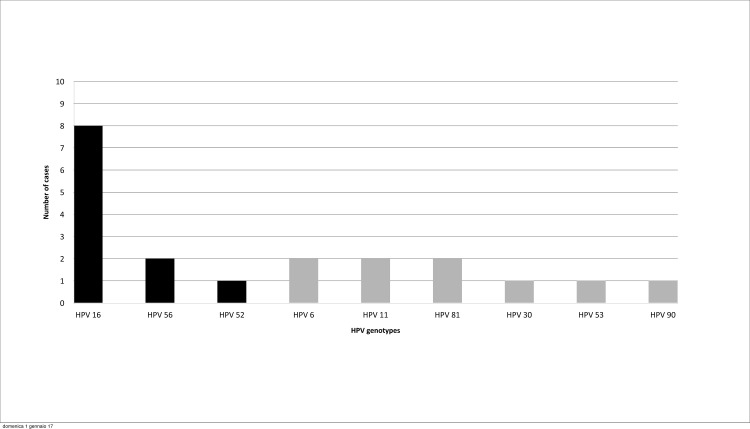
Although the prevalence of human papillomavirus (HPV)-related oropharyngeal squamous cell carcinoma (OPSCC) is increasing in developed countries and becoming a relevant health issue, the natural history of oral HPV infection is still unclear. Estimating the infection's prevalence in specific populations and identifying risk factors can widen our understanding of its natural history and help to delineate appropriate prevention strategies. This study sought to (i) determine oral HPV prevalence and genotype distribution in a large series of young Italian adults, (ii) validate an oral rinse sampling/storage protocol, and (iii) pinpoint factors associated with oral HPV infection. Five hundred students, nurses, and technicians (19-35 years-old) studying and working at/for the University of Padua were recruited. Each participant was provided with an oral rinse sampling kit and instructions for use. They were also asked to complete an anonymous questionnaire concerning their demographic characteristics and behaviors. The questionnaires and oral rinse containers were labeled with the same identification code number. The oral rinse samples were tested using a bead-based multiplex BSGP5+/6+-MPG genotyping assay which amplifies the L1 region of 51 mucosal HPV types. The prevalence of oral HPV infection was 4.0% (95% confidence interval (CI), 2.5%-6.1%); those of 14 high-risk HPV types and of HPV-type 16 (HPV16) infection were 2.2% (95% CI, 1.1%-3.9%) and 1.6% (95% CI, 0.6%-3.1%), respectively. HPV16 was the most frequent genotype (40.0% of oral HPV infections). No association was found between oral infection and the co-variables studied (gender, tobacco, alcohol and illegal drug use, number of sex and oral sex partners, HPV vaccination status, history of HPV and sexually transmitted infections, abnormal pap smears, recurrent tonsillitis and tonsillectomy). The oral rinse sampling protocol outlined here proved to be simple, efficient and well tolerated, and the prevalence rate can be considered reliable and thus useful to guide future research. Determinants of oral HPV infection are still unclear and further studies are certainly warranted.
Conflict of interest statement
MP is inventor of patents owned by DKFZ in the field of HPV DNA diagnostic assays: Novel Broad Spectrum BS---GP5+/6+PCR for Homogeneous Amplification of Human Alpha Papillomaviruses. Patent EP 2195468, US 8,202,694. This does not alter our adherence to PLOS ONE policies on sharing data and materials.
Figures
References
-
- Blot WJ, McLaughlin JK, Winn DM, Austin DF, Greenberg RS, Preston-Martin S, et al. Smoking and drinking in relation to oral and pharyngeal cancer. Cancer Res. 1988;48: 3282–3287. - PubMed
-
- Ferlay J, Soerjomataram I, Ervik M, Dikshit R, Eser S, Mathers C, et al. GLOBOCAN 2012 v1.0, Cancer Incidence and Mortality Worldwide: IARC CancerBase No. 11 [Internet]. International Agency for Research on Cancer, Lyon, France (2013) Available from: <http://globocan.iarc.fr accessed on 02/03/2015>.
-
- Chaturvedi AK, Graubard BI, Broutian T, Pickard RK, Tong ZY, Xiao W, et al. NHANES 2009–2012 Findings: Association of Sexual Behaviors with Higher Prevalence of Oral Oncogenic Human Papillomavirus Infections in U.S. Men. Cancer Res. 2015;75: 2468–2477. 10.1158/0008-5472.CAN-14-2843 - DOI - PMC - PubMed
MeSH terms
LinkOut - more resources
Full Text Sources
Other Literature Sources
Research Materials
