


Comparison of the Effect of Two Kinds of Iranian Honey and Diphenhydramine on Nocturnal Cough and the Sleep Quality in Coughing Children and Their Parents
- PMID: 28103276
- PMCID: PMC5245888
- DOI: 10.1371/journal.pone.0170277
Comparison of the Effect of Two Kinds of Iranian Honey and Diphenhydramine on Nocturnal Cough and the Sleep Quality in Coughing Children and Their Parents
Abstract
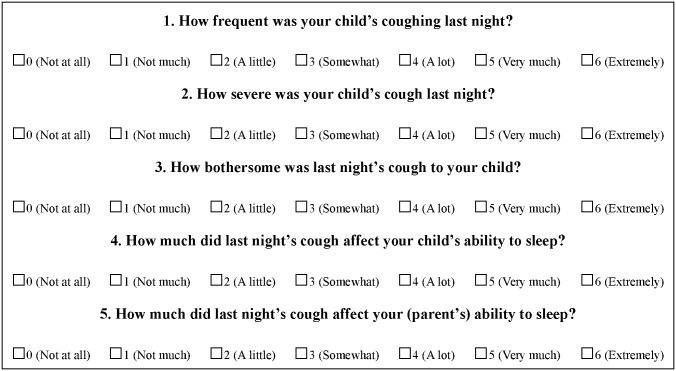
Coughing in a child induced by upper respiratory tract infections (URTIs) can be a problem, both for the child and its parents. Current studies show a lack of proven efficacy for over-the counter (OTC) medications, but promising data support the use of honey for children. The aim of this study was to compare the effects of two kinds of Iranian honey with diphenhydramine (DPH) on nocturnal pediatric coughs and the sleep quality of children and their parents. This was a clinical trial (registered in IRCT; No.: 28.20.7932, 15 October 2013). The study consisted of 87 patients. All the parents completed a standard previously validated questionnaire. The children were randomly assigned to one of three treatment groups: Group 1, Honey type 1 (Kimia Company, Iran) (n = 42), Group 2, Honey type 2 (Shahde-Golha, Iran) (n = 25), and Group 3, DPH (n = 20). Each group received double doses of the respective treatments on two successive nights. A second survey was then administered via a telephone interview in which the parents were asked the same questions. The mean scores for all aspects of coughs were significantly decreased in each group before and after the treatment. All three treatments improved the cough and sleep scores. Honey type 1 was superior to DPH in improving all aspects of coughs, except the frequency, and Honey type 2 was more effective than DPH in improving all aspects of coughs, except the sleep quality of the child. There was no significant difference between Honey type 1 and 2 in any aspects of cough relief in the present study. The results suggest that honey may provide better cough relief than DPH in children and improve the sleep quality of children and their parents.
Conflict of interest statement
The authors have declared that no competing interests exist.
Figures

References
-
- Turner RB, Hayden GF. The common cold In: Kliegman RM, Stanton BF, St. Geme JW, Schor N, Behrman RE, editors.Nelson Text Book of Pediatrics, 19nd ed Philadelphia: Elsevier/Saunders; 2015. pp. 1434–1436.
Publication types
MeSH terms
Substances
LinkOut - more resources
Full Text Sources
Other Literature Sources
Medical
