


Walking through Apertures in Individuals with Stroke
- PMID: 28103299
- PMCID: PMC5245896
- DOI: 10.1371/journal.pone.0170119
Walking through Apertures in Individuals with Stroke
Abstract
Objective: Walking through a narrow aperture requires unique postural configurations, i.e., body rotation in the yaw dimension. Stroke individuals may have difficulty performing the body rotations due to motor paralysis on one side of their body. The present study was therefore designed to investigate how successfully such individuals walk through apertures and how they perform body rotation behavior.
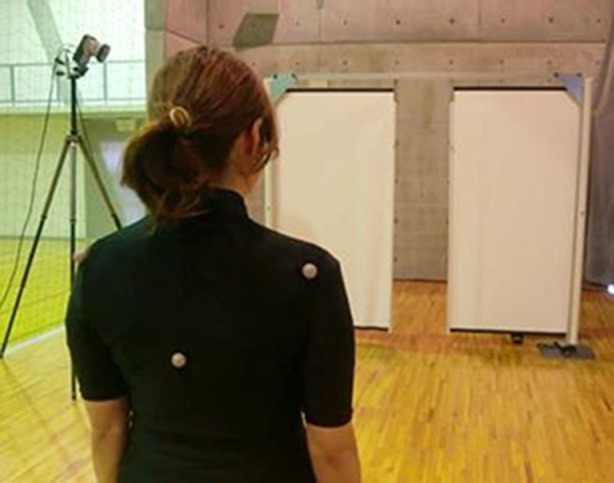
Method: Stroke fallers (n = 10), stroke non-fallers (n = 13), and healthy controls (n = 23) participated. In the main task, participants walked for 4 m and passed through apertures of various widths (0.9-1.3 times the participant's shoulder width). Accidental contact with the frame of an aperture and kinematic characteristics at the moment of aperture crossing were measured. Participants also performed a perceptual judgment task to measure the accuracy of their perceived aperture passability.
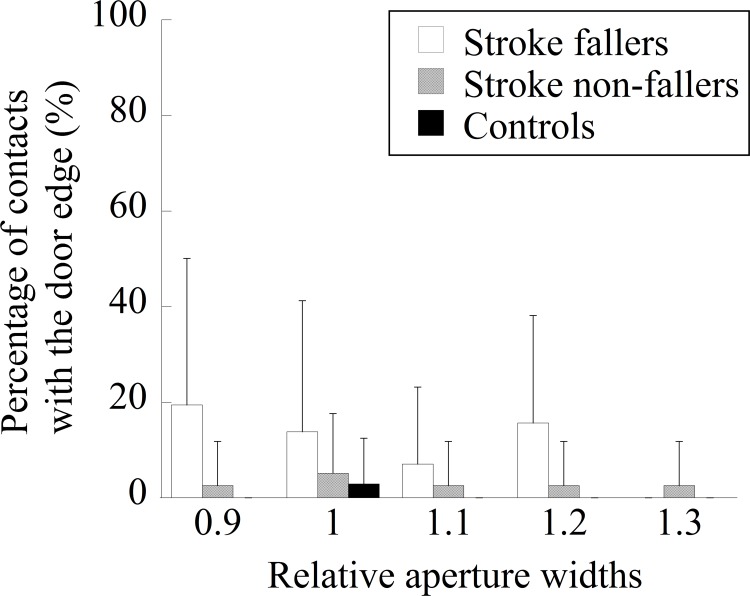
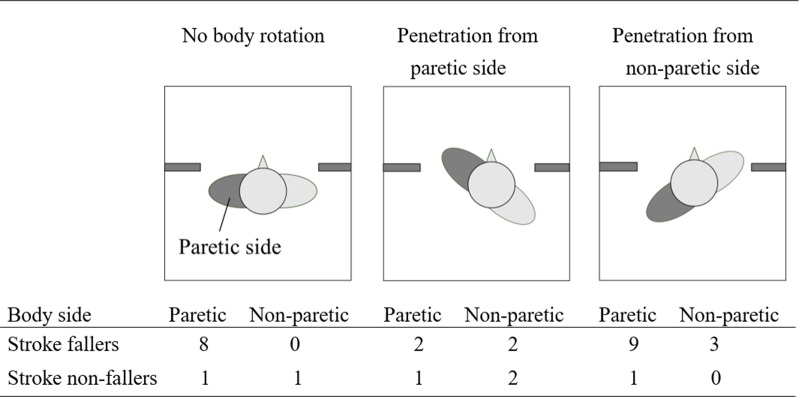
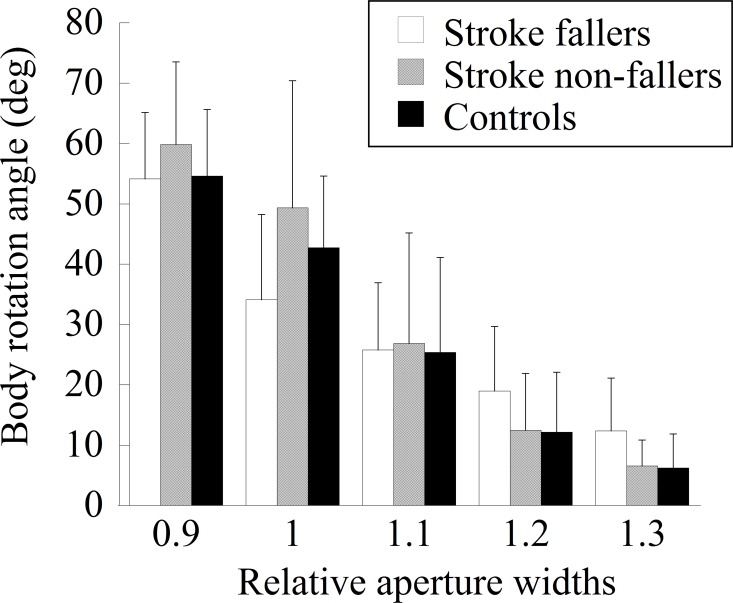
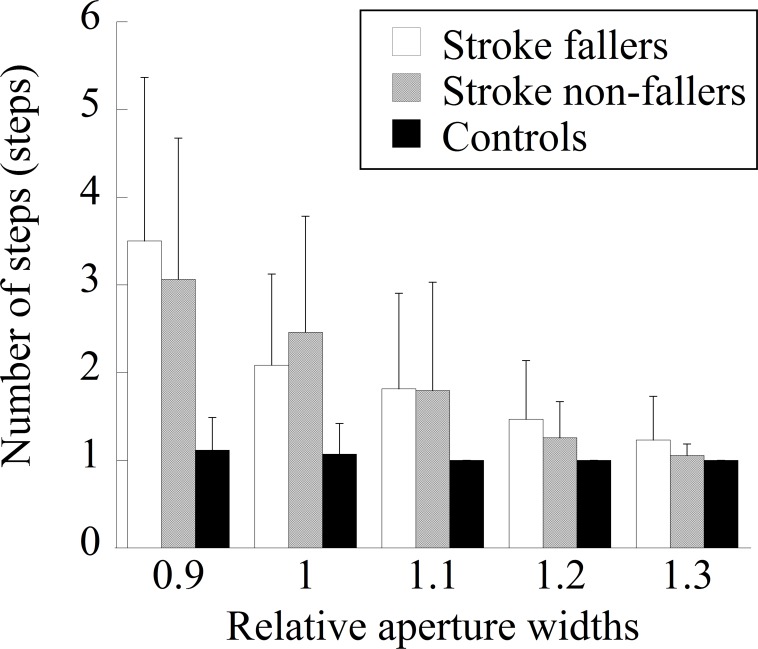
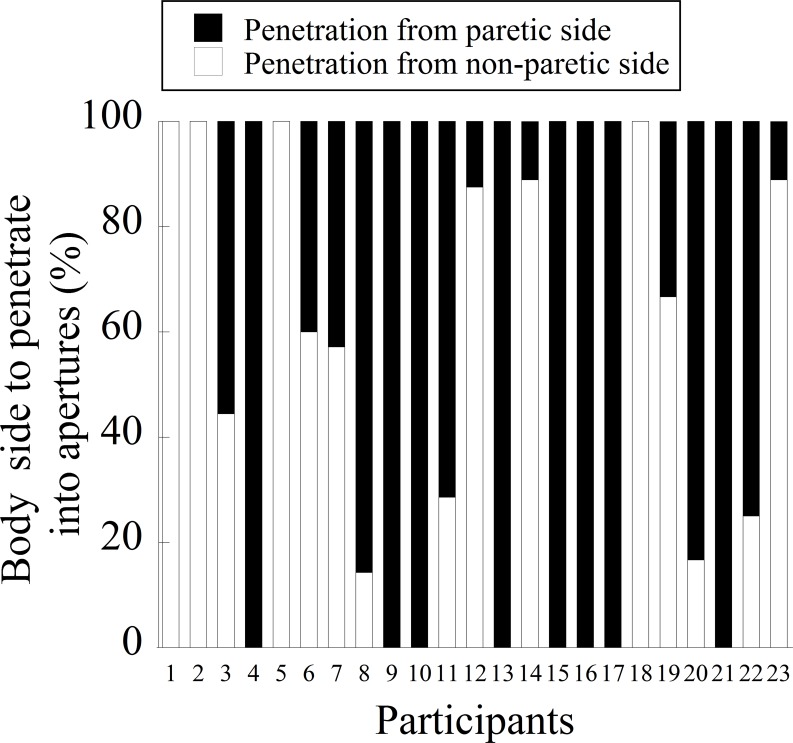
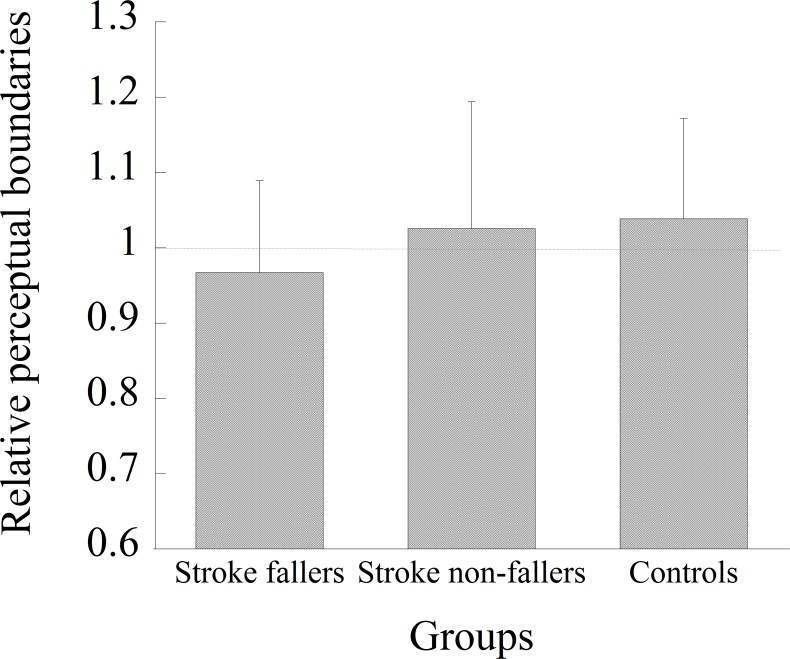
Results and discussion: Stroke fallers made frequent contacts on their paretic side; however, the contacts were not frequent when they penetrated apertures from their paretic side. Stroke fallers and non-fallers rotated their body with multiple steps, rather than a single step, to deal with their motor paralysis. Although the minimum passable width was greater for stroke fallers, the body rotation angle was comparable among groups. This suggests that frequent contact in stroke fallers was due to insufficient body rotation. The fact that there was no significant group difference in the perceived aperture passability suggested that contact occurred mainly due to locomotor factors rather than perceptual factors. Two possible explanations (availability of vision and/or attention) were provided as to why accidental contact on the paretic side did not occur frequently when stroke fallers penetrated the apertures from their paretic side.
Conflict of interest statement
The authors have declared that no competing interests exist.
Figures
References
-
- Kim CM, Eng JJ (2003) Symmetry in vertical ground reaction force is accompanied by symmetry in temporal but not distance variables of gait in persons with stroke. Gait Posture 18: 23–28. - PubMed
-
- Jørgensen L, Crabtree NJ, Reeve J, Jacbsen BK (2000) Ambulatory level and asymmetrical weight bearing after stroke affects bone loss in the upper and lower part of the femoral neck differently: bone adaptation after decreased mechanical loading. Bone 27: 701–707. - PubMed
MeSH terms
LinkOut - more resources
Full Text Sources
Other Literature Sources
Medical
