Review
. 2017 Apr:43:63-70.
doi: 10.1016/j.conb.2016.12.012. Epub 2017 Jan 16.

The readily releasable pool of synaptic vesicles

Affiliations
Review

The readily releasable pool of synaptic vesicles

Pascal S Kaeser et al. Curr Opin Neurobiol. 2017 Apr.

Abstract

Each presynaptic bouton is densely packed with many vesicles, only a small fraction of which are available for immediate release. These vesicles constitute the readily releasable pool (RRP). The RRP size, and the probability of release of each vesicle within the RRP, together determine synaptic strength. Here, we discuss complications and recent advances in determining the size of the physiologically relevant RRP. We consider molecular mechanisms to generate and regulate the RRP, and discuss the relationship between vesicle docking and the RRP. We conclude that many RRP vesicles are docked, that some docked vesicles may not be part of the RRP, and that undocked vesicles can contribute to the RRP by rapid recruitment to unoccupied, molecularly activated ready-to-release sites.


Figures

Figure 1
Figure 1. Measurements of RRP
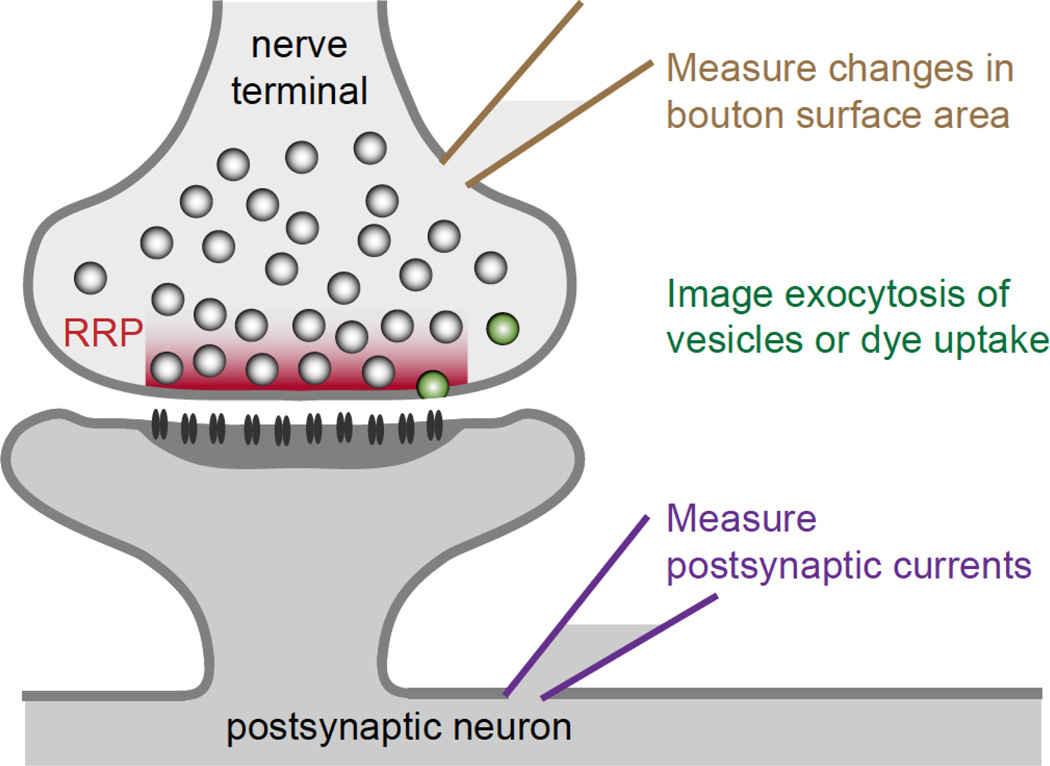
A schematic of a synapse is shown with a presynaptic nerve terminal containing many vesicles. Some of these vesicles are close to the active zone and make up the RRP. To quantify the RRP size it is necessary to quantify neurotransmitter release, which is done in several different ways. It is possible to record directly from some types of presynaptic boutons (top), and this allows control of the presynaptic potential for large voltage steps, allows control of the intracellular milieu, and makes it possible to measure the change in surface area in response to vesicle fusion. It is also possible to quantify fusion using optical methods (middle, illustrated by vesicles colored in green). The most common method to quantify RRP size is to record postsynaptic currents (bottom).
Figure 2
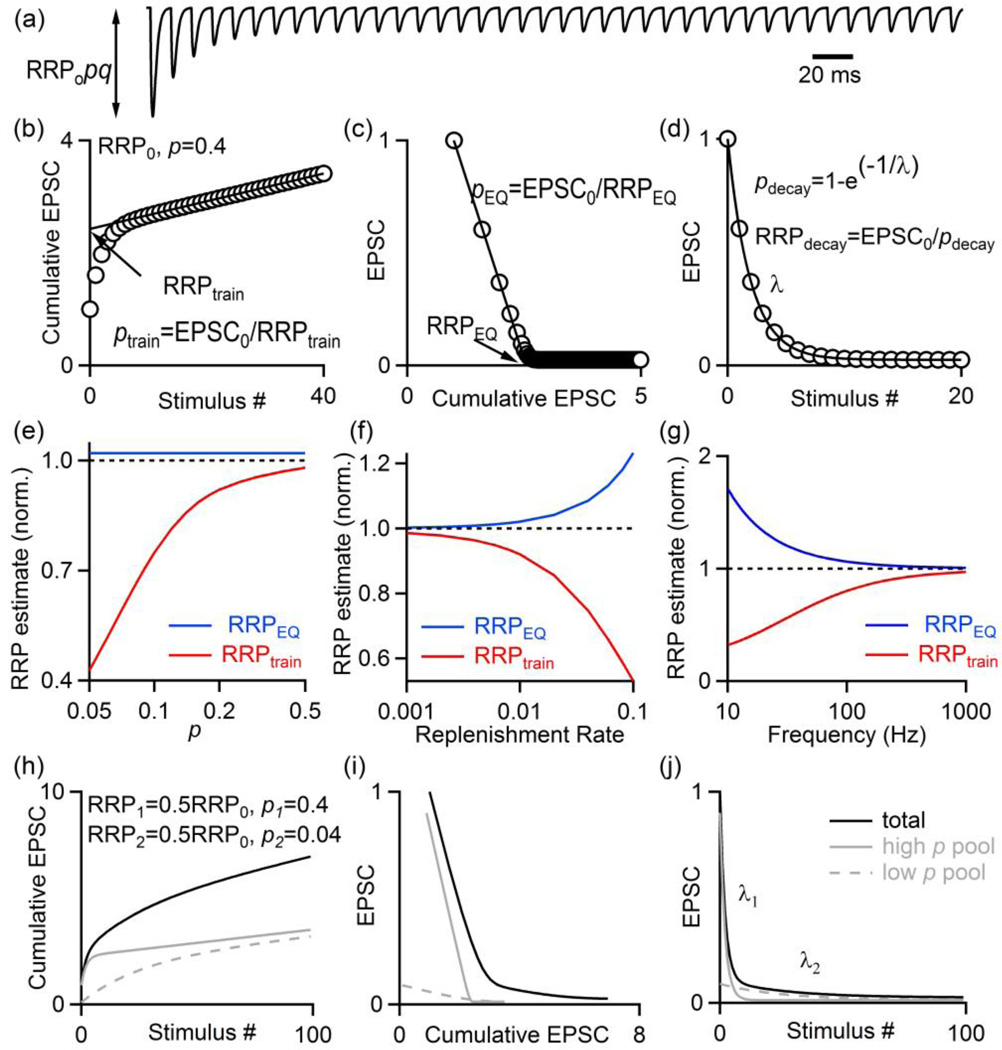
Figure 2. Using synaptic responses evoked by high-frequency stimulus trains to estimate synaptic parameters
Synaptic responses are described by N0 (the size of the readily releasable pool, RRP), p (the vesicular release probability), R (the rate of replenishment of the RRP from a reserve pool) and q (the size of a quantal response). (a). Simulated EPSCs in response to a 100 Hz stimulus train. (b, c). Two extrapolation methods commonly used to estimate synaptic parameters are illustrated: one referred to as the train method (b) and the other as the Elmqvist and Quastel (EQ) method. (d). If depression of synaptic responses is due to RRP depletion, the dependence of the EPSC amplitude on number of stimuli can be used to estimate p and determine the RRP (from [8*]). (e–f) Simulations based on a depletion model were used to determine EPSC amplitudes during a train and the cumulative train method and EQ methods were used to estimate the RRP from these simulated responses (from [8*]). The dashed line corresponds to the RRP size used in the simulations. (h–i) Simulations with a depletion model were made for a synapse with 50% of release having p=0.4 and 50% having p=0.04. Plots were made as in B–D that highlight complications associated with having nonuniform p.
Figure 3
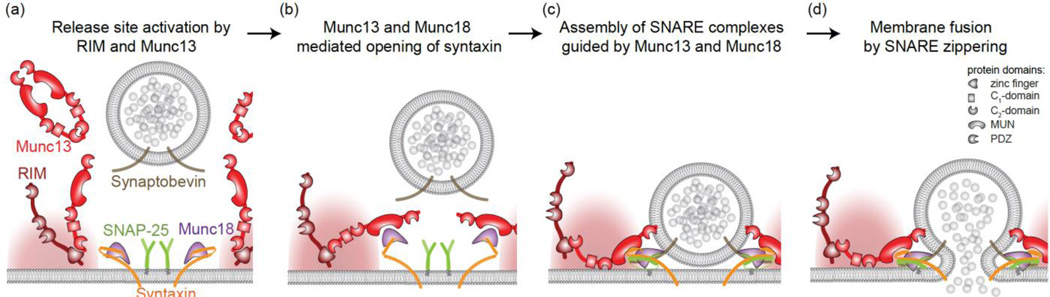
Figure 3. Simplified, Munc13-centered model of exocytosis
Munc13 participates in multiple steps of exocytosis, which raises the question at which step a vesicle becomes part of the RRP. (a) RIM recruits and monomerizes Munc13 to activate a release site. (b) Munc13, together with Munc18, opens syntaxin-1 to allow for the assembly of the SNARE complex. (c) SNARE complexes may partially assemble under the molecular control of Munc13 and Munc18, and this assembly may be regulated by complexin, synaptotagmin, or other SNARE-binding proteins. (d) Fusion proceeds when SNARE proteins fully assemble into a four-alpha-helical bundle that forces the vesicular and target membranes to fuse.
Figure 4
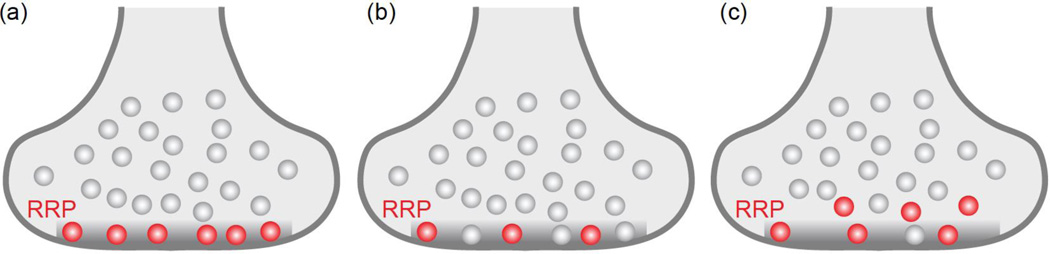
Figure 4. Morphological correlates of RRP
The RRP consits of docked vesicles. The questions that arise are: Are all RRP vesicles docked? Are all docked vesicles in the RRP? (a) One model posits that all docked vesicles are part of the RRP and all RRP vesicles are docked. (b) Another possiblity is that only a subset of docked vesicles is the RRP. (c) A third model is that many RRP vesicles are docked, but additional vesicles may contribute to RRP through rapid recruitment to empty, activated release sites. In (a) – (c), RRP vesicles are illustrated in red and the active zone is the grey shaded area.

References

    1. Guo J, Ge J-L, Hao M, Sun Z-C, Wu X-S, Zhu J-B, Wang W, Yao P-T, Lin W, Xue L. A three-pool model dissecting readily releasable pool replenishment at the calyx of held. [Internet] Sci. Rep. 2015;5:9517. - PMC - PubMed
    1. Mahfooz K, Singh M, Renden R, Wesseling JF. A Well-Defined Readily Releasable Pool with Fixed Capacity for Storing Vesicles at Calyx of Held. PLoS Comput. Biol. 2016;12:1–38. - PMC - PubMed
    1. Qiu X, Zhu Q, Sun J. Quantitative analysis of vesicle recycling at the calyx of Held synapse. [Internet] Proc. Natl. Acad. Sci. U. S. A. 2015;112:4779–4784. - PMC - PubMed
    1. Pan B, Zucker RS. A general model of synaptic transmission and short-term plasticity [Internet] Neuron. 2009;62:539–554. - PMC - PubMed
    1. Dittman JS, Kreitzer AC, Regehr WG. Interplay between facilitation, depression, and residual calcium at three presynaptic terminals. J. Neurosci. 2000;20:1374–1385. - PMC - PubMed

MeSH terms

LinkOut - more resources